


Very few homes in Wales will benefit from ‘pylon bill cut’ says charity
Martin Shipton
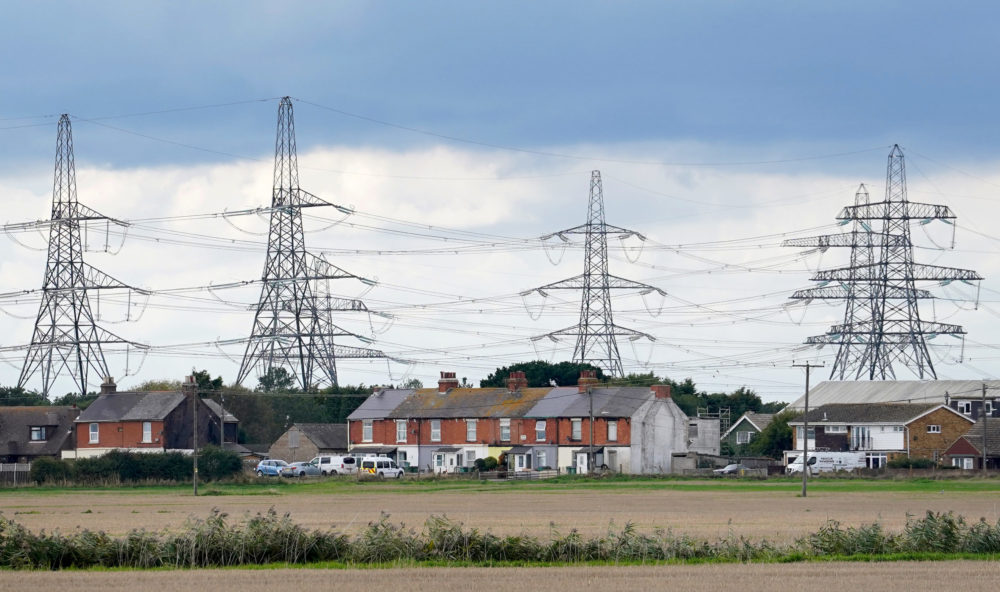
A UK Government scheme that will see households living within 500 metres of new pylons having their energy bills cut by £250 per year for 10 years is only likely to help a tiny number of people in Wales, according to a prominent charity.
Energy Minister Michael Shanks said that planned multibillion pound upgrades to Britain’s grid infrastructure would result in savings for hundreds of thousands of homes as a reward for “hosting vital infrastructure” which will help the transition away from fossil fuels.
Mr Shanks said: “It is a moment of national renewal. It’s vital we build again as a country and we are determined that communities which host pylons should benefit, which is why we’re bringing down the energy bills of those hosting this vital national infrastructure.”
Grid companies are expected to spend up to £77bn over five years to build the new networks and power lines needed to carry renewable electricity, often generated offshore or in more remote parts of the country, to urban areas with high electricity demand.
The Westminster government confirmed the sweetener for local communities near these projects after ruling out proposals to run the new cables underground.
It said that research, commissioned by the department for energy and net zero (DESNZ), found that “building pylons remains the most cost-effective way of upgrading Britain’s outdated electricity networks” and would provide “the best value for bill-payers”.
But CPRW, The Welsh countryside charity, pointed out that only one project in Wales is currently included on the UK Government’s list: the Pentir to Trawsfynydd upgrade in north Wales. CPRW said this project will actually involve removing pylons from the Dwyryd estuary, placing cables in a tunnel, and changing the wires on one side of the remaining pylons.
Crucially, the scheme only applies to transmission infrastructure. It therefore does not apply to the three proposed Green GEN Cymru lines in mid Wales.
Dr Jonathan Dean, CPRW’s energy spokesperson, said: “I don’t know anyone who would be happy to have pylons within 500 metres of their home, and don’t think £250 is enough compensation for the years of dust, noise and construction disruption, and of course there is nothing for having to live with the finished project. But with the cost of living, help with bills will be welcomed. The vast majority of people who don’t live in rural areas will never have a pylon near their home, as lines are put underground in towns and cities, and they will probably see this as generous.”
Dr Dean added: “The annual payment is insulting and only applies to transmission pylons (around 50 metres high) not distribution pylons (about 30 metres high), so in Wales this doesn’t apply to the three proposed lines by Green Gen Cymru in mid Wales. Given that electricity bills will increase as demand increases, from EVs and heat pumps, the percentage to the bill payer is small. Labour are giving a quarter what the Conservatives originally promised (it was a Conservative idea originally).”
The UK Government has announced 43 transmission projects in the first wave of the scheme, with most eligible households expected to receive the discount automatically through their electricity supplier once projects have secured the necessary consents and main construction work has begun.
Dr Dean said: “For CPRW, the announcement highlights a wider question about fairness for rural communities being asked to host major electricity infrastructure, particularly where communities may experience construction disruption, landscape impacts and long-term changes to their surroundings without qualifying for direct household support.”
Support our Nation today
For the price of a cup of coffee a month you can help us create an independent, not-for-profit, national news service for the people of Wales, by the people of Wales.
Get more trusted Welsh news
Choose Nation.Cymru as a preferred source in Google News to see more of our journalism.




If my house was surrounded by as many pylons shown in the picture I would want compensation for the full value of the property before the ugly things were erected. Loss of property value will be massive. £250 is an insult. These companies rely in bull**** baffling brains.