


Victorian Society highlight ‘concerns’ over demolition work at historic school site
Dale Spridgeon, Local Democracy Reporter
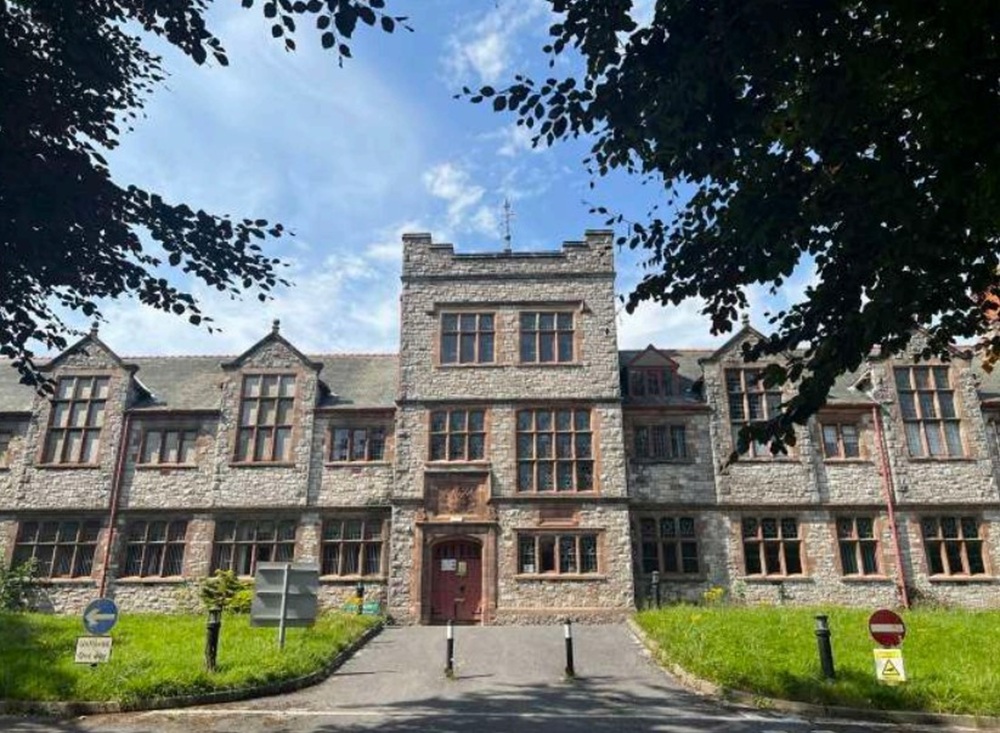
Concerns have been raised about demolition work planned at a historic Grade II-listed former school which is set to be transformed into a business school.
Plans have been submitted to Cyngor Gwynydd by Bangor University for work at the former Coleg Menai and Friars Junior School site in Bangor.
However, the Victorian Society, a heritage group which campaigns to save historic buildings, has highlighted concerns over some of the work.
They are worried about the loss of a former gymnasium building thought to date to around 1910.
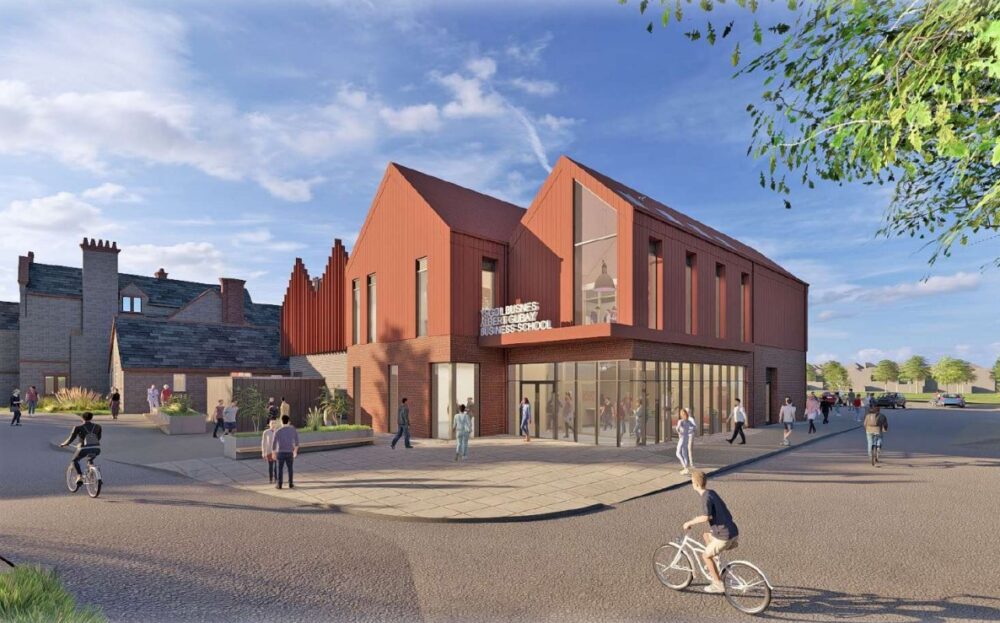
Bangor University last year announced plans for the £10m Albert Gubay Business School development, named in memory of the Welsh billionaire philanthropist and founder of the Kwik Save chain.
The late Rhyl-born businessman famously made a divine pact with God, when he was young and penniless selling sweets from the back of a van, that he would share his wealth with the church if he made it big.
Among the beneficiaries of the Albert Gubay Charitable Foundation, Bangor University was told it would receive more than £10m.
The university had said at the time it was “thrilled” and the Vice-Chancellor Prof Edmund Burke was reported as saying the gift was an “extraordinary act of generosity”.
Two planning applications lodged with the council linked to the proposal will be discussed by members of Cyngor Gwynedd’s planning committee on Monday, April 27.
Both, which relate to the demolition of rear extensions and creation of a new two-storey extension along with internal alterations, are recommended for approval.
‘National significance’
The Victorian Society noted that the former school was Grade II-listed and recognised for its “national significance and special interest”.
“We raise concerns that the application appears to have not assessed this extension adequately and may have misunderstood the provenance of the gym,” it stated.
“The school is defined by its cohesive Tudor Revival architecture and is a good example of a Victorian school, following a redesign of the school buildings by the State after the Welsh Intermediate Education Act 1889.
“The building was designed in 1899 by Douglas and Minshall and officially opened in 1900.
“This application for demolition and redevelopment at the rear of the building will result in the permanent loss of 20th Century material.
“We highlight that amongst the buildings to be lost is an apparent gymnasium (not to be confused with the later 20th Century assembly hall), potentially dating to 1910.
“This extension is both a crucial aspect of the building’s significance, but also deliberately cohesive to the front range’s Tudor Revival architecture.”
Reassessment
It called for a reassessment with the “significance of its historic material and relationship with the front range” to be reconsidered.
The Royal Commission on the Ancient and Historic Monuments of Wales had also noted parts of the rear two-storey extension had “to an extent reproduced Tudor details of the original building”.
It recommended a Level 2 photographic recording of the site as part of conditions.
Council documents noted there was “some doubt” as to the age of the rear sections, the part to be demolished, and which had arisen within correspondence.
“Because of this, more information has been commissioned and submitted to assess their age and importance,” it said.
It had noted from the “Heneb Gwynedd Archaeology Report 1840 there was evidence that within old maps of the area from 1911, the south-westerly section (i.e. the building known as the old gymnasium) was in the process of being constructed, and was a separate building to the main front building seen today”.
It added: “By the time the 1914 map was published, the gymnasium had been completed and had a roof.
“Interior plans of the school in 1935 show this building in use as a gymnasium with a toilet building added to the north but it is still a separate building.
“Aerial photographs from 1945 show that this building was included and added to the rear of what is now the main building, with a second floor built and the present hall.
“It therefore appears that this rear section is quite contemporaneous with the main building, and the rear has developed over the years.”
‘Poor condition’
However due to “a significant lack of maintenance over time, this section was now in a poor condition” and the size and space of the rooms were “not suitable” for the university’s requirements as a lecture hall.
“An extensive record has been made of the building, and the rear sections are important to the development and history of the site,” it said.
“It is not possible to convert these to the required lecturing use and it is considered that their demolition would protect the long-term future of the site.”
As a compromise it was proposed to reuse the materials from the demolished sections, to consider retaining the gymnasium footprint on the new extension floor using different colours and to use photographs on the walls.
The listed consent had noted among recommendations that the details of how the footprint of the gym will be recorded must be submitted before its demolition.
Support our Nation today
For the price of a cup of coffee a month you can help us create an independent, not-for-profit, national news service for the people of Wales, by the people of Wales.
Get more trusted Welsh news
Choose Nation.Cymru as a preferred source in Google News to see more of our journalism.



To be replaced with banality…
Should never give children building blocks, they turn into architects,
better beach pebbles then they flower into stone-wallers, dry or otherwise…