


Village awaits 150th anniversary of mining disaster that changed safety law
Martin Shipton
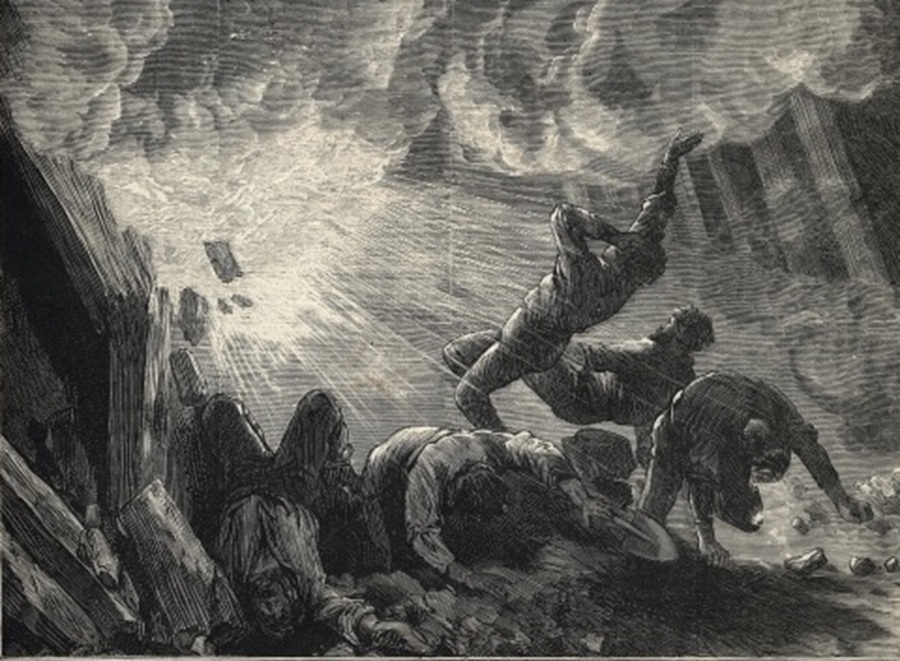
A village near Cardiff is preparing to commemorate the 150th anniversary of a mining disaster whose tragic outcome led to the introduction of safety regulations that remain in place to this day.
The Lan (or Llan) disaster, although small compared to others, is the only recorded mining disaster to have taken place within the local authority area of Cardiff.
Sixteen men and boys lost their lives when there was a gas explosion at the Lan colliery in the village of Gwaelod-y-Garth, on the northern outskirts of the city.
Scandal
It not only changed safety law but saw a coal baron face justice for false accounting in a Victorian scandal that brought down the West of England Bank.
The 150th anniversary of the 1875 disaster will be marked on December 6 2025. Two children were killed when the explosion took place, so every year children from Ysgol Gwaelod–y-Garth join with Friends of the Lan in a memorial celebration at the old drift mine.
This year, on Friday December 6, the children will be led by a Welsh pony, in remembrance of the work pit ponies did.
On the day of the disaster 11-year-old Moses Llewellyn and his younger friend David Rees were playing hide and seek during a break from working underground and ran into the mine’s Bras Vein.
When the explosion occurred, Moses died of gas poisoning, while David died when a ventilator door was blown on to him, causing massive head injuries. Both were essential wage earners.
Gas
Local historian and writer Norma Procter, who has written a film treatment based on the events, said: “The fireman found gas in the Bras Vein. He told the Overman, Abraham Phillips, who was fully aware that working in gas was dangerous.
“But there was another consideration. Phillips knew that the coal baron who owned the mine, Thomas William Booker, was struggling. If coal didn’t come up, the pit would close.
“It was an impossible decision. If the men didn’t go down, the pit would close, and the village depended on Booker’s coin. To take men into gas was dangerous – but they had worked in gas before. To save his village from starvation, he took the men down. The gas exploded. Phillips lost his life, as did his men.
“At the inquest, the deaths were blamed on negligence.
“William Galloway, the Accident Investigator, explained that in certain conditions, coaldust and gas can explode without a flame. It was new science, a risk that Phillips couldn’t have known. This explained why men far from the initial blast were badly burned.
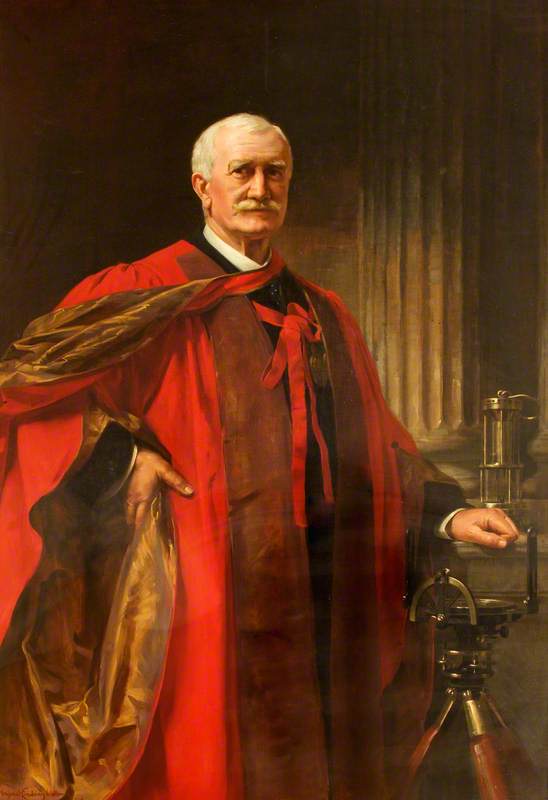
“Later, Galloway was knighted for his research. His advice of watering air during blasting became – and still is – world safety mining law, practised first at Llan Colliery.
“For the coal baron Booker, 1875 was his Annis Horribilis. His only son died at four months; steel was replacing iron. He couldn’t afford to rejig his iron works and couldn’t sell. His iron miners went on strike. The price of coal fell – and the bank called in his debts.
“Then came the Lan disaster. Broken, to save his company, Booker got involved in false accounting. When it came to light, there were two High Court actions – one in Bristol, the second in London, by Government decree – judged by the highest Justice in the land. ‘The matters of Thomas William Booker and company’ became a national scandal.
“Booker was declared bankrupt and everything he owned was sold to pay his debts – except the pub in Gwaelod y Garth, which was worthless for no one had the money to live, let alone buy a drink. Young Tom Booker died a broken and disgraced man.
“After the fall of Booker, the papers record men ‘tramping around unsuccessfully in search of work’, adding: ‘It is feared if something doesn’t turn up there will be a state of semi-starvation in the neighbourhood, as people literally have nothing.”
Law
But successive changes to the law came about because of the explosion. According to the 1910 Coal Mines Act, all roadways had to be watered to keep the dust from rising. Inspired by the Lan disaster, this still stands and, in addition, inert stone dust has to be distributed around a road heading before explosives are fired. Countless lives have been saved as a result.
Today, Gwaelod-y-garth is seen as a peaceful, quiet, and safe neighbourhood, with many 19th-century workers’ cottages forming a conservation area, indicating its heritage-focussed character.
Support our Nation today
For the price of a cup of coffee a month you can help us create an independent, not-for-profit, national news service for the people of Wales, by the people of Wales.


