

Volunteers needed to help uncover Wales’ elusive harvest mice
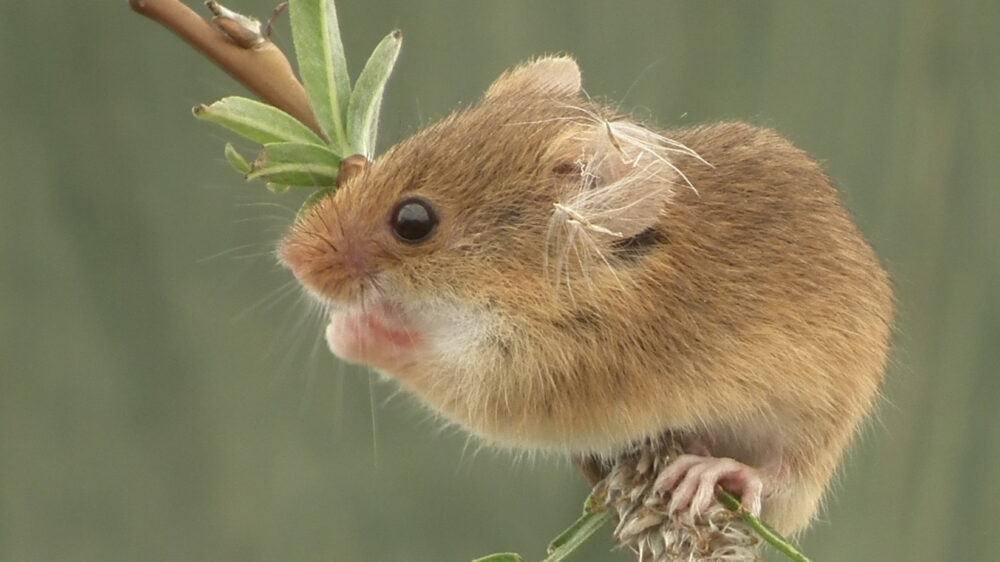
Natural Resources Wales (NRW) is calling on volunteers across the country to take part in the upcoming National Harvest Mouse Survey.
The UK-wide citizen science project, led by The Mammal Society, aims to uncover more about one of Wales’ smallest and most elusive mammals.
Wales is currently underrepresented in the survey, and NRW hopes to boost participation to help fill crucial data gaps. Every new record will contribute to a clearer picture of the species’ distribution, population trends and the health of Wales’ natural habitats.
Woven nests
The harvest mouse (Micromys minutus) is the UK’s smallest rodent, weighing just 4–6 grams. It is best known for its tiny, tennis ball-sized woven nests, which it builds in tall grasses, hedgerows and reedbeds. Despite its distinctive nests, the species is notoriously under-recorded in Wales, making it difficult to assess its true conservation status.
NRW previously supported harvest mouse monitoring during the Mammals in a Sustainable Environment project (2011–2015), which uncovered previously unknown populations. However, data remains limited, and the species is now classed as Vulnerable in Wales according to the 2020 State of Mammals in Wales report, commissioned by NRW. The report estimated a population of around 34,000—but this figure carries significant uncertainty due to a lack of verified records.
The 2025–26 survey season runs from October 2025 to March 2026, a period chosen to avoid disturbing breeding activity. Volunteers of all experience levels are encouraged to take part, and no specialist equipment is required. Surveyors are asked to look for the distinctive, tightly woven nests, typically the size of a tennis ball, hidden in long grass or field margins.
Wildlife monitoring
Liz Halliwell, Terrestrial Species Team Leader for NRW, said: “This is a great opportunity for people across Wales to get involved in wildlife monitoring and make a real contribution to conservation. Whether you’re a seasoned naturalist or simply curious about your local wildlife, your help could make a big difference.”
Matt Larsen-Daw, Chief Executive of The Mammal Society, added: “Good conservation outcomes depend on good data, but our smallest mammals, like the harvest mouse, are often overlooked. Searching for their nests is fun, easy, and makes a real impact. Even confirming the absence of harvest mice is valuable in understanding how the species is faring in the face of climate change and changing land use.”
Harvest mice are omnivorous, feeding on seeds, berries, and insects, and typically live for up to 18 months. Their decline has been linked to habitat loss, agricultural changes, and modern land management practices.
Volunteers can find more information and sign up for the National Harvest Mouse Survey here.
Support our Nation today
For the price of a cup of coffee a month you can help us create an independent, not-for-profit, national news service for the people of Wales, by the people of Wales.


