


Waddle you vote for? Duck art campaign breaks down the Senedd election
Debbie Luxon
A group from the Dyfi Valley has launched a quacky art campaign breaking down the Senedd election.
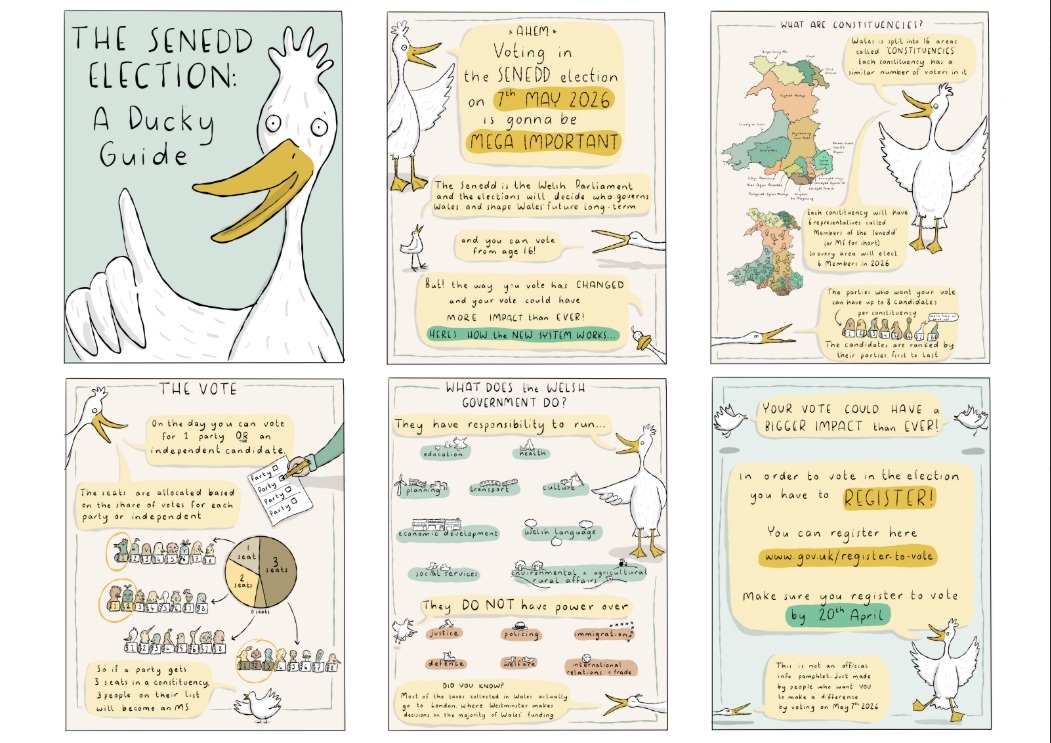
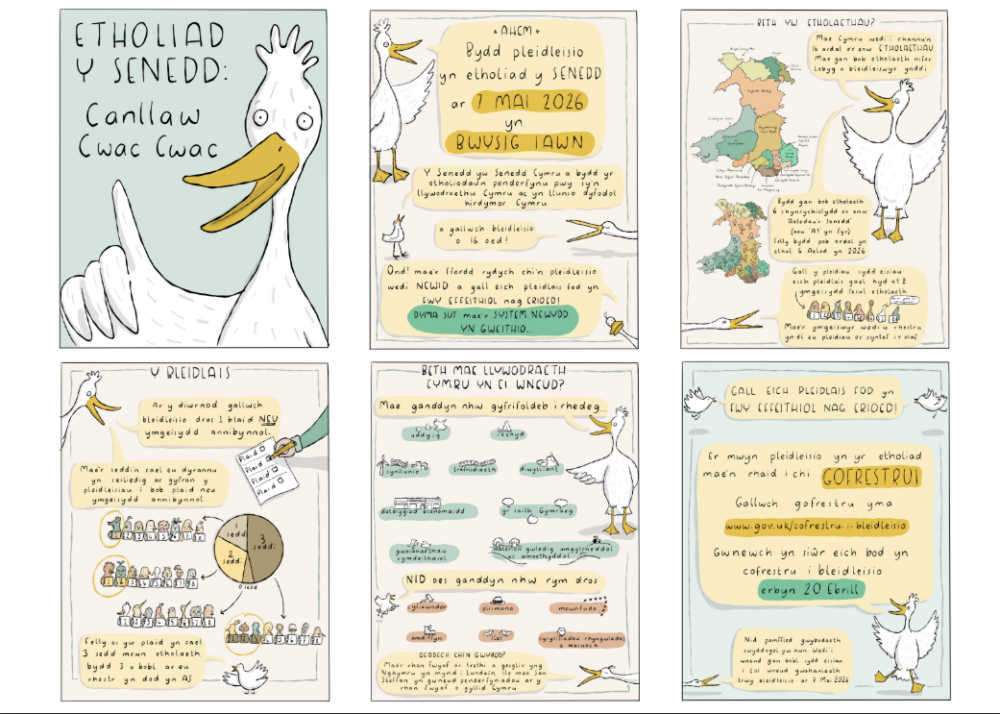
Ducks of the Dyfi Valley ask ‘waddle you vote for?’ in a charming series of graphics designed to make the Senedd election more accessible and encourage people to register to vote.
With the upcoming election on 7 May billed to be the most significant in the Welsh parliament’s 27-year history and now only weeks away, these ducks quack voters through the new Closed Proportional List voting system, who can vote (including 16-year-olds), and what exactly the Welsh government has powers over.
Maia Thomas, the Clarach illustrator whose ducks are bringing the election to the masses, said: “Politics right now is in crisis, but people won’t engage to change things for the better if they don’t think their vote will count or don’t understand what their vote can do.
“Politics and electoral reform can be really difficult to understand and can feel quite overwhelming.
“Bringing lightness, humour and storytelling to what is quite a heavy and often dry topic can help people engage.
“We might not read a long text, but animals are universally relatable, and I think you can learn a lot from them – especially these ducks.”
The ducks are the first collaborative creation of a group of friends disillusioned by the increasingly polarised political discourse in the UK, who got together to do something positive ahead of the May Senedd election.
The team found a way to re-engage with “anxiety-inducing” political discourse by talking whilst simultaneously doing strenuous outdoor work, from drive clearance to tree planting, orchard maintenance, and building walls, coming up with this awareness campaign as they worked.
Sarah Wilson, co-founder of Ieuenctid Machynlleth Youth Club and group member, said it’s crucial 16-year-olds know their vote matters: “In recent years, young people have been failed by successive Welsh governments.
“In this election, they have more power than ever to potentially change their own futures and who better to tell them than some ducks?
“It’s important they understand the new systems and register to vote as soon as possible so they can take advantage of the fact that they can now vote from 16 in the new electoral system.”
The new ‘Closed Proportional List’ system may make votes worth more by ensuring the share of seats each party wins is more closely aligned with the share of votes they receive – this gives smaller parties a potentially greater chance of getting a seat, and is more likely to end in a coalition.
The previous system (First Past the Post) allowed for ‘minority rule’, meaning the winning party usually had the minority of votes – for example, in the 2024 general election, Labour won with 34% of votes, meaning the majority of people (66%) voted for other parties.
Cool ducks
Community organiser Sian Stacey from Taliesin said on this: “This is a huge election for us in Wales, with big changes to how we vote and the impact our votes have. We wanted to make sure that as many people as possible know about this and can see it explained by some pretty cool ducks!
“We hope people see these and register to vote, check out the political parties’ main manifesto points, or do a deep dive into the full manifestos if you fancy it, and turn out to vote on the 7 May!”
Register to vote by 20 April here.
Support our Nation today
For the price of a cup of coffee a month you can help us create an independent, not-for-profit, national news service for the people of Wales, by the people of Wales.
Get more trusted Welsh news
Choose Nation.Cymru as a preferred source in Google News to see more of our journalism.



If there was a duck standing I’d vote for them but as there’s not I won’t be wasting my time.