


Wales leads UK as solar installations rise by more than 18%
Mark Mansfield
Solar installations in Wales have risen faster than anywhere else in the UK over the past year, new figures show.
The number increased by more than 18% between July 2025 and July 2026, compared with around 15% in England, 14% in Scotland and 11% in Northern Ireland.
Official Department for Energy Security and Net Zero data shows Wales had 144,888 installations by the end of July, up from 122,317 a year earlier.
The figures come during a record-breaking year for solar power across the UK, with nearly 172,000 installations completed since the beginning of 2026.
Almost 28,000 were completed across homes, businesses and larger-scale projects during July alone, making it the third-highest month on record after March and June.
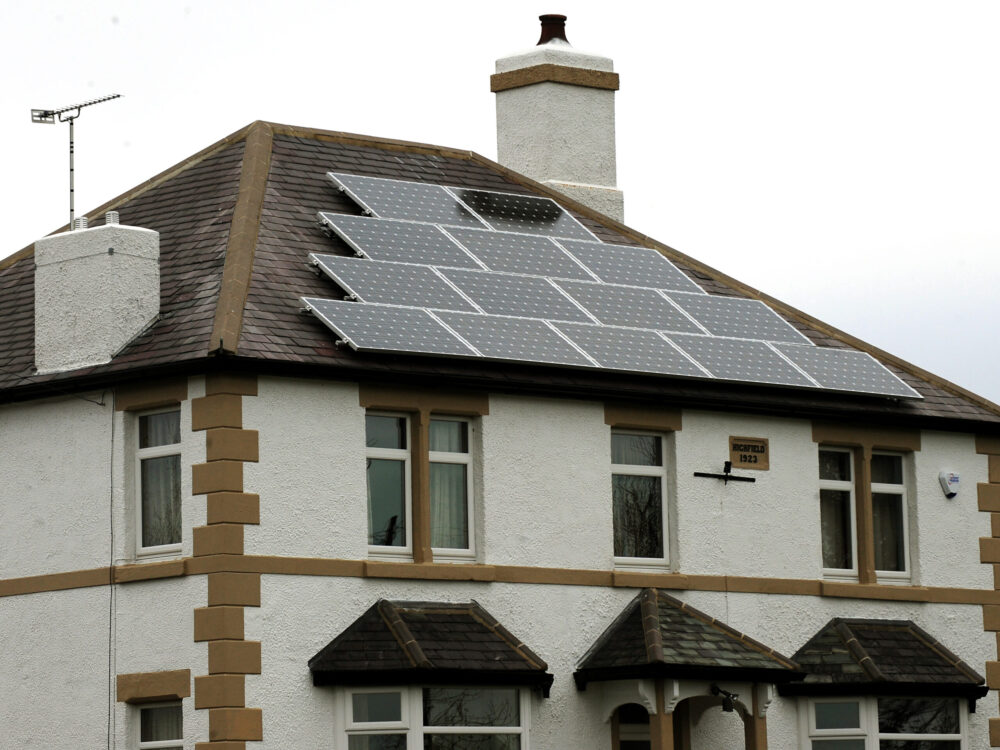
Rooftop solar has been a major driver of the increase, with more than 19,800 installations in July, accounting for more than seven in 10 of the month’s total.
More detailed figures reveal significant differences in the take-up of domestic solar across Wales.
There are more than 124,500 domestic installations across the country’s 32 Westminster constituencies, with a combined generating capacity of almost 496MW.
Ceredigion Preseli has the highest number, with 8,064 installations by the end of July and 36.6MW of capacity.
Montgomeryshire and Glyndŵr is second with 6,739, followed by Caerfyrddin with 6,371, Mid and South Pembrokeshire with 6,350 and Monmouthshire with 6,205.
The figures show a marked contrast between predominantly rural areas and Wales’ two largest cities.
Cardiff’s four constituencies are clustered near the bottom of the rankings. Cardiff East has 2,232 installations, Cardiff West 2,139 and Cardiff South and Penarth 2,088.
Cardiff North has 1,998 – the lowest number of any Welsh constituency.
Swansea’s constituencies also have considerably fewer installations than the areas towards the top of the table.
However, Neath and Swansea East was among the areas recording the strongest growth during July, adding 91 domestic solar systems.
Monmouthshire recorded the largest increase during the month, adding 99 installations, narrowly ahead of Ceredigion Preseli with 98.
UK data
The underlying DESNZ data shows England had 1.68 million solar installations at the end of July, up from around 1.46 million a year earlier – an increase of approximately 15.1%.
Wales’ increase over the same period was around 18.5%, while Scotland recorded growth of approximately 14% and Northern Ireland around 11%.
The latest official solar statistics form part of the UK Government’s Energy Trends data, with DESNZ publishing its latest release on August 27.
The UK Government’s Energy Minister Michael Shanks said: “From the South East to Scotland, households across Britain are embracing solar power and taking control of their energy.
“Record numbers of families are installing solar panels to generate clean, homegrown power, helping them cut their energy bills.”
Disruption
The growth comes against a backdrop of rising energy costs, with disruption to global oil and gas supplies contributing to higher household bills.
Ofgem announced this week that its energy price cap will rise by 4% from October, taking the annual bill for a typical household using gas and electricity to £1,723.
The UK Government is also seeking to expand access to the technology through changes allowing plug-in solar panels to be sold for use in Great Britain.
The smaller systems can be fitted to locations such as balconies and fences and feed electricity directly into a home’s electricity network.
Major retailers including Currys, B&Q, Screwfix and Amazon are expected to offer the systems following the rule change.
Mr Shanks added: “Now, by making plug-in solar available across Great Britain, we’re making it easier than ever for more families to benefit from Britain’s solar revolution.”
Support our Nation today
For the price of a cup of coffee a month you can help us create an independent, not-for-profit, national news service for the people of Wales, by the people of Wales.
Get more trusted Welsh news
Choose Nation.Cymru as a preferred source in Google News to see more of our journalism.



Cost of a Nuclear power plant and you can do a lot of good nation wide with solar and battery instal. Bring cheap power quicker than a nuke plant ever will.
Plug in solar is very interesting.
https://www.gov.uk/government/news/households-can-save-as-plug-in-solar-panels-come-to-market
Not so good for the ‘Hen Oed’, I doubt I would see a return on a modest investment but the ability to boil a kettle without calling on Electric Mountain to spin my meter is something to seriously look into. What do the preppers use, do you know Jeff?
The burn burn wood something to make nettle tea.
Plug in solar will be even more interesting when they allow it to be combined with a battery to save the energy for the evenings when most households use the most electricity. In Germany as many as 2.5 million have balcony solar, a quarter with batteries, which is about 2.5 gigawatts ie equivalent to a nuclear power station on a sunny day. Combine with batteries and you shave the top of the peaks of electricity demand, ridding us of dependence, for part of the year at least, on gas peaker plants and lowering the cost of electricity as has just… Read more »
For now the price point is too high for me. Battery on a EV tariff is more attractive but for someone renting, drop the price and/or assist with purchase and this can make a big difference.
And then all the new data centres will eat up their capacity too. Still failing to see the bigger picture are we?
All driven on the capitalist dream of getting rid of the workers. Data centres built on sand.
No doubt driven not just by goernment incentives but also by the high price of electricity and lower cost of installation in Wales.