


Wales records driest July since records began
Nation.Cymru staff/agencies
Wales has experienced its driest July since records began nearly two centuries ago, following a month of exceptionally low rainfall, record sunshine and high temperatures.
Provisional Met Office figures show Wales received just 9% of its average rainfall during July, with less than half the amount recorded during the previous driest July in 1911.
The country also recorded its joint hottest July on record and its sunniest July since records began.
For Wales and England, July was not only the sunniest July on record but the sunniest calendar month ever observed, according to the Met Office.
The figures come after the whole of Wales was declared to be in drought following prolonged dry weather and successive heatwaves.
England also recorded its driest July in records dating back to 1836, with both countries receiving less than half the rainfall recorded during the previous record dry July of 1911.
Met Office science manager Dr Amy Doherty described July as a “truly remarkable month” in the UK’s climate record.
“The combination of record-breaking dryness, exceptional warmth and unprecedented sunshine has delivered one of the most notable summer months in our historical records,” she said.
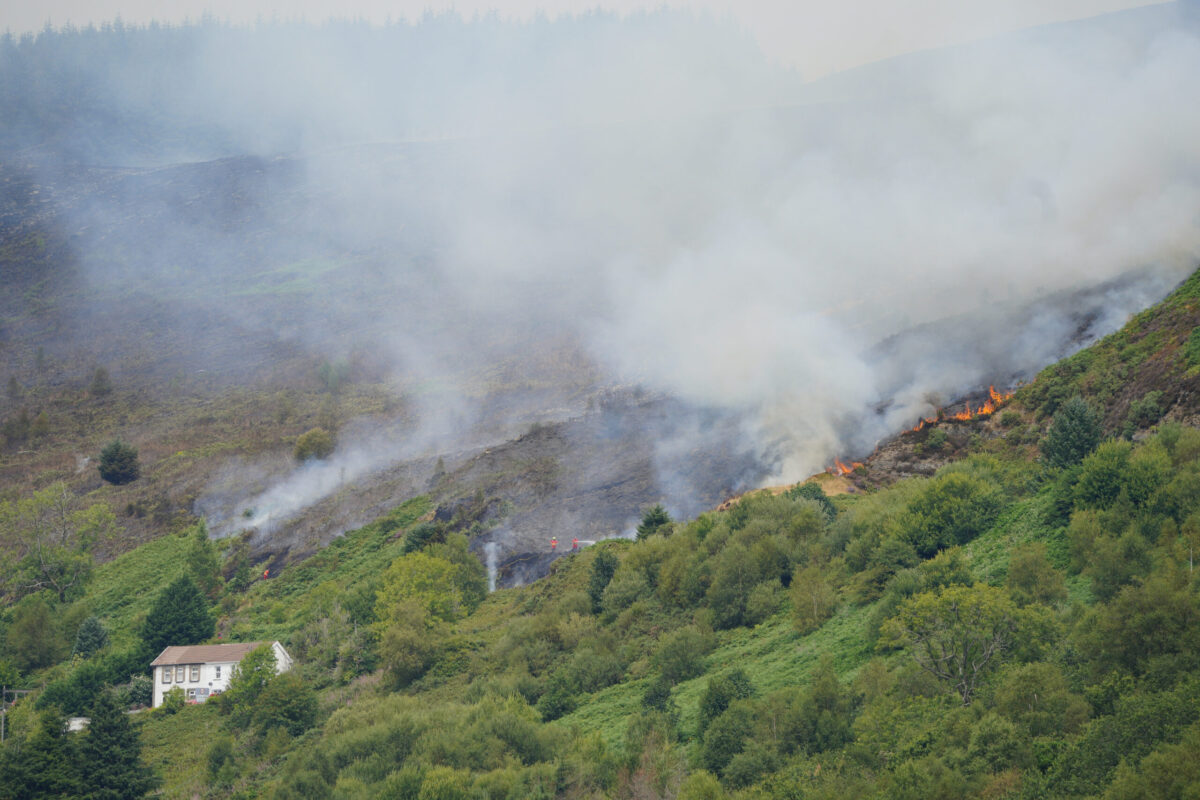
The summer of extreme weather has seen two record-breaking heatwaves, in May and June, followed by two more heatwaves in July which have fuelled drought and wildfires.
The May and June heatwaves were associated with more than 2,800 excess deaths.
The UK is facing the impacts of increasingly extreme weather such as droughts and heatwaves fuelled by climate change, which is caused mostly by burning fossil fuels in power plants, vehicles, home heating and industry, as well as planet-warming emissions from agriculture and clearing forests.
Farming
The prolonged dry conditions are also putting increasing pressure on agriculture.
Farming leaders have described the drought as “one of the most severe” many farmers and growers have experienced, with poor harvest yields, difficulties accessing water for fruit and vegetables and some livestock farmers already using feed stored for winter.
National Farmers’ Union president Tom Bradshaw said: “This is one of the most severe droughts many farmers and growers have lived through.
“Harvest yields are looking poor, farmers are struggling to access water to irrigate fruit and vegetables, and livestock farmers are having to use grass they cut this spring for their stores of winter feed for cattle as there’s very little grass growing now.
“If this summer teaches us anything, it is that we must prioritise food production.
“We can’t produce food without water.”
Rivers and the natural environment are also struggling with low water levels following the prolonged period of dry weather.
Record sunshine
The exceptional sunshine during July also helped solar power reach a new UK monthly record, with the technology providing 14.4% of all electricity during the month.
Solar supplied a peak of 44% of electricity generation for a period on the morning of Sunday July 12.
The record-breaking month comes during a summer in which drought, heatwaves and wildfires have demonstrated the impacts of prolonged hot and dry conditions.
Temperatures are expected to gradually decrease in the second half of the week, with more unsettled weather forecast for parts of the UK.
Support our Nation today
For the price of a cup of coffee a month you can help us create an independent, not-for-profit, national news service for the people of Wales, by the people of Wales.
Get more trusted Welsh news
Choose Nation.Cymru as a preferred source in Google News to see more of our journalism.



Manmade global warming coming at us fast. Wonder if this is an extinction event. The Earth will survive. Just it will be there without us. But drill baby drill eh.
We had 35% more rain last Feb, my spring is fine…but cave dwelling has been tried before as most of you will know…