


Wales’ wildlife pushed to breaking point as rivers hit lethal temperatures
Richard Youle, Local Democracy Reporter
Experts have said that wildlife in Wales will take time to recover, after river temperatures reached tropical levels, trees turned brown, and bumblebees overheated this summer.
The temperature of the lower River Wye hit 27.7C during a heatwave at the end of June – warm enough to power a hurricane in certain conditions at sea.
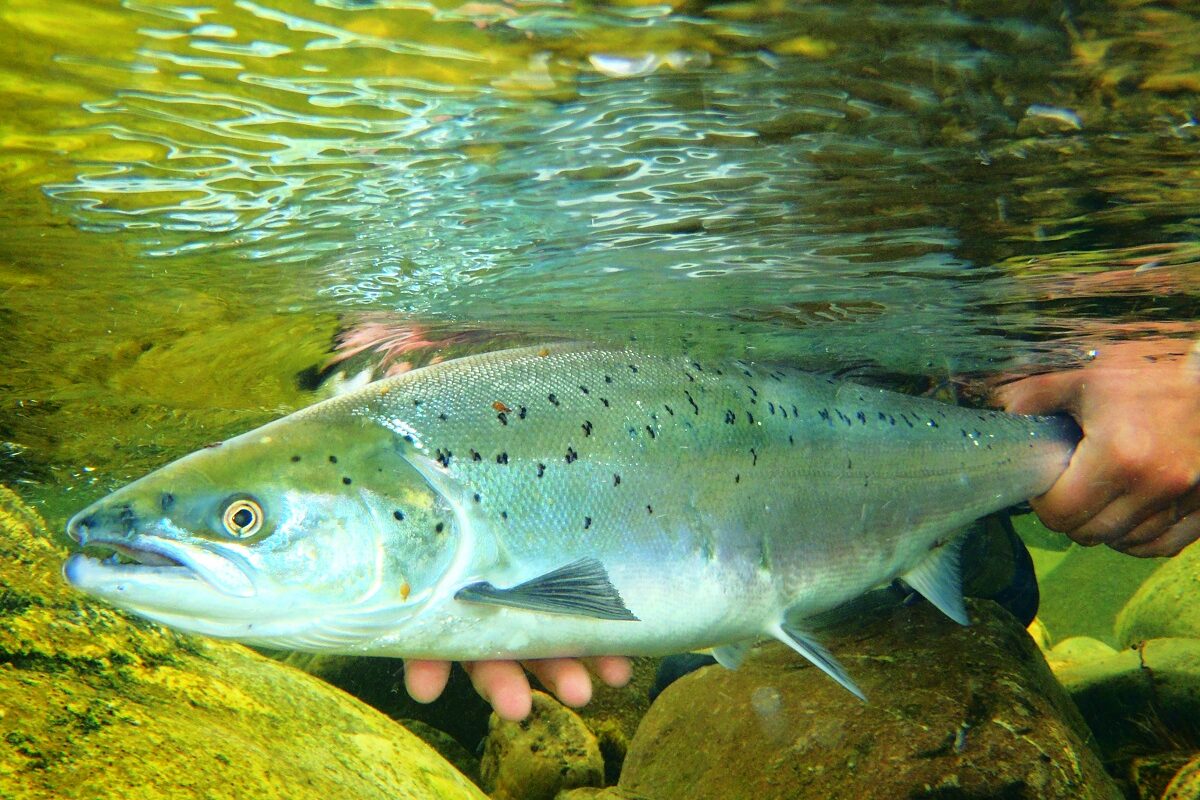
A senior officer at environment body Natural Resources Wales (NRW) said he was concerned the country’s 22 principal salmon rivers might be coming to a point where they could not host a sustainable population of the iconic fish.
“We are fairly close to that on a number of our rivers,” David Mee, lead specialist adviser for freshwater and migratory fish at NRW, told the Local Democracy Reporting Service (LDRS). “It’s very worrying. Salmon are probably the most vulnerable freshwater fish to low river flows and high temperatures. They need lots of clean, cold water to survive.”
‘Lethal for adult salmon’
Mr Mee said NRW advises that all salmon and sea trout angling should cease when river water temperatures reach 20C. “Above 20C the risk of the fish succumbing post-capture (catch and release) is much higher,” he said.
Between March 3 and August 17, he said, the average water temperature in the lower River Wye exceeded 20C on 72 days.
“At 27-29C it starts to become lethal for adult salmon,” said Mr Mee. “We had 27.7C in the lower Wye at the end of June.”
Declining numbers of salmon returning from the Atlantic to spawn in rivers in Wales and elsewhere isn’t new – they’ve shrunk by around 70% across the North Atlantic in recent decades – and pollution, invasive non-native species and physical modifications to rivers hindering access are factors.
But high temperatures and low water levels have been exceptional this summer.
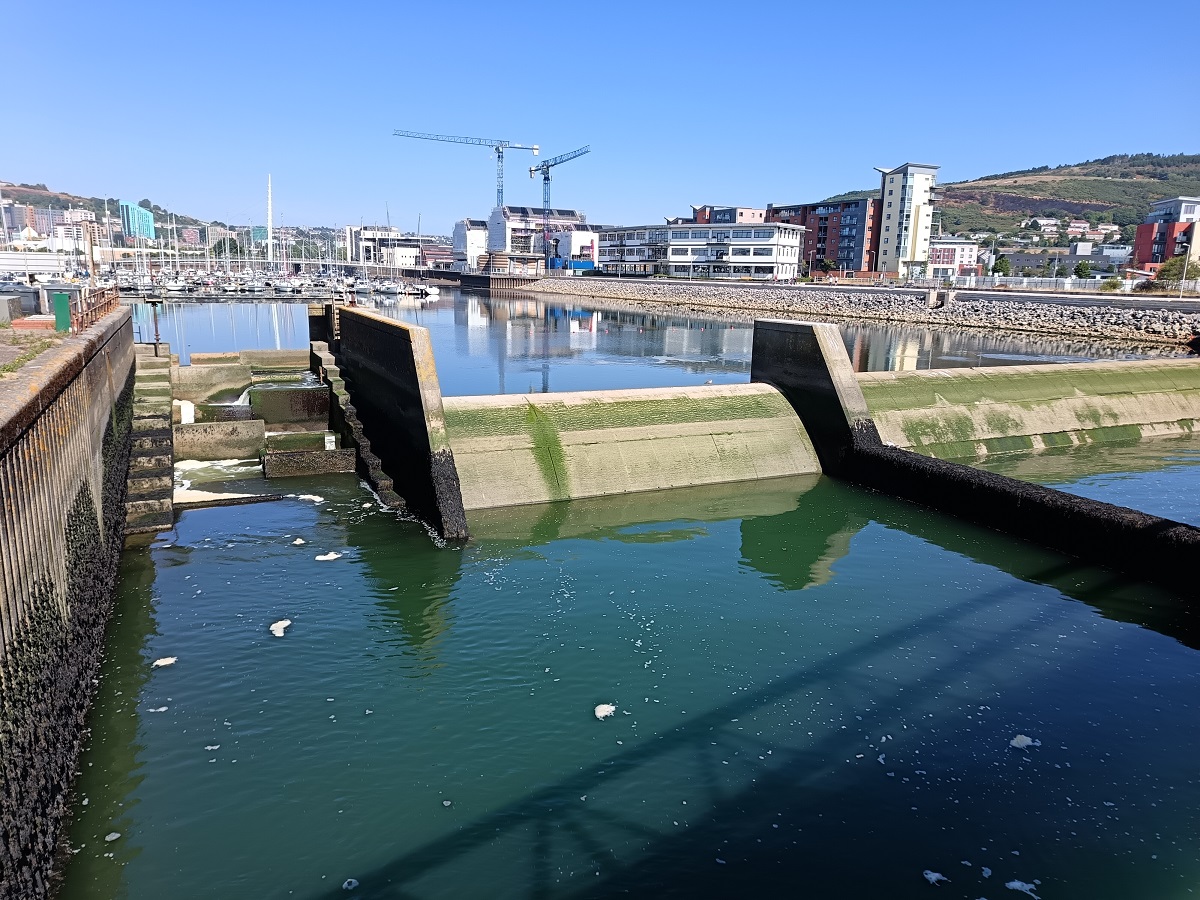
Mr Mee said lower river levels reduced the number of returning adults, while for those that did return and spawn in the cooler upper reaches the shrinking habitat meant fewer young baby salmon – called fry – survived.
Mr Mee said there have been reports of the odd dead fish but thankfully no mass mortalities. The warming climate isn’t just a summer risk though.
“In 2016 we saw a failure of salmon spawning recruitment and we put it down to elevated temperatures in November,” he said. “Anything above 12C starts to be a mortality risk for (salmon) eggs.”
Mr Mee, who has worked at NRW and its predecessors for 38 years, said fish populations had a huge capacity to recover from such events. “However, when you are getting events year after year after year then it’s going to have more profound effects at a population level,” he said.
“We’ve been having water temperatures above 20C on a fairly regularly basis over the last five to six years. There is a lot of concern about salmonids (fish including salmon and trout) and particularly migratory salmonids.”
Mr Mee said peatland restoration in upland river catchments has been increasing in Wales and that this can improve water retention and water quality, moderate run-off from the land, and smooth out flood peaks – all good from a salmon perspective.
He also said tree-planting along rivers to provide shade and improve riverbank stability was taking place although it was somewhat fragmented and catchment-specific.
“It’s going to take quite some time for our rivers to recover,” he said.
Afonydd Cymru, which represents several river trusts, said some Welsh rivers had recorded their lowest levels this summer while others had benefited from extra water being released from reservoirs. Rainfall, it said, couldn’t come soon enough.
‘The pressure goes beyond adaptation’
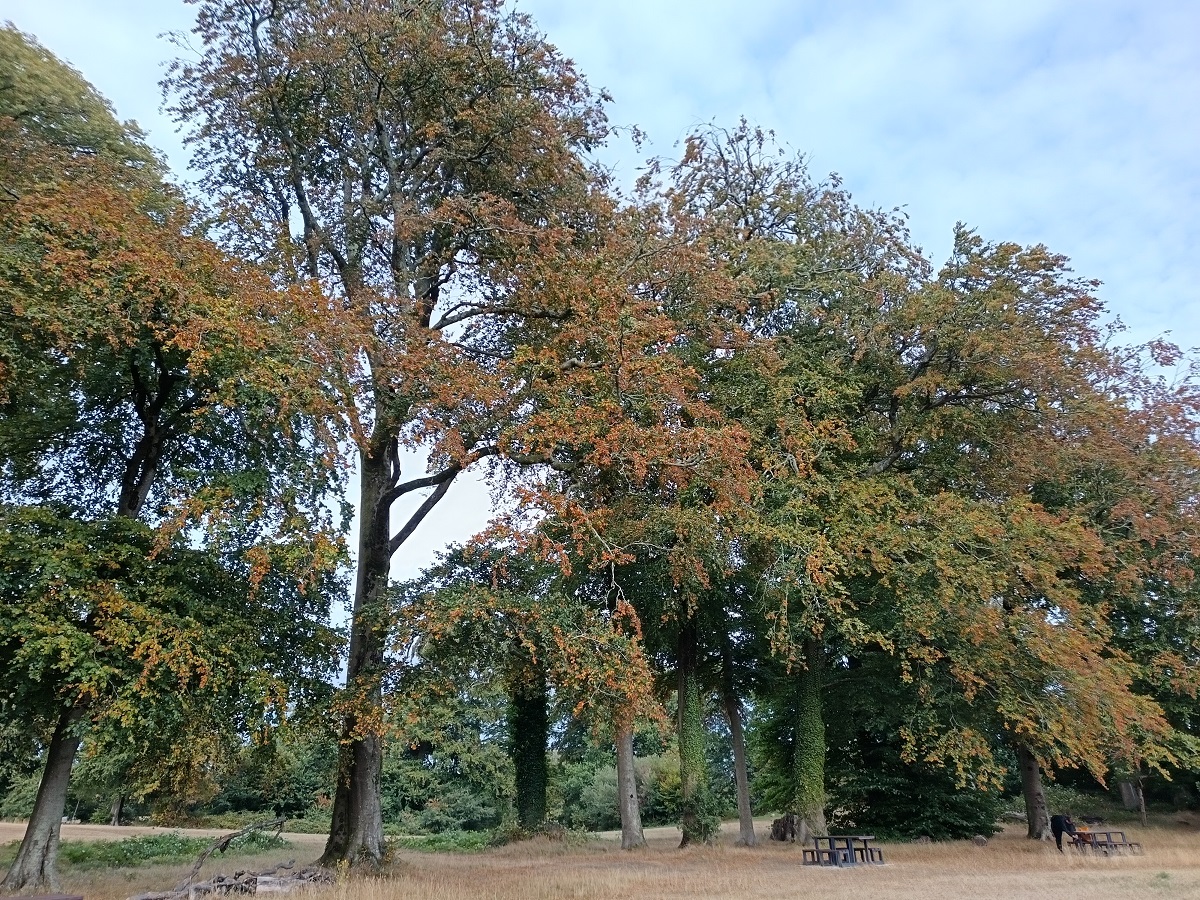
Trees have also had to adapt to fierce heat and diminishing soil moisture and many are turning brown prematurely. In some cases trees can shed whole branches, seemingly out of the blue, known as summer branch drop.
Swansea University professor of geography Mary Gagen said: “What trees are doing in a drought is getting rid of stuff they can’t spend time on. It’s an adaptation, and all trees do it.”
Prof Gagen explained that trees drew water up in their trunk “like a large straw” to make sugars and enable leaves to transpire. “They have to evaporate water out of holes in their leaves – they can’t stop doing that,” she said.
Soil moisture drought places more stress on trees and Prof Gagen said instances of summer branch drop were increasing, judging by conversations she’s had with tree officers and arborists.
In London, staff who work for the Royal Parks, which manages several green areas such as Hyde Park, were advised last month not to leave deckchairs under tree canopies as ” an additional precaution” because of summer branch drop risk.
Prof Gagen said younger trees could partly compensate for branch drop by growing more foliage elsewhere and increasing their root mass, while older trees were already “retrenching” and shrinking their canopy.
She reckoned more older trees would die sooner than they would have if hot, dry summers continued and that younger trees would struggle to recover. “We’ve had five heatwaves this summer,” she said. “The pressure goes beyond adaptation.”
Prof Gagen has heard a recording of “pop” sounds captured from within a very drought-stressed tree which denoted air bubbles infiltrating the water column as vessels in their trunk worked harder – a process called cavitation. “It’s like Morse code,” she said, adding that the air bubbles had nowhere to go.
Without water for a prolonged period a tree’s prospects could be grim. “Sooner or later its internal water column ends up pulled apart by the bubbles,” she said.
Earlier this month footage emerged of young plantation conifers going up in flames in Rhandirmwyn, north of Llandovery, Carmarthenshire. The fire was declared a major incident and residents were evacuated from the remote area.
Prof Gagen said it was unusual for whole trees to burn in the UK. Some pines were adapted to fire, she said, via thicker bark on the lower part of their trunk.
She said she’d been concerned about a wildfire in Scotland which “laddered” up mature trees and exposed their roots. “If a fire gets up into the canopy or into the roots you do a lot of damage,” she said.
Conditions have been so hot and dry in Wales and England that plant material generally has become more flammable. “It’s why the fire risk has been so high,” she said.
The UK’s three warmest years since 1884 were 2025, 2023 and 2022. An attribution study about the 2025 heat by the Met Office found that human-induced climate change made the record-breaking year approximately 260 times more likely.

‘A super-organism’
Populations of bumblebee, which help pollinate some crops, declined after extreme heat in 2022 according to the Bumblebee Conservation Trust. Bumblebees are adapted to the UK’s historically cooler climate and in hot temperatures they can struggle to fly without overheating, the trust told the BBC. “Once their internal body temperature is much above 40C, they literally start dying, they start keeling over,” said the group’s science manager Dr Richard Comont.
Lower temperatures and thundery rain are forecast in Wales this week – and the country began summer in a good position water-wise as rainfall in the preceding 12 months was 110% above the 1991-2020 average according to the Met Offfice.
That rain combined with warm weather led to a brilliant early crop of honey for beekeeper Gruffydd Rees, of Dryslwyn, Carmarthenshire.
He has around 500 honeybee hives in the county and neighbouring Ceredigion and Pembrokeshire, half of which he crops for honey with the remaining colonies sold to beekeepers.
Mr Rees said: “We had a record spring crop. Now, because the last few weeks has been so dry, nothing much extra has come in because plants have died of thirst. That’s very unusual.
“Normally we would get not much of a spring crop and then get a good summer crop. What would have been amazing is a bit of rain in the evenings and on some days.”
Mr Rees, of family business Gwenyn Gruffydd, said he still expected a better than average harvest overall this summer. He estimated that this could equate to around 40kg of honey per hive.
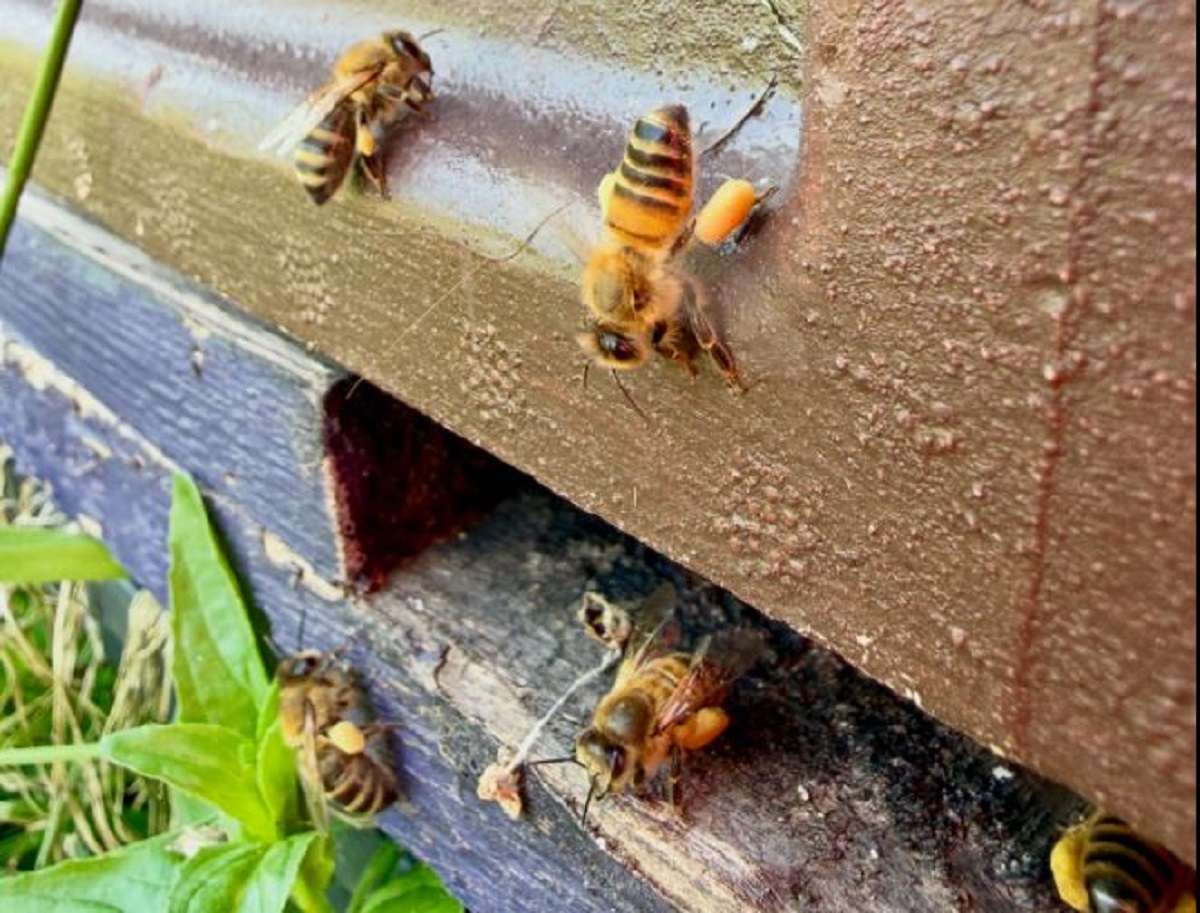
Mr Rees explained that honeybees could regulate the temperature within a hive, vibrating in cold weather to generate heat and then fanning excess heat out in heatwaves. He said: “They have a built-in air conditioning system.”
He added: “Honeybees are very adaptive. Their genetic code is huge. They’re a super-organism full of reason.”
Support our Nation today
For the price of a cup of coffee a month you can help us create an independent, not-for-profit, national news service for the people of Wales, by the people of Wales.
Get more trusted Welsh news
Choose Nation.Cymru as a preferred source in Google News to see more of our journalism.



