


Warning issued over highly toxic invasive plant
Mark Mansfield
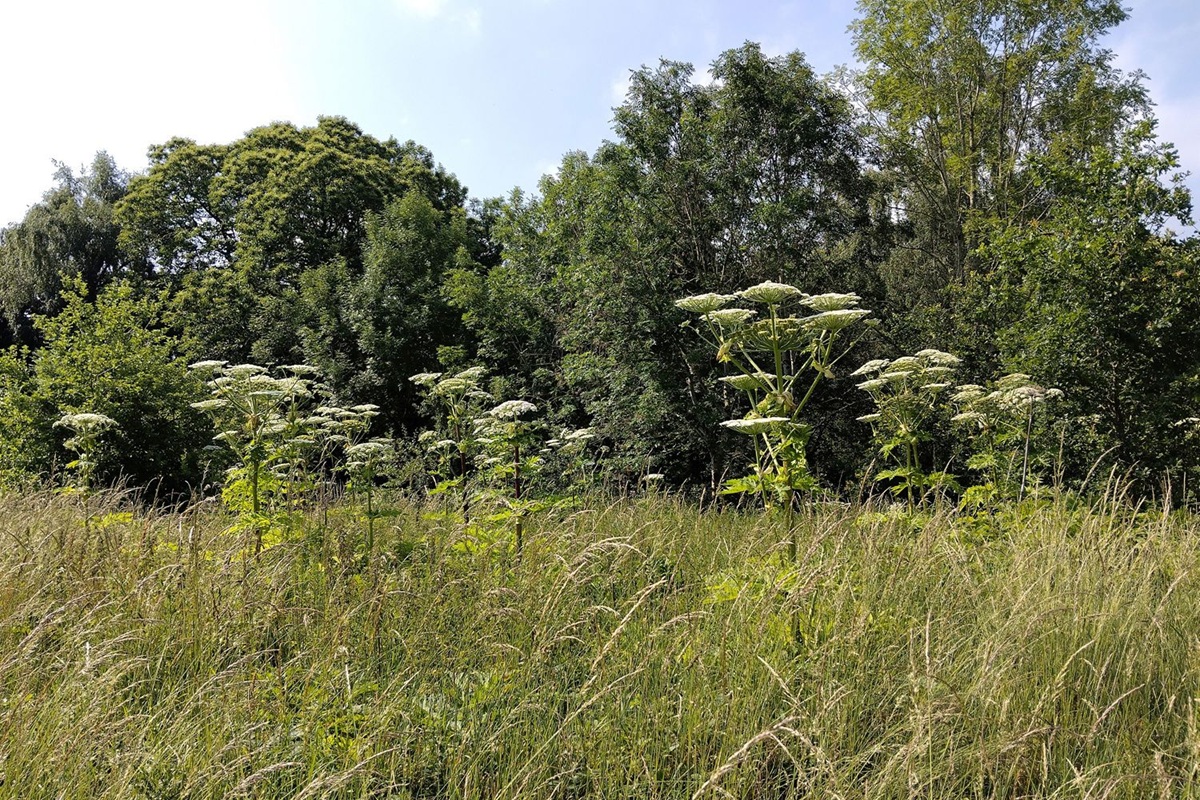
People are being warned not to touch a highly toxic invasive plant which can cause serious burns and leave skin sensitive to sunlight for years.
Recent sightings of giant hogweed have been reported along the River Usk near Glangrwyney, as well as at Llangattock, Gilwern and Govilon.
Natural Resources Wales’ Four Rivers for LIFE project and Bannau Brycheiniog National Park have issued the warning and are asking people to report sightings rather than attempt to touch or remove the plant themselves.
Giant hogweed can grow up to five metres tall and poses a risk to both people and animals.
Its sap is phototoxic, meaning contact with the skin followed by exposure to sunlight can cause severe burns and blistering. The effects can recur for years after exposure.
The plant can be found across the UK, particularly alongside lowland riverbanks, in rough pasture and on wasteland.
It was introduced to the UK from the Caucasus Mountains and Central Asia during the 19th century as an ornamental plant but subsequently escaped into the wild.
It spreads by seed and can out-compete native vegetation.
Identification
Giant hogweed can be mistaken for common hogweed, cow parsley or elderflower, but its considerable size is one of its most distinctive features.
It also has thick, hollow stems with purple blotches and very large, sharply jagged leaves.
Beverley Lewis from Bannau Brycheiniog said: “Due to its potential hazards and risk to humans and animals, BBNP will work with landowners to identify plants and advise on effective methods of control.”
‘Extremely careful’
Susie Kinghan from Four Rivers for LIFE said: “As we move into the growing season and the summer months it’s important that the public are extremely careful around giant hogweed.
“Where it grows, giant hogweed out-competes native flowers and reduces species diversity.”
The NRW Four Rivers for LIFE project has been working with Bannau Brycheiniog officers and volunteers to control invasive plants along the River Usk for the past four years.
It has also been working with the Wye and Usk Foundation specifically to control giant hogweed.
Anyone who spots the plant is being asked not to touch any part of it and instead report the sighting to their local Biological Records Centre or through the LERC Wales app.
The Four Rivers for LIFE project is funded by the EU LIFE Programme with support from the Welsh Government.
Support our Nation today
For the price of a cup of coffee a month you can help us create an independent, not-for-profit, national news service for the people of Wales, by the people of Wales.
Get more trusted Welsh news
Choose Nation.Cymru as a preferred source in Google News to see more of our journalism.




The dangers of this plant are well-known and rightfully have been clearly repeated here. This article could however have been much better prepared if the objective of effective public service reporting is the goal. In particular a more general map of locations found (not detailed locations, just general areas for the benefit of visitors) would eliminate the need to look up these locations individually. More importantly, on the matter of identification, images of leaves, stems, umbels – without recourse to vague and subjective descriptions like “large” and “sharply jagged” leaves – would have greatly improved the usefulness and removed the… Read more »