


Water company’s ‘taste and odour’ test made me ill, says ex-employee
Martin Shipton
Serious questions have been raised about a water company’s assessment of water quality after a former employee revealed worrying details of how tests are undertaken to detect contamination.
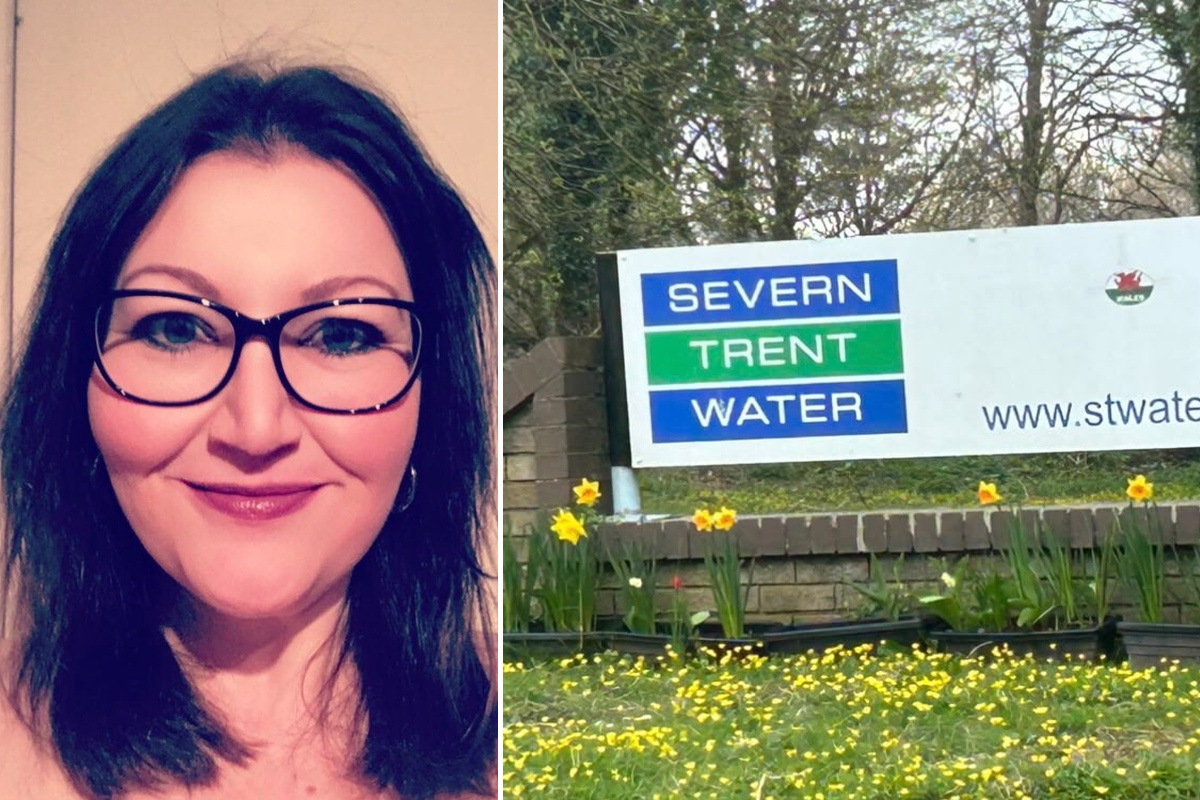
Tracy-Ann Morgan, who worked for Severn Trent Water in Bridgend for five years, says she was repeatedly made ill by smelling and tasting contaminated water samples taken from homes where residents had complained about the quality of tap water.
The company claims that her concerns have been investigated and proven false.
There are two main water companies serving customers in Wales, Dŵr Cymru and Hafren Dyfrdwy (created by the merger of Dee Valley Water and the Welsh part of Severn Trent Water). Two further companies, Severn Trent Water and United Utilities, border Wales and hold licences to take water from Wales to serve customers in England.
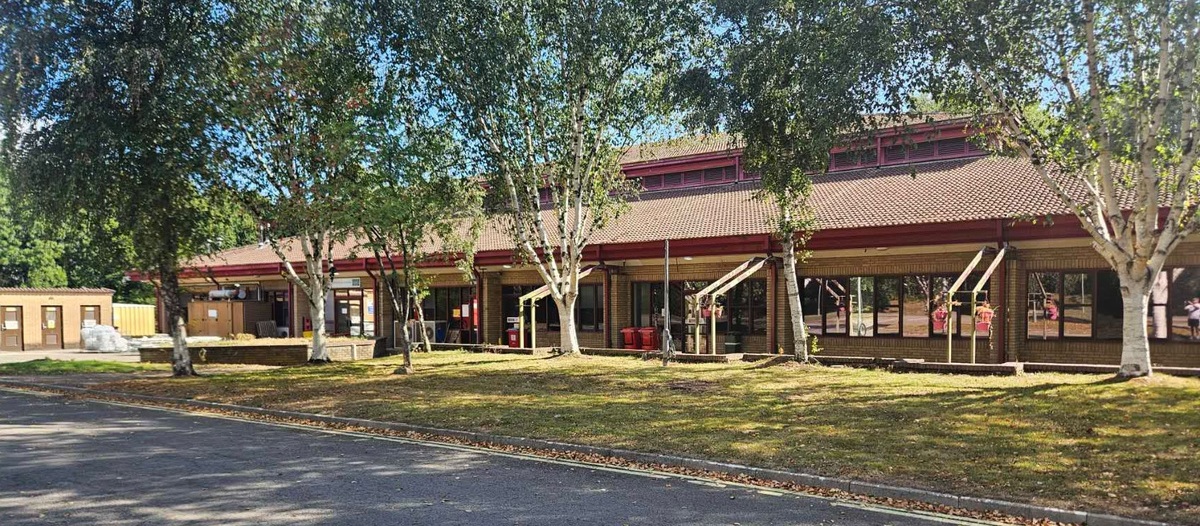
Severn Trent has a Water Chemistry Laboratory at Bridgend Science Park, on the town’s southern outskirts.
Ms Morgan was part of a team of testers who would assess water samples for taste and odour.
Nation.Cymru has seen reports made by Ms Morgan in which she describes the nauseous nature of some of the samples she tested, and how they affected her.
In one report she stated: “T&O [taste and odour]. It is not a job I like doing. I have mentioned this many times and I did ask not to be on the panel. Being on the T&O panel is not an option, it is mandatory for people who pass screen. This is something I have accepted. It is part of my job so I do it because I believed our personal safety had been taken into account.
“In a lab of 50 people only 12 are panellists. Everyone else is too sensitive. So with three panelists needed each day, taking into account holidays & sickness it means people will be on the panel multiple times in a week. Meaning that when contaminated samples are submitted for human taste & odour, it’s the same people are having continued exposure to possible toxins.
“I am raising this HSA [health and safety referral] for my own safety.
“During three consecutive days of T&O I was exposed to samples that contained fumes that affected me adversely. These samples were Taste and Odour. I did not taste the samples. Just inhaling the odour was enough to bring on a head rush, a feeling of being woozy and nauseous. I found my breathing deepened. At the time I didn’t need to use my asthma inhalers, but I found later in the evening I needed to use both the Qvar and Ventolin inhalers. Something I don’t normally do. I also became facially flushed after inhaling these fumes. This faded once I was in fresh air, but I developed a headache that lasted till bedtime. My head was clear when I woke up the next morning.”
Ms Morgan went on to detail the numbered samples which had made her feel ill.
A company response said Ms Morgan may have been affected worse than the other panellists because she took deep breaths when conducting analysis for odour.
Asthma
In an email she wrote to her union rep, Ms Morgan stated: “On several occasions I have been subject to samples that contained fuel. I have a low tolerance to certain smells because of my asthma. I also have [detected] taste from medication I take. None of my issues matter. I’ve been told point blank that I will remain on the T&O panel, This is where people are not actually hearing what I am saying. My manager’s only concern is that I stay on the panel.I just asked that we not retest fuel samples.”
Despite the company’s own protocol stating that samples presenting with a strong solvent, fuel, petrol or diesel should not be reanalysed, Ms Morgan insists that they were – and that they were tested when they had been diluted.
A trade union rep drew managers’ attention to the fact that laid-down health and safety procedures aimed at protecting employees were not followed. On one occasion, in a message seen by Nation.Cymru, the rep wrote: “I have been getting some questions from members over the taste and odour processes in the water quality area. The questions are from a few roles. First in the QT [Quality Technicians] area when investigating potential concerns and then in the labs when doing the taste and odour panels.
“What I am getting at is the failure to follow processes for the safety of our staff. I am not an expert in this area but what is being relayed back to me is a perceived pressure to analyse samples that the individuals are not comfortable doing. I have seen the R/A [risk assessment] and documentation and would like to actually revisit it with the teams to make sure we are following out the correct duty of care. I am not sure if the R/A go far enough in terms of personal wellbeing. If you could ask your teams to revisit this it would be good. The staff in these areas do feel like their wellbeing could be better protected by a clearer process.”
On another occasion the rep wrote a Safety Incident report, stating: “On the 17th of April a call from PH&S [Severn Trent’s Public Health and Standards department] quoting 5 samples [giving their numbers] sent in for T&O [taste and odour] suddenly became ODOUR ONLY samples. The T&O supervisor was told immediately of this.
“Unfortunately, the panel had already finished. Mean[ing] all members of the panel has [sic] put these odours ONLY samples in the mouth.
“No one on the panel was informed of the risk associated with having contaminated samples in their system. If there is no risk at all to the humans ingesting & inhaling unknown samples, then why is information being omitted from the panel?
“These odour only samples then went on to have further analysis.
“ … Regarding openness and transparency I feel information is deliberately hidden from panel members. This was backed by the fact that, during a weekly team meeting it was mentioned that calls from PH&S should now be put through to T&O and not to take a message.
“This is yet another instance of T&O samples being tasted because the odour-only issue came too late.
“The reason for this HSA is the disregard to the safety of the panel, failing to address legitimate concerns, omitting to inform the panel of a potential risk and not addressing yet another failure in communication from PH&S about NOT TASTING samples.”
Ms Morgan told Nation.Cymru: “We were told at a meeting by supervisors that we would no longer assess samples for odour only if they contained bits. We would have to make that decision for ourselves when we poured the sample into our glass.
“Fails equalled do not drink (DND) orders being issued. DND meant fines.
“At present one of the supervisors has no sense of smell.
“T&O is not a main job. It’s treated as a side hustle. T&O is quick and fast, because analysts have their daily analysis to do.
“Having humans on the panel is cheaper than instrumental analysis that fails more samples. Humans are less sensitive and pass more samples.
“If samples failed then a full instrument analysis was done. The panel never had access to the results.
“PH&S would often ring the lab and ask if someone could just take a secondary. ‘Quick’ smell. I referred them to the site manager or her husband, a T&O supervisor.
“There was no risk assessment, just a general only. Nothing that covered the risk of exposure to panel members.
“After watching Michael Sheen’s documentary on PCBs, I now have questions as to what I actually put in my mouth. The panel is like wine tasting but in no way pleasurable.
“Panellists were not allowed to know where samples came from or what was in them. The samples were sent to us following a sample plan from PH&S. This included raw water, river water, and surface water. Any water that was called into question was given to the panel,
*New mains water T&O was performed by a single panellist, alone and with no supervisor – smelling and tasting wherever there was room. This could be in a corridor or at the back of the quality room.
*The smelliest samples were from Cropston Reservoir [in Leicestershire]. This is raw water. It’s not wholesome and not from a customer’s tap.”
Site visits
Ms Morgan added: “Site visits from UKAS (the UK’s official standards accreditation body), DWI (the Drinking Water Inspectorate), visitors and the annual token visit from the CEO are all pre-arranged.
“For example, UKAS is every October, normally the last week. For these visits the site is prepared. Mess is hidden. T&O testing is adjusted to much slower speed.
“No one sees the real site. They get the staged version.
“It’s a Water Quality, Hygiene & Environment lab. Yet it has no health inspection. The canteen is held to a higher standard than the lab.
“To me it felt like Severn Trent Water Bridgend was an ‘out of sight, out of mind’ lab. Left on its own. It wasn’t in England – it was disconnected from Severn Trent Water and left to run itself.
“It promotes itself as a green lab yet they ship hundreds of samples to Bridgend overnight. T&O is not run over the weekend, unless Severn Trent Water’s public health and standards request it. (I’m assuming customers do use water on a Saturday and Sunday)
“Bridgend also switched from glass reusable pipettes to single use plastic, spending over £10,000 on the switch. Every bit of useless waste is customer money. Many times I’ve been tempted to tell my friends in Birmingham exactly where their bill money goes.”
Customers
Severn Trent Water customers have raised concerns about the quality of drinking water supplied by the company. In June 2025 the Drinking Water Inspectorate issued Severn Trent Water with a warning letter following the supply of water from Boughton Water Treatment Works in Chester with an abnormal change in taste and odour. The investigation followed rejection of the water supply by consumers.
A senior water industry professional who spoke to us on condition of anonymity said: “I am shocked at the information that has been provided.
“The public expect the highest standards when it comes to the safety of their drinking water and have a well founded belief that water quality in the UK is of the highest possible standard.
“That belief is underpinned by robust processes and testing.
“It is extremely concerning that such deficiencies have been highlighted and given the highly regulated nature of the water industry people will be justified in questioning how such apparent breaches can be taking place.
“I have faith in the water industry and am proud to be a part of it, but it is a sector that is under the spotlight for a number of reasons. The overwhelming majority of staff within water companies are working tirelessly to restore public confidence.
“It is therefore essential that Severn Trent Water undertake an urgent and robust inquiry, supported by the DWI, to understand what has happened in their Bridgend laboratory and take immediate steps to ensure that public confidence is restored.”
‘Misleading’
A Severn Trent spokesperson said: “Any suggestion of non-compliant practices at Bridgend or in any of our laboratories is wholly inaccurate and misleading. These allegations made by a former employee have been fully investigated internally, by the Drinking Water Inspectorate and the Health and Safety Executive. All allegations about non-compliant practices have proven to be false with no issues or concerns found. Our practices are safe, fully compliant and meet or exceed industry standards and to suggest otherwise is wrong. We take seriously the safety of our employees and our responsibility to produce the highest quality of our drinking water and maintaining the confidence of our customers.”
A company note about the taste and odour testing method states:
Why the process is in place
* We are required to carry out taste and odour sampling under the Water Quality Regulations.
* The method we use is recognised industry best practice and is detailed in the Standing Committee of Analysts (SCA) Blue Book series, which is regarded as the standard reference for water industry testing. The method is accredited to ISO 17025 and DWTS requirements, and our laboratory is independently assessed by UKAS through annual audits.
* We maintain extensive records of all analyses, which are retained for six years after testing to support audit and compliance requirements.
* For example, in 2025, we analysed more than 20,000 taste and odour samples using this approach.
* Although instruments are available to help assess taste and odour, they do not currently match the sensitivity of the human nose and palate. Any alternative technology would still need to be validated against the industry-standard panel method used by all UK water companies.
How the process works
* Samples are collected from both customer taps and our own water assets. At the point of sampling, the sampler carries out an on-site taste and odour assessment. If anything unusual is detected, it is reported immediately to Public Health & Standards Team (PH&S) so that any necessary action can be taken without delay.
* The samples are then sent to our laboratory in Bridgend, where they are analysed within 72 hours of collection. Before testing, the water is warmed to 25°C, as this helps to enhance any tastes or odours that may be present.
* The assessment is carried out by a trained panel of three people. The samples are presented by a panel supervisor, and the panellists do not know where the sample has come from or any background information about it. Each panellist independently smells and tastes the water and records their results. Testing is performed blind to prevent perception or prior knowledge from influencing the outcome.
* If any panellist detects a taste or odour, the sample is presented again and progressively diluted until the taste or odour can no longer be detected. This allows us to measure the strength of the taste or odour accurately. At any point the panellist can stop to process.
* With every batch of 10 samples we run blank (known negative) samples, and also known positive samples (made from known taste or odour compounds) to ensure that our panellists can still detect both positive and negative samples.
* Our panellists undergo screening before they can participate. This involves testing with known taste and odour compounds to ensure the panel represents average sensitivity. Some people are naturally more sensitive to tastes and odours, while others have a reduced ability to detect them. This screening process is a key requirement of the Blue Book methodology.
* Safety is an important part of the process. Before any sample is presented for tasting, it is checked for pH and appearance. Samples showing unusual results, such as abnormal turbidity or visible material, are removed from the tasting element of the assessment.
Support our Nation today
For the price of a cup of coffee a month you can help us create an independent, not-for-profit, national news service for the people of Wales, by the people of Wales.
Get more trusted Welsh news
Choose Nation.Cymru as a preferred source in Google News to see more of our journalism.



Im with her!
.some days the Welsh water is foul, if it not chlorine smell and taste it can be about a foul smell.