


Welcome to Wrexham has helped boost employment, public spending and overall wellbeing – research
The television documentary series charting the revival of Wrexham AFC has delivered measurable economic and social benefits for its home city, according to new academic research.
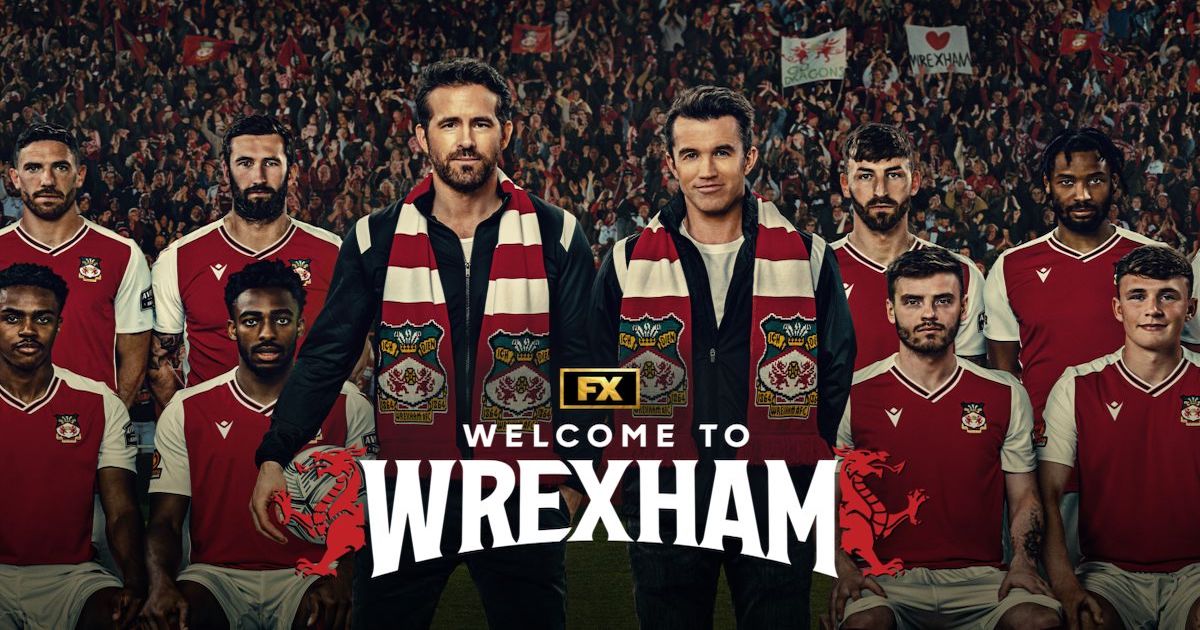
A study by the University of Michigan suggests that the FX docuseries Welcome to Wrexham, which follows actors Rob McElhenney and Ryan Reynolds after they bought Wrexham AFC in 2021, has helped boost employment, public spending and overall wellbeing in the Wrexham area.
The research, published in the academic journal Communication & Sport, examined government and health board data from across Wales to assess whether Wrexham experienced changes beyond wider national trends after the show’s release in September 2022.
The findings suggest it did. After the first series aired, Google searches for Wrexham rose by around 30 per cent. Over the following years, indicators including employment rate, gross domestic product (GDP) per capita, social services spending and mental health outcomes improved more sharply in Wrexham than in other Welsh local authority areas, even after accounting for other potential influences.
One of the most striking findings related to employment. When Welcome to Wrexham was first released, Wrexham had the third-lowest employment rate in Wales. By March 2024, it had risen to the highest in the country.
“That was the most staggering takeaway,” said Jan Boehmer, assistant professor of sport management at the University of Michigan’s School of Kinesiology and lead author of the study.
“Wrexham went from one of the lowest to one of the highest employment rates in Wales exactly through the time period we studied. It’s remarkable that sport business and sport media had the power to influence more than just the bottom line of the club.”
The researchers believe the study is the first to use long-term government data to explore the relationship between sports media, economic development and residents’ quality of life.
“Our research shows that sport and media can do far more than entertain,” said co-author Kyriaki Kaplanidou, a sport management professor at the University of Florida. “Sport storytelling can genuinely transform communities.”
Model
To conduct the analysis, the researchers built a model using six indicators across all 22 principal local authority areas in Wales. These included the number of active businesses, employment rate, average hourly wages, GDP per capita, social services spending and the number of mental health assessments per month.
The model was designed to account for shared pressures affecting all parts of Wales, such as inflation, seasonal fluctuations and the impact of the COVID-19 pandemic. The team also factored in Wrexham AFC’s on-pitch performance, recognising that football success alone might influence local morale.
One common criticism of using sport as a tool for regeneration is that investment in teams can divert public money away from other services.
Spending
In Wrexham, however, the study found the opposite. Social services spending was around 16 per cent higher than expected compared with what the model predicted without the club’s takeover and the documentary’s global exposure.
The study also found that mental health assessments were about seven per cent lower than expected. Boehmer said this could act as a proxy for improved community mood, although he stressed that wellbeing is difficult to measure purely through quantitative data.
“I’m interested in the business of sports, but also in sport’s power to change societies,” he said. “It was important to look at mental wellbeing, not just financial outcomes.”
Not all indicators showed significant change. Average income levels and the number of new businesses did not rise substantially in the available data, although the researchers noted they could not isolate figures for areas immediately surrounding the club’s stadium, where impacts may be more concentrated.
Boehmer said further research could explore these localised effects in more detail, potentially in partnership with local authorities or those involved in the project.
“All I’m saying is: Ryan Reynolds, please reach out if you’d like to know more,” he added.
Support our Nation today
For the price of a cup of coffee a month you can help us create an independent, not-for-profit, national news service for the people of Wales, by the people of Wales.


