

Welsh and Irish language commissioners raise concerns over BBC cuts
Stephen Price
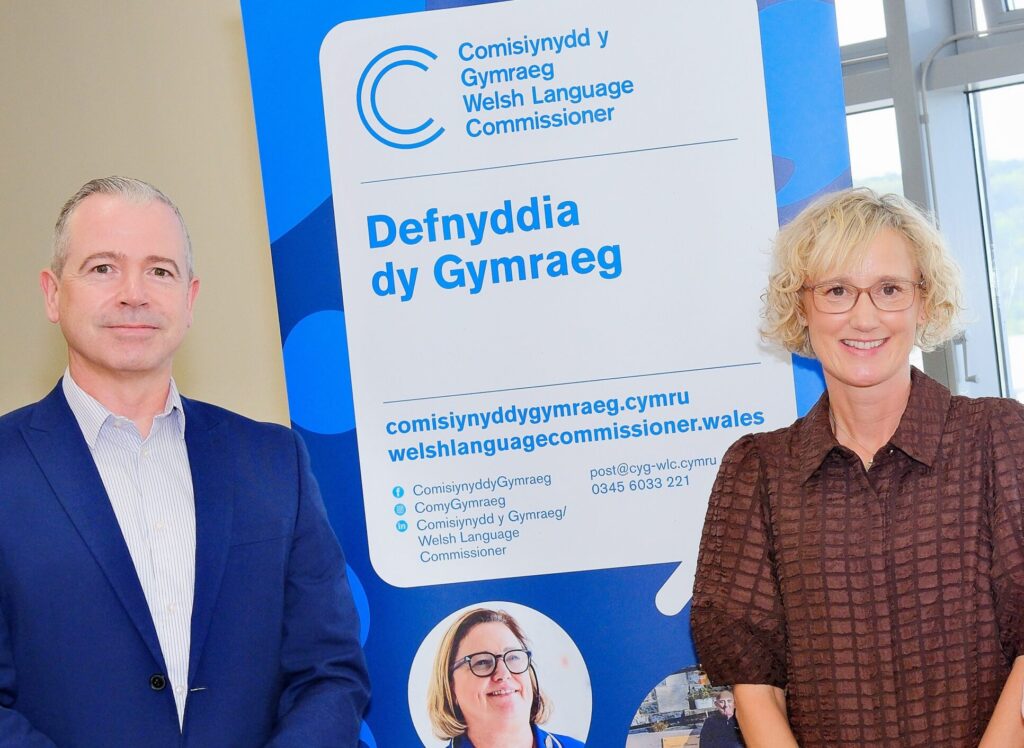
The Welsh Language Commissioner and the Irish Language Commissioner for Northern Ireland have raised concerns about the impact of BBC cuts on minority-language services.
Efa Gruffudd Jones and Pól Deeds emphasised the vital role broadcasting plays in promoting regional and minority languages worldwide and warned that recent BBC announcements could be a threat to that.
BBC management has announced plans to cut between 1,800-2,000 jobs as part of a 10% reduction to its total costs by the end of 2028-29.
In June, the BBC announced its intention to axe 550 roles – including around 200 in BBC News and 250 in BBC Nations – plus TV and radio programmes such as Radio 4’s The World Tonight and the World Service’s The Conversation.
This week has seen further announcements of proposed cuts – particularly affecting BBC Local, BBC Sport, and BBC Wales as well as BBC Scotland, Business and Operations and other areas – that will put hundreds of members at risk of redundancy.
These announcements extend the BBC’s streak of slashing its workforce. In July, the National Union of Journalists also urged the BBC to reconsider its decision to cut dedicated foreign correspondents covering 14 European countries for the broadcaster.
The BBC has also withdrawn its promise of jobs for apprentices working in BBC News – a programme designed to help increase representation and entry routes into journalism, particularly for young people from diverse working class backgrounds.
Welsh Language Commissioner Efa Gruffudd Jones said that decisions should not be based solely on value for money: “Welsh-language broadcasting is vital to the language and to ensuring that people can hear and use Welsh every day.
“Research published by ourselves last year demonstrated the importance of Welsh-language broadcasting in raising the visibility of the language and creating opportunities for people to hear and use it in their daily lives. It provides a platform for culture, sport, entertainment and news that reflects life in Wales, while also helping to attract new Welsh speakers.
“Welsh-language broadcasting depends entirely on publicly funded services. Without that support, there would be no Welsh-language provision – unlike English-language broadcasting. The value of Welsh-language broadcasting must therefore not be assessed solely in terms of value for money.”
“Central” to language promotion and protection
Gruffudd Jones added: “Minority-language broadcasting is about far more than entertainment or profit. It is central to efforts to promote and protect language, culture and identity.
“I fully recognise the significant challenges facing the BBC, and the difficult decisions it must make. However, the long-term impact on our culture – and the cost to future generations – must be fully considered.”
Irish Language Commissioner Pól Deeds echoed these concerns and said: “Irish-language broadcasting plays an important role in ensuring that Irish is visible, heard and used as part of everyday life in Northern Ireland.
“For a minority language, opportunities to hear the language through news, current affairs, sport and entertainment are particularly valuable. They help create a space in which speakers can engage with public life through Irish, while also introducing the language, giving confidence to those who use it and ensuring progress is being made to support Irish as a living language.
“I appreciate the financial pressures facing the BBC, Irish already lags behind other indigenous languages within the UK in terms of BBC provision. I would urge that the particular needs of minority-language audiences, and the potential long-term consequences for Irish, are fully considered when decisions about services are made.”
A BBC spokesperson said: “The BBC remains highly committed to supporting the UK’s minority languages, across Welsh, Gaelic, Irish, Ulster-Scots, Cornish and Manx, as can be seen from our content and services.
“We do this against a background of the BBC facing a real-terms funding reduction of around 30% since 2010, and a current and real savings challenge.
“We are committed to ensuring our languages audiences receive high-quality provision, and we remain ambitious for the future of the language content within the funding available.
“Questions around the future funding and delivery of these services are central to the current debate on the next BBC Charter and how the Corporation should be funded in the years ahead.”
Support our Nation today
For the price of a cup of coffee a month you can help us create an independent, not-for-profit, national news service for the people of Wales, by the people of Wales.
Get more trusted Welsh news
Choose Nation.Cymru as a preferred source in Google News to see more of our journalism.



The BBC funding model us dead in the water.