


Welsh care boss invites First Minister to see damage caused to services by immigration ban
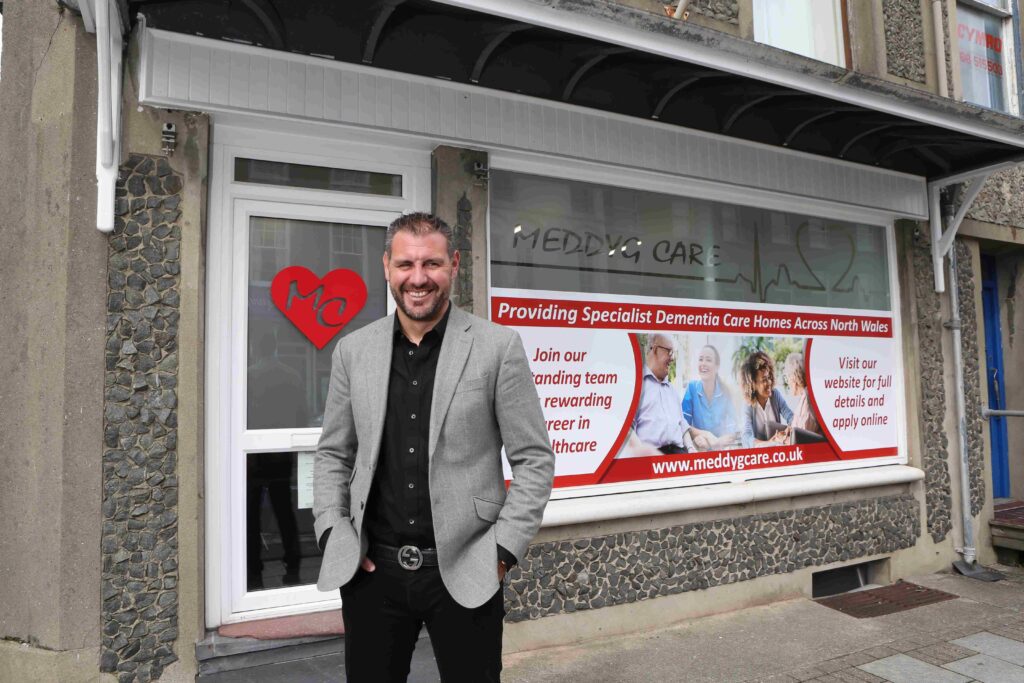
A Welsh care home boss has invited the First Minister to come on a visit to see at first had the threat to services caused by the ban on overseas workers.
Kevin Edwards, a director of Gwynedd-based Meddyg Care, wrote to Eluned Morgan to warn of the “potentially devastating impact” of the UK Government’s decision to end the Health and Care Worker visa.
According to Mr Edwards, whose company operates two care homes in Porthmadog and Cricieth and specialises in dementia care, there was a real risk of care homes and domiciliary care companies being forced to close.
The crisis, he said, was particularly acute in rural areas where it was increasingly difficult to recruit local workers.
“Critical lifeline”
The scale of the problem was underscored by official statistics which showed that 15 per cent of registered care workers in Wales were born outside the UK.
In his letter Mr Edwards urged the First Minister to put pressure on the Westminster Government to either reverse the policy or introduce a transitional scheme for critical workers in social care.
At the same time, he wants to see more investment in training and pay levels to attract and retain local workers.
He’s also calling for stronger measures to safeguard international workers from exploitation.
Mr Edwards said: “The social care sector in rural North Wales is already under significant strain, grappling with high vacancy rates, an ageing population, and limited local workforce availability.
“The Health and Care Worker visa has been a critical lifeline, enabling care providers to recruit international workers to fill staffing gaps.
“The withdrawal of this visa will exacerbate existing challenges in rural North Wales, where geographic isolation and a smaller pool of domestic workers make recruitment particularly difficult.”
Decline in visa applications
Figures show the ban on care workers bringing dependants, which was implemented in March last year, has already led to an 83 per cent decline in visa applications, with monthly applications dropping from 129,000 to 26,000 in a year.
Mr Edwards added: “This sharp reduction demonstrates the policy’s immediate impact, and the complete termination of the visa route will likely deepen the crisis.
“Moreover, the care sector in rural areas faces unique challenges, including limited access to training facilities and higher costs for service delivery due to dispersed populations.
“The loss of international workers, who bring diverse skills and dedication, threatens to destabilise care homes and domiciliary services, potentially leading to closures.
“Such closures would not only disrupt care for vulnerable residents but also place additional pressure on NHS services in north Wales, as hospitals struggle to manage increased demand when social care support falters.
“The care sector in rural north Wales is at a critical juncture. Without urgent action, the withdrawal of the Health and Care Worker visa risks collapsing services that our most vulnerable citizens rely upon.”
“I would welcome the opportunity to discuss this further with you and would like to extend an invitation to you, to visit our nursing homes so you can see firsthand the key role that we and our migrant workers play in our community.
The issue has also been taken up by social care champions Care Forum Wales (CFW) who described the policy as “half-baked”.
The organisation has warned the policy, which came into force on July 22, risks “extreme workforce shortages” and “potential harm to older and disabled individuals, who depend on consistent care to maintain their quality of life”.
“Double whammy”
CFW Chair Mario Kreft MBE said: “This ill-thought through policy has come as a double whammy because it coincides with the increase in the employers’ National Insurance contributions which amounts to a 37 per cent rise.
“It’s particularly damaging here in Wales because most people who need social care – whether it’s in a care home or in their own homes – are publicly funded.
“It’s also counter-intuitive because there’s no point investing in the NHS unless you fund social care properly. If you don’t fix social care you can’t fix the NHS.
“I’d also like to quash the myth once and for all that international workers are cheap labour because the exact opposite is true.
“Recruiting overseas staff is always the last resort because it’s a lot more expensive than it is to employ local people which is always the first choice whenever that’s possible.”
Support our Nation today
For the price of a cup of coffee a month you can help us create an independent, not-for-profit, national news service for the people of Wales, by the people of Wales.



He needs to really be speaking to Farage, the architect of anti immigration and sees how he aims to solve this social care crisis.
Perhaps Mr Edwards should consider reducing profits and increase the wages he’s offering staff rather than relying on cheap imported labour?
That would work if the laws of supply and demand applied. However it is well known that there are a lot of native people who could do these jobs but are unwilling to get their hands dirty and don’t have the emotional stability to help those who need care. Often these are the same people who sneer at migrants. Odd innit ?
The laws of supply and demand obviously apply to these types of jobs. While true that ‘native’ people aren’t willing to do these difficult and demanding jobs for minimum wage, if wages were increased the care sector would find it a lot easier to recruit, hence my point.
As for the rest of your post, I think your just projecting your own biases.
Wild idea. Maybe pay them proper wages? Just a thought. Whatever they are on (and I bet it’s just north of nothing) then stick another 15k on top. Go on Mr Capitalist. Give it a whirl. If there are still no takers then maybe you can whine on about needing cheap labour from overseas.