


Welsh Conservative Senedd candidate says election is not a ‘two-horse race’
Emily Price
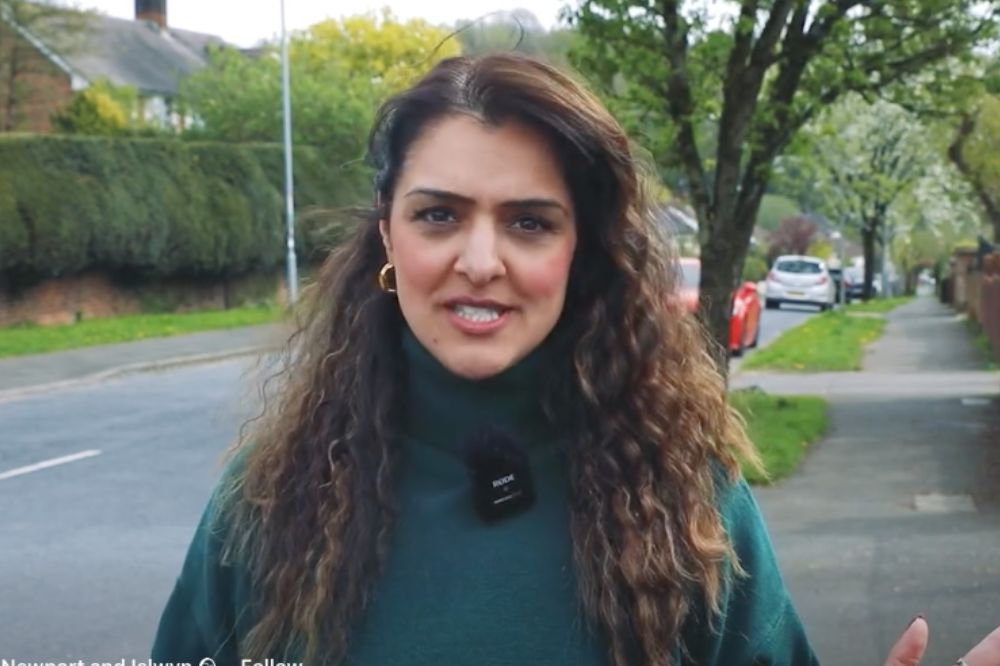
A prominent Welsh Conservative Senedd election candidate has posted a video to social media explaining why the May 7 vote isn’t “a two-horse race”.
Former South Wales East Senedd Member Natasha Asghar is the Tories number one candidate in the Casnewydd Islwyn constituency in the upcoming Senedd election.
Her party came second in the 2021 election – but recent projections have suggested the Welsh Tories could slip from second place to as low as fourth or even fifth, risking the loss of their status as the official opposition in Wales.
Plaid Cymru and Reform UK have categorised the May 7 vote as a “two horse race” as both are on course to be the biggest party after polling day.
But in a video message to voters, Asghar said these claims “couldn’t be further from the truth”.
She said: “You’re being told that this is a two horse race. It isn’t. This is not the Caerphilly by-election and it’s not a Westminister contest like the Gorton and Denton constituency election that we saw.
“This is a Welsh Senedd election taking place on the 7th of May with a totally new system.
“In May, six Members of the Senedd will be elected to represent you.
“That means your vote is not squeezed into two parties alone. Your vote directly counts towards electing a person – not wasted, not sidelined.
“So lets talk about tactical voting. In this system, it doesn’t work the way that people are claiming it works.
“Voting for who you believe in isn’t a risk – it’s exactly how the system is meant to work.
She added: “The reality is this election is wide open. Polls are shifting every day.
“Predictions are uncertain which means your vote matters more than ever before.
“Don’t be pressured. Don’t be misled.”
Support
Asghar’s comments followed the release of a new voting intention poll by The Telegraph on Wednesday (15 April), which suggested the Welsh Conservatives’ chances of winning enough seats to form a group in the Senedd had improved significantly compared with earlier projections.
The poll suggested that Welsh Labour could fall to third place, behind Reform UK and Plaid Cymru, with the latter on course to emerge as the largest party in Wales.
The Welsh Greens are expected to make a breakthrough, winning seats in the Senedd for the first time.
The Liberal Democrats are not expected to win any seats at all.
Although previous polling has pointed to a potential wipeout for the Welsh Conservatives – the Telegraph’s new poll has predicted the party could gain 12 per cent of the vote share.
‘Positive’
A Welsh Conservative campaigner told Nation.Cymru that much of their time on the doorstep is being spent explaining how the new closed-list proportional representation voting system works.
They said many of the “undecided voters” they speak with believe the only way to keep Reform UK or Plaid Cymru out of power in Wales is to vote tactically for one or the other, rather than on the basis of their preferred party.
The source also said that, in recent days, canvassing had become “far more positive,” with voters noticeably more willing to engage in conversation than during the general election.
The May 7 vote marks the introduction of a new electoral system with 16 new super constituencies – each of which will elect six Senedd Members.
Fragmented
The new system is aimed at moving away from “winner-takes-all” outcomes, making it challenging for any single party to secure an outright majority.
A more fragmented Senedd is expected as a result of the changes, making coalition or minority governments the most likely outcome once votes are counted.
Welsh people will cast a single vote for a party or independent candidate rather than a person and seats are shared out based on each party’s percentage of the total vote in that area.
If a party gets roughly 12–15% of the vote in a constituency, they are generally guaranteed at least one seat.
While traditional “lesser of two evils” voting to block a specific candidate is largely diminished under the new system, different forms of tactical voting could arguably still come into play.
If a preferred smaller party is polling well below the 12-15 per cent level needed to gain a seat, voters might instead back a larger party of the same persuasion to increase the chances of their vote contributing to representation.
Although campaign claims that “only X can stop Y” are generally less accurate under proportional representation, voters seeking to prevent a particular party from gaining a seat may still opt for the strongest competing party in their constituency.
With single-party majorities less likely under Wales’ new voting system, voters may also base their choice on the type of coalition government they would prefer to see.
Support our Nation today
For the price of a cup of coffee a month you can help us create an independent, not-for-profit, national news service for the people of Wales, by the people of Wales.
Get more trusted Welsh news
Choose Nation.Cymru as a preferred source in Google News to see more of our journalism.



Of all the parties canvassing for my vote only the “Welsh” Tories haven’t bothered to send me anything yet. I wonder if they’ve given up?
How patronising. She clearly thinks that the good people of Cymru are thick.
The Tories have never done anything other than to help Westminster continue the theft and pillaging of Cymru for decades, they helped inflict putin and farages brexit to drive the final boot in to the UK. These wasters are consigned to the bin of political history with labour, which is exactly where they belong.