


Welsh Government approves huge solar farm despite local opposition
Emily Price
Plans for a large-scale solar farm in north Wales have been approved by the Welsh Government despite strong local opposition.
A decision letter from the Cabinet Secretary for Economy, Energy and Planning, Rebecca Evans, to development consultancy Pegasus Group revealed that the Welsh minister had given the green light for a huge solar farm on the island of Anglesey.
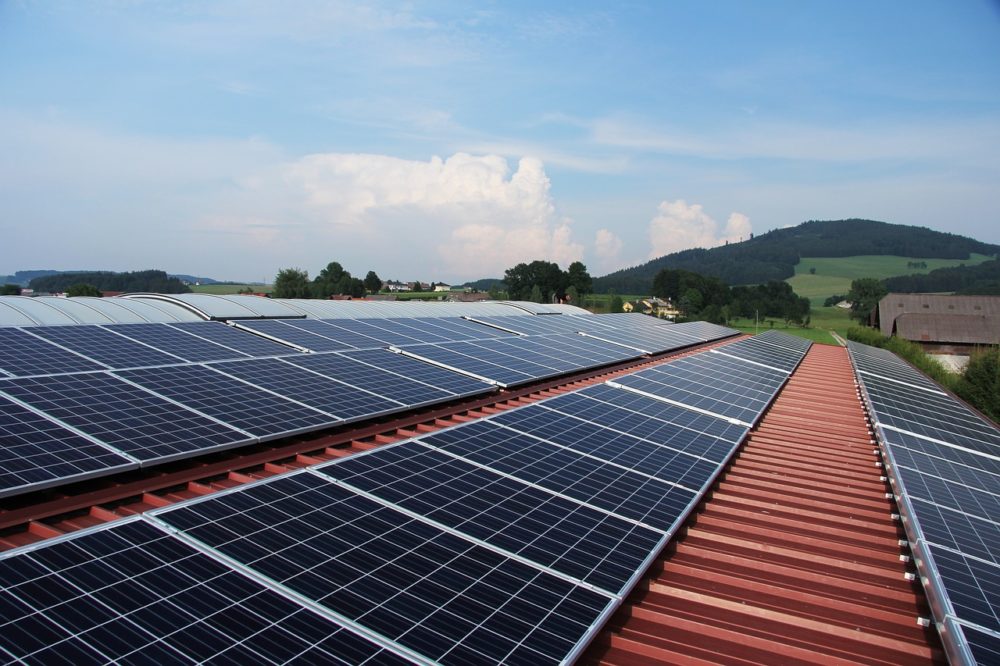
The Alaw Môn solar farm will be developed by Enso Energy on land 500m to the east of the small hamlet of Llantrisant and 1.5km to the west of the village of Llannerch-y-Medd.
The site will be less than 500m from Anglesey’s largest lake – Llyn Alaw.
It will comprise of solar arrays and an energy storage facility which could supply up to 160 megawatts of renewable energy to the National Grid.
Evans’ decision letter revealed that approval for the energy farm was given despite planning inspectors and the minister herself concluding that the project contradicted the Welsh Government’s own policy of protecting Wales’ Best and Most Versatile Agricultural Land (BMVAL).
Productive
This type of farmland is considered to be the most productive – supporting high yields and a broad spectrum of crops.
Around 10 to 15% of the land in Wales is classified as BMVAL and Welsh planning policy requires detailed surveys and gives considerable weight to its protection in development decisions.
BMVAL is graded from 1 to 3a. The Anglesey solar farm site includes 36.7 hectares of Grade 2 (very good quality) farmland and 122.3 hectares of Grade 3a (good quality) farmland.
In Evans’ letter to Pegasus Group, she wrote: “The inspectors note that the application site contains a high proportion of BMVAL.
“Planning Policy Wales (PPW) is clear that BMVAL should be conserved as a finite resource for the future and Future Wales (FW) identifies BMVAL as a national natural resource.
“The proposal clearly conflicts with PPW as the applicant has failed to undertake an appropriate site selection process.
“I note the inspector’s assessment regarding the impact of the proposed
development on BMVAL, as well as the potential for the site to be restored following decommissioning.”
She added: “However, I remain unconvinced that the impacts on the land will be entirely reversible at the end of the operational period.
“Also, whilst the BMVAL within the application site is not being used to its productive potential at the moment, the Agricultural Land Classification grade describes what the land is potentially capable of, not what it is currently used for.
“However, I concur with the inspector’s view that the scheme’s significant contribution to renewable energy generation should be given considerable weight in the planning balance.”
Protests
She added: ” I recognise the supplementary benefits associated with the scheme, including biodiversity enhancements.
“For these reasons, in this particular case I consider the benefits of the scheme outweigh any harmful effects, including the impact of the proposal on BMVAL and I agree the scheme accords with relevant development plan policies.”
In November last year, a decision on the solar farm proposal was delayed amid hundreds of objections from members of the public.
In July, more than 100 protestors demonstrated against Enso Energy’s plans for Anglesey.
Plaid Cymru hit out at the Welsh Government for approving its large scale solar farm despite fierce opposition from locals.
‘Disappointed’
Llinos Medi MP, Plaid leader Rhun ap Iorwerth and Leader of Anglesey County Council, Gary Pritchard, said: “We’re very disappointed to hear that the proposal to develop a large-scale solar farm over 650 acres of good agricultural land on Anglesey has been approved.
“Local residents have long made their opposition to this development known, because of its damaging impact on our landscapes and agricultural and tourism sectors on the island, while offering little in terms of jobs or economic benefit.
“It is frustrating that the Labor Welsh Government has ignored these concerns and pushed ahead, despite the proposal explicitly contradicting the Welsh Government’s own policy of protecting Best and Most Versatile Land.
“This is not about opposing solar energy – which has its role to play as part of the energy mix.
“It is about protecting our communities from exploitation by commercial developers and preventing the loss of vast swathes of valuable farmland when better, more innovative alternatives exist.
“We will continue to stand up for our communities on this matter and work to ensure that any developments that impact them deliver meaningful benefits to local residents.”
‘Missed opportunity’
However, Shadow Cabinet Secretary for Climate Change and Biodiversity, Janet Finch-Saunders hit out at Plaid saying the party had missed an opportunity to block the decision on the energy farm application.
On 11 June 2025 Finch-Saunders presented a motion that called on the Welsh Government to “announce a moratorium on all applications to place solar panels on agricultural land” and “undertake a review of the potential of solar energy in Wales”.
13 MSs voted in favour, whilst 23 MSs voted against.
Plaid Cymru MSs abstained and Liberal Democrat Jane Dodds didn’t vote at all
Finch-Saunders said: “While securing our energy future is important, it must not come at the expense of our agricultural land.
“Undermining farming in this way threatens food security and rural livelihoods.
“We need a clear and sustainable solar strategy that balances renewable energy development with the protection of our farmland.
“The current lack of strategy risks undermining both our energy goals and our food security.”
She added: “Rather than take the opportunity I created to pause all decisions on solar farms, Plaid Cymru through abstaining and the Liberal Democrat by not voting at all, enabled the Welsh Labour Government to keep charging ahead without a solar strategy.
“Should Plaid Cymru and the Liberal Democrat have joined forces with the Welsh Conservative and independent members on 11 June 2025, the decision on Alaw Môn solar farm could have been blocked whilst a solar strategy is created for Wales.”
Conditions
The Welsh Government have included a number of conditions in the planning approval letter.
Rebecca Evans said the site must be decommissioned within 40 years from when electricity is first exported with a restoration scheme in place 12 months prior “to ensure the land is restored appropriately”.
The Welsh minister also said that no development can take place until a programme of archaeological work is carried out at the site to identify “potential archaeological features”.
Developers will be required to submit a series of plans and timetables prior to work being carried out to mitigate the effect of construction traffic and noise as well as the impact on trees and habitats in the area.
The Welsh Government said it can’t comment further once a decision letter has been issued.
Support our Nation today
For the price of a cup of coffee a month you can help us create an independent, not-for-profit, national news service for the people of Wales, by the people of Wales.



Good luck with the judicial review I guess.
I am disappointed with all the MSs who didn’t support this moratorium. We don’t need solar farms for net zero. There are plenty of buildings to cover with solar panels. This should not be about costs. This should always be ensuring Wales is food secure.
I imagine there’d be all sorts of complications with inter-connecting small numbers of panels on different buildings, owned by different people. Installation would also be more complicated in a town or city than it would in a field. Wales has loads of space and the Welsh Government is 100% signed up to Net Zero. We voted for this so I don’t really understand why anyone would complain.
Maybe buildings from prehistoric times and those in the St Fagans museum. I think most buildings in this day and age are connected to the electricity grid now.
Even if you took away all the solar farms, Cymru would not be food secure. If you are worried about food security you should be complaining about the devastation caused by livestock farming; large areas of land which could usefully be providing food are given over to sheep and cattle, allowing nothing to grow but coarse grass. All this at the taxpayer’s expense, since sheep farms would go out of business without state benefits.
So how is adding more solar farms going to help food security?
Having lived near Llyn Alaw in the past, I can’t see the problem. For many years there was a massive oil storage terminal near by, there are wind farms just north of the llyn. You don’t see that many tourists or walkers in this part of Ynys mon, though it is a fantastic area to cycle/walk around and for a bit of solitude. It’s generally good to see projects moving more quickly in the UK. We’ve had so much delay/bluster under the tories. I don’t get the Plaid position on this- if they didn’t want it, why did they abstain/not… Read more »
Use poor quality farm land for solar panels instead of wasting high quality farm land.