


Welsh Government ‘calls in’ controversial US military radar scheme
Martin Shipton
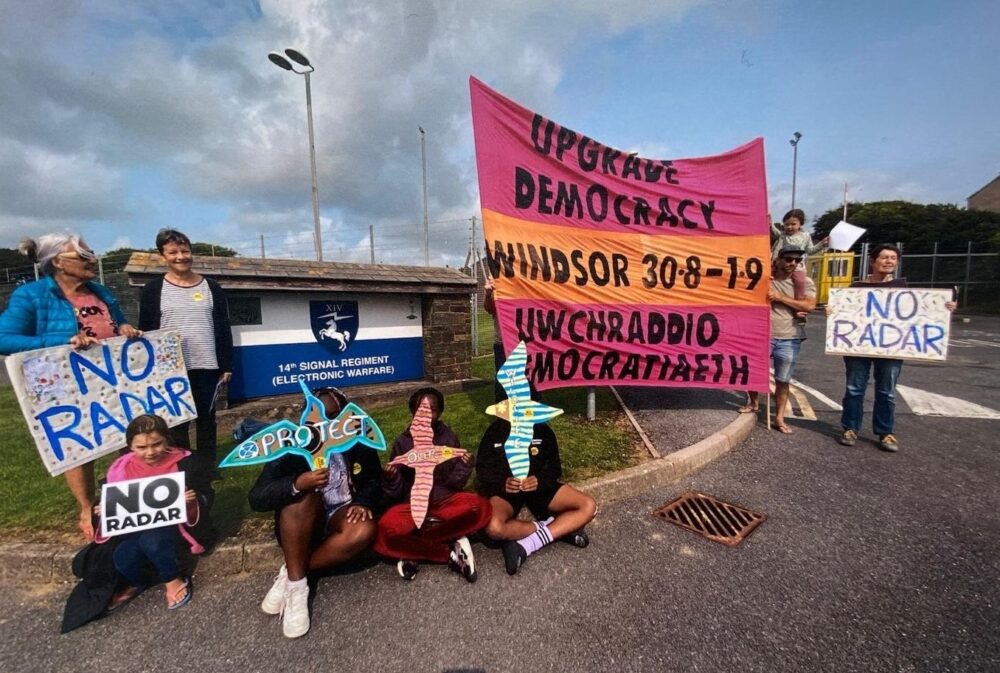
Campaigners against a controversial plan by the US military to build a radar system in west Wales are celebrating a decision by the Welsh Government to “call in” the planning application.
PARC Against DARC, established in 2024 to oppose the proposed DARC radar array at Cawdor Barracks near St Davids, is happy that Planning Minister Siân Gwenllian took the decision on whether the project should go ahead out of the hands of Pembrokeshire County Council.
The group described the move as a “seismic and significant step” in the right direction for the new Plaid Cymru-led Welsh Government.
Pembrokeshire County Council’s planning committee was set to take the decision next Tuesday but the Minister has now intervened at the final hour following heavy lobbying efforts by the PARC campaign, which had identified several key reasons why the application should be called in.
A PARC spokesperson said: “DARC is a proposal for a huge 27-dish radar array overlooking the St Davids Peninsula of the Pembrokeshire Coast National Park. The National Park Authority has objected to the scheme because of its unacceptable adverse visual impact, the damage it would cause to tourism and the harm it would do to a nationally important landscape. Natural Resources Wales agrees with that assessment.
“As we pointed out in our case to Welsh ministers, the DARC proposal is part of a weapons system designed to track and target satellites belonging to other countries around the world. It is being developed for the US Space Force, which was created under Donald Trump, at a time when US military spending has doubled since he took office. That is why DARC has been described as a significant escalation in the militarisation of space.
“The concerns become even greater when we consider that DARC’s developer has suggested it could be included in Trump’s proposed ‘Golden Dome’ missile-defence programme. The plan would involve surrounding the Earth with missile-armed satellites. A significant consensus believes this would gravely alter the balance of power between countries and make the world a more dangerous place.
“Siân Gwenllian has made the right decision here, and DARC is far from a typical infrastructure project. Its national and international scope and implications means it raises issues that go well beyond the local planning process, demanding consideration at Welsh Government level.”
The Cabinet Minister’s letter to Pembrokeshire County Council calling in the application sets out the following factors in calling in the proposal: “The proposed development raises national security issues given the strategic defence nature of the proposal and is a novel planning issue. The proposal potentially conflicts with national policy in relation to landscape, ecology, sustainability and placemaking. A decision on the proposal may be controversial beyond the immediate locality, and there is already considerable public interest in the proposal. All these matters lead the Cabinet Minister to conclude the development is of more than local importance and the application should be determined by the Welsh Ministers.”
This all comes following the council’s own public period for representations, where an FoI disclosure showed there had been 1,121 objections to DARC and just one submission in favour. Almost 20,000 people have also signed a petition opposing the proposal.
Jubilant
In a jubilant public announcement to their campaign supporters PARC quipped: “DARC radar is officially no longer in the hands of Pembrokeshire County Council planning committee, and is in a suitcase, being carried by men in dystopian astronaut-style suits, and on its way to the Welsh Government, to be, rightfully, decided at the very highest level of planning authority in Wales.”
PARC believes that the people of Pembrokeshire have made their views clear throughout two years of opposition of a kind rarely seen in their community, asserting that: “This is not just a group of residents objecting to a development. It is a mass movement of public opposition, which offers us great hope that we can defy any future interference which may come from the UK Government over this issue.”
Plaid Cymru has also played a central role in political opposition. A statement of opinion against DARC has been tabled by Plaid, as has a Westminster Early Day Motion calling for DARC to be scrapped. There was also a unanimous vote at the 2024 Plaid Cymru conference committing the party to taking action to oppose the proposal.
A spokesperson for the campaigners said: “This is why we strongly welcome the new Welsh Government’s wise decision to listen to those voices and we are very pleased that they have answered PARC’s request to call in the DARC planning application.
“Our national parks should not be sacrificed to military expansion. Our communities should not be ignored when they speak with such a clear and overwhelming voice. Wales should not be expected simply to accept the strategic priorities of foreign governments without question.”
Neil Kinnock
In another interesting twist of history, campaigners have pointed out that they have a letter of support which Neil Kinnock sent to PARC during a similar anti-radar campaign in the 1990s while Kinnock was leader of the opposition, adding: “Now Neil Kinnock’s son has been freshly appointed as Welsh Secretary, will Stephen Kinnock find himself at the centre of one of Wales’ most contentious planning applications in decades?”
As the stage is now set for a potential Wales v Westminster showdown, the campaigners have confirmed that a planned demonstration to be held outside Pembrokeshire County Council’s planning committee meeting on Tuesday July 28 at 9am will go ahead as a vigil in support of the Welsh Government’s call-in decision.
Support our Nation today
For the price of a cup of coffee a month you can help us create an independent, not-for-profit, national news service for the people of Wales, by the people of Wales.
Get more trusted Welsh news
Choose Nation.Cymru as a preferred source in Google News to see more of our journalism.



A good call. Now let’s see if Plaid Cymru has the courage to stand up to US/NATO militarism.
Well the decision to call this in was made by the the Plaid Cymru Welsh govt (so looks like youve got youre answer there Lyn).
It’s promising, but Welsh Government has often approved applications after calling them in so we’ll see. Westminster will press for approval.
The less influence and assets the US has in Cymru the better. We should not be catering to the wants and desires of a fascist imperialist state that seeks absolute control of the entire globe. I don’t hold out much hope of Westminster putting a stop to it though.
Here is a link to the EDM at Westminster.
https://edm.parliament.uk/early-day-motion/63346/darc-in-wales
There are some Labour MPs who have signed it, but none from Wales. If your MP has not signed it yet, contact them as a constituent, and ask them to sign.
One of Englands many downfalls over the years is its keeness to be Americas lapdog.
Cymru needs to give the USA a very wide berth.
Good on Plaid for doing this, its sounds like the local council are well on someone elses payroll.
Ultimately Westminster can legislate to allow this to proceed if necessary so this is about securing some quid pro quo. Must be some well paid jobs that could be moved to the area.