


Welsh Government criticised for ‘applauding’ bluefin tuna catch off Welsh coast
Stephen Price
The Welsh Government has been criticised for celebrating the killing of bluefin tuna, with an international charity calling for them to be ‘left in peace’ following their return to Welsh waters.
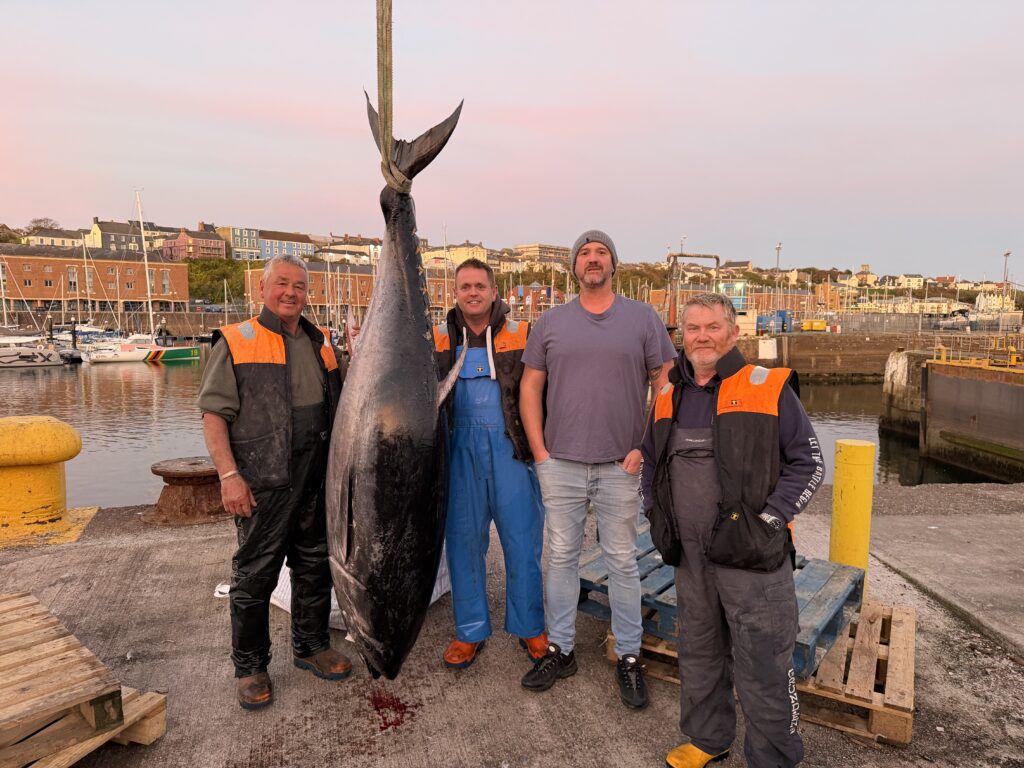
Sharing images of smiling men posing with a dead bluefin tuna, which was likely to have died an agonising death from oxygen deprivation, coupled with injuries from resisting being pulled from the sea and killed, the Welsh Government shared a press release today (30 October) titled ‘What a catch!’ celebrating the occasion.
The first five bluefin tuna landed at Milford Haven have been processed and sold locally for the first time, marking what the Welsh Government termed ‘a milestone for the Welsh fishing industry”.
The tuna were caught as part of a commercial-scientific trial introduced by the Welsh Government, with participants using rod and reel only instead of chumming, which is the practice of throwing fish parts, blood, oils, or other organic groundbait into the water to attract fish (such as sharks, tuna, or groupers) to a specific fishing spot.
According to the Welsh Government, fishers taking part in the trial must record every catch in detail, including catch locations, weather conditions, hours fished and any bycatch, and land their fish at designated Welsh ports in Milford Haven and Holyhead.
In return for providing this data, they are allowed to target bluefin tuna in specified areas of Welsh waters.
The fish caught earlier this month were processed at a premises in Burry Port, with majority of the tuna sold to the public at a Saturday walk-in fish market.
The rest, including the fins, frames and heads, was sent out through a nationwide home delivery service for people across the UK.
Fishers are hopeful of landing further tuna, weather permitting, and want to build on the “excitement” around these first catches.
The Cabinet Minister for Rural Resilience and Sustainability, Llyr Gruffydd, who is facing further anger from animal rights activists following his support for a Reform UK motion calling for a badger cull, said: “These landings show how our fishers can combine tradition with science to build a sustainable future for bluefin tuna in Wales, and deliver locally caught fish to Welsh customers.
“I’d like to congratulate everyone involved in this fantastic moment for Welsh fishing.”
Teddy Whitall, Managing Director of Whitfish Ltd, said: “It means a great deal to be involved in purchasing and selling the first bluefin tuna commercially caught and landed in Wales.
“This is about more than the fish themselves: it’s the start of a new chapter for Welsh fishing, creating fresh opportunities for our fishermen, coastal communities and the wider seafood sector.
“I hope this marks the beginning of something exciting for the future of the Welsh fishing industry.”
“Show we have evolved”
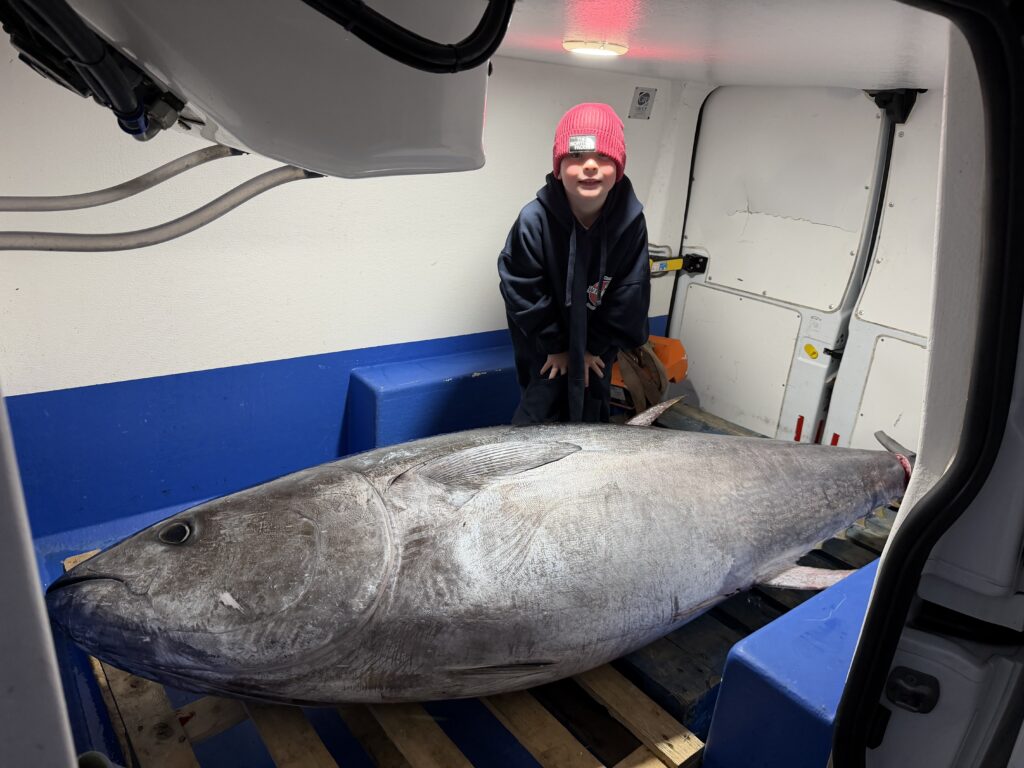
In press images for the ‘celebratory’ news, the Welsh Government included a photo of a young child posing next to one of the dead bluefin tuna.
In 2010, Greenpeace International added the northern bluefin tuna to its seafood red list. As of January 2022, the bluefin tuna remains on the list.
Fresh and frozen tuna consumption has increased steadily over recent years, especially in North America, Japan, Western Europe and emerging economies. As a result of globalization of food culture and health food preferences, fresh tuna is now prevalent in restaurants and supermarkets worldwide.
Bluefin tuna used to be a regular sight in UK waters but due to overfishing across the Atlantic, the populations declined and became non-existent. For more than 60 years no sightings of this species were recorded anywhere around the UK but in the past decade, sightings are slowly increasing
According to the United Nations, longline fishing has one of the highest bycatch rates of any gear used to fish for tuna. The average bycatch rate is more than a quarter (28%) of the total catch. In the Pacific Ocean, for instance, millions of baited hooks are set each year on longlines in order to catch tuna and other fish that swim deeper like swordfish and mahi mahi. However, sharks, marine turtles, billfish, seabirds, dolphins, juvenile fish and other fish species also get hooked. The bycatch problem is perhaps most sensitive for marine turtles, especially the critically endangered Pacific leatherback turtles.
Driven by increasing demand for tuna, fishing pressure has negatively impacted tuna stocks. For instance, in the Coral Triangle region, two of the key tuna species, bigeye and yellowfin, are now on the verge of becoming overfished. Overfishing of these key marine predators can upset the ecological balance of this the global centre of marine biodiversity.
Tuna enjoy complex communication, cooperate with one another, and can swim more than 100 miles a day. Tuna suffer immensely when yanked from the water, and those who swallow baited hooks deeply can sustain painful internal injuries.
Fish feel pain, share knowledge, and have long memories and cultural traditions. Some woo potential partners by creating intricate works of art in the sand on the ocean floor. Yet billions of fish die every year in nets and on hooks—some are destined for human consumption, many are tormented just for “sport,” and others are non-target species who are caught or become entangled in fishing gear meant to ensnare other sea life.
PETA’s Vice President of Vegan Projects, Dawn Carr, commented: “Only people who still think of fish as swimming vegetables, unaware that they are social, thinking individuals, celebrate the Bluefin tuna’s return to Welsh waters as an excuse to maim and kill them.
“These fish enjoy complex communication, cooperate as a team, and can swim more than 100 miles per day and the Welsh Government must protect them, not applaud as they’re reduced to sandwich filler.
“PETA urges that everyone wise-up, show we have evolved, that we know more now, and leave tuna in peace as the only truly sustainable catch is a vegan one.”
The Welsh Government said: “Bluefin tuna stocks have recovered dramatically after years of strict management, and the species is now classed as ‘Least Concern’ by the IUCN.
“We are running a small trial to test whether a sustainable fishery can work in Welsh waters. Wales has 10 tonnes of the UK’s 230 tonne share, which itself is less than 0.5% of the international catch limit.
“Only five small boats are authorised, using rod and line only, and fishers are trained in handling fish.”
PETA – whose motto reads, in part, that “animals are not ours to use for entertainment, or abuse in any other way” – points out that Every Animal Is Someone and offers free Empathy Kits. For more information, visit PETA.org.uk or follow PETA on Facebook, X, TikTok, or Instagram.
Support our Nation today
For the price of a cup of coffee a month you can help us create an independent, not-for-profit, national news service for the people of Wales, by the people of Wales.
Get more trusted Welsh news
Choose Nation.Cymru as a preferred source in Google News to see more of our journalism.



Where do they think tuna comes from? It doesn’t appear in tins by magic. Grow up!