


Welsh Government meets toxic clean-up company about remediating metal mines
Martin Shipton
Welsh Government officials responsible for tackling pollution from more than 1,300 abandoned metal mines have visited Hydro Industries’ operational headquarters in Carmarthenshire to explore potential solutions.
Company chairman David Pickering and chief executive Wayne Preece welcomed Andy Williams and Sam Deeley to Llangennech, near Llanelli.
Professors Mark Macklin and Chris Thomas, two internationally renowned scientists who have partnered with Hydro to establish a Centre of Excellence for Mine Impact Assessment and Water Remediation, also took part in the visit.
The visit follows the Welsh Government’s renewed commitment to tackling the 50 worst abandoned metal mine sites, originally identified as priorities in 2002.
More than two decades later, pollution from abandoned mines continues to affect Welsh rivers and surrounding land. Natural Resources Wales estimates that more than 500 tonnes of metals, including lead, zinc and cadmium, enter Welsh waterways every year, contributing to nearly 700km of rivers failing to achieve good chemical or ecological status.
The scale of the problem has been highlighted in investigations by the Financial Times and the BBC and, more recently, in Michael Sheen’s two-part documentary Buried, which exposed the continuing legacy of toxic contamination and the urgent need for practical solutions.
During the visit, Hydro demonstrated how its proprietary British technology is being used to tackle water contamination internationally, particularly in Ecuador, where the value of its portfolio of projects now exceeds $100m.
The projects include treating contaminated landfill water near Quito, developing infrastructure for drinking water on the Pacific coast and working with local authorities on major wastewater projects.
Professors Macklin and Thomas, who co-direct the Lincoln Centre for Water and Planetary Health at the University of Lincoln, explained how their research could help identify and prioritise contamination risks.
Their global study, published in Science in 2023, examined approximately 185,000 metal mines worldwide and estimated that around 23 million people live on floodplains affected by potentially dangerous concentrations of mining-related contamination.
The new Wales-based Centre of Excellence combines their expertise in mapping and understanding pollution with Hydro’s technology for treating contaminated water at source. The aim is to develop solutions in Wales that could be used internationally.
Wayne Preece said: “We were delighted to welcome Andy and Sam and encouraged by the Welsh Government’s renewed determination to tackle a problem that has been recognised for decades.
“Wales has more than 1,300 abandoned metal mines, and the worst 50 were identified as priorities back in the early days of devolution. It is extraordinary that so much pollution continues to flow into our rivers.
“At Hydro, we have brought together some of the world’s leading scientific expertise with proven British technology capable of treating seriously contaminated water. And we have established this pioneering Centre of Excellence here in Wales.
“We are already delivering solutions to major water challenges in Ecuador and elsewhere around the world. We would love to bring that experience and technology to bear here in Wales.
“Welsh industry helped power the Industrial Revolution. Welsh innovation should now help clean up its legacy.
“We look forward to hearing more about the government’s plans, the timetable for tackling these priority sites and how Hydro might contribute to delivering practical solutions.”
Risks
Professor Macklin said: “We have become increasingly sophisticated at identifying mining pollution, understanding how it moves through river systems and establishing where the risks lie.
“But identifying the problem is not enough. By combining our scientific expertise with Hydro’s treatment technology, we have an opportunity to move from mapping and measuring pollution to actually doing something about it.”
Hydro hopes the discussions will lead to further talks with the Welsh Government as it develops plans to address contamination from abandoned metal mines.
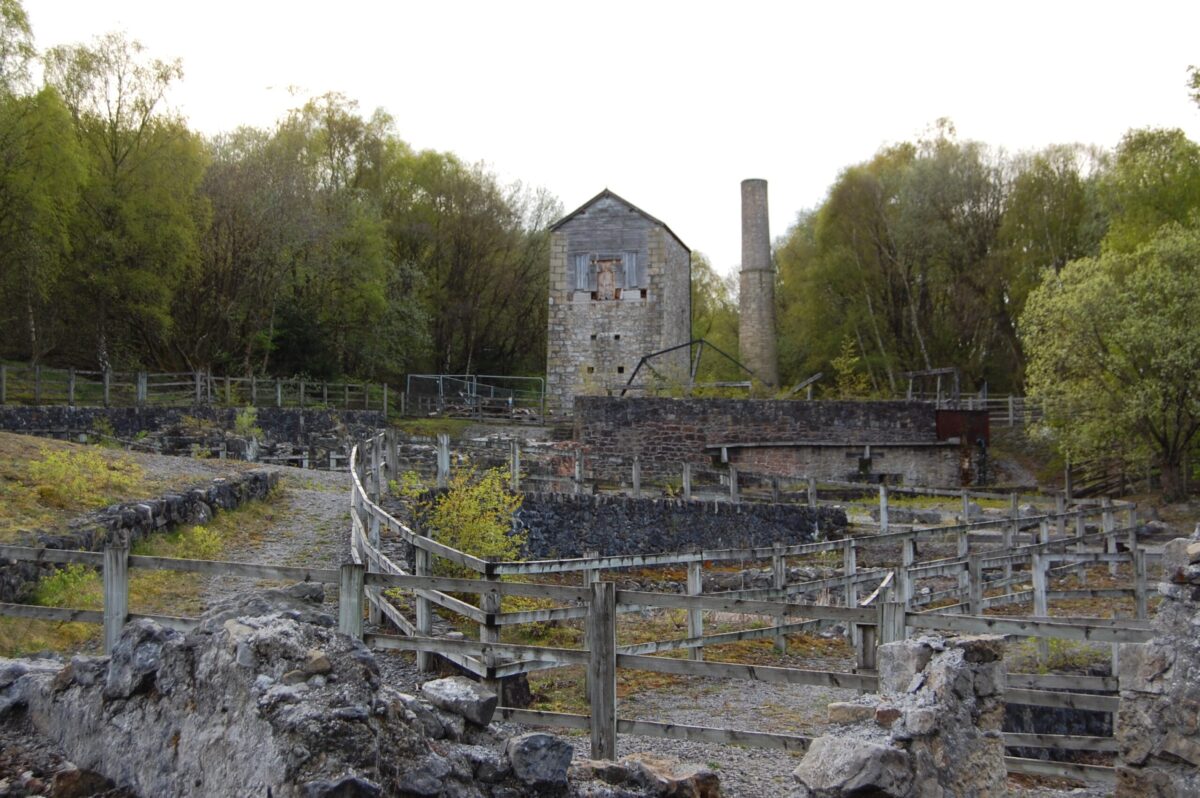
Research published in the Journal of Hydrology in 2024 examined historic mine pollution in Wales, including at Frongoch in Ceredigion, where remediation was associated with a reduction of about 90% in total lead concentrations.
Support our Nation today
For the price of a cup of coffee a month you can help us create an independent, not-for-profit, national news service for the people of Wales, by the people of Wales.
Get more trusted Welsh news
Choose Nation.Cymru as a preferred source in Google News to see more of our journalism.


