

Welsh health secretary welcomes UK wide organ transplant pilot
Emily Price
Wales’ health minister has welcomed the launch of a new UK wide pilot that will preserve and assess donor organs in a bid to enable more lifesaving transplants.
NHS Blood and Transplant (NHSBT) announced on Tuesday (March 17) that it has opened the first of 15 assessment and recovery centres (ARC).
The programme has been hailed as a unique venture which could unlock a step change in organ transplantation at a time when the transplant waiting list is higher than it has ever been.
If the pilot is successful, a full UK system will be created with the ability to also recondition organs.
NHSBT predicts a full system would enable up to 750 of extra lifesaving and life improving transplants every year – a 19% increase on current activity.
Although health is a matter devolved Wales, the pilot is being supported by all four UK Governments.
It will trial creating regional hubs specialising in organ perfusion, where oxygenated blood or nutrient-rich fluids are circulated through organs, preserving their function.
The ARCS will give more time for assessment, so more organs can be accepted for transplant.
Currently, many organs are not transplanted simply because the short time scales involved mean there is too little time to carry out tests, so clinicians are not confident enough to accept them for transplant.
Assessment
The first of the lung pilot centres has now opened at Royal Papworth Hospital in Cambridge – with lung pilot sites at The Freeman Hospital in Newcastle and Harefield Hospital in London to follow soon.
The 12 liver and kidney pilot centres will open in the coming months.
Some organs which have not yet been accepted for transplant will go to the ARCs, for longer assessment, so some can be accepted for transplant.
Each year hundreds of people die waiting for a transplant. Meanwhile, hundreds of potential donor organs are not retrieved or transplanted because there is such a limited time to assess how well they could function.
The potential donor pool is also reducing as the population ages and more people live with long term health conditions.
The ARCS model is being piloted following a recommendation by the UK Government’s department of health and social care’s organ utilisation group report.
Repairs
With DHSC funding, NHSBT has made agreements with several transplant centres to provide the pilot service.
Perfusion is already used to varying extents at different centres. If the pilot successfully provides proof of concept and then a full ARC model is implemented, dedicated ARC facilities would be created.
In a full ARCs model, organs could also receive additional reconditioning treatments – such as surgical repairs, medications, blood group changing or cell therapies.
It will also enable more organs which still cannot be transplanted to instead be used for potentially lifesaving medical research.
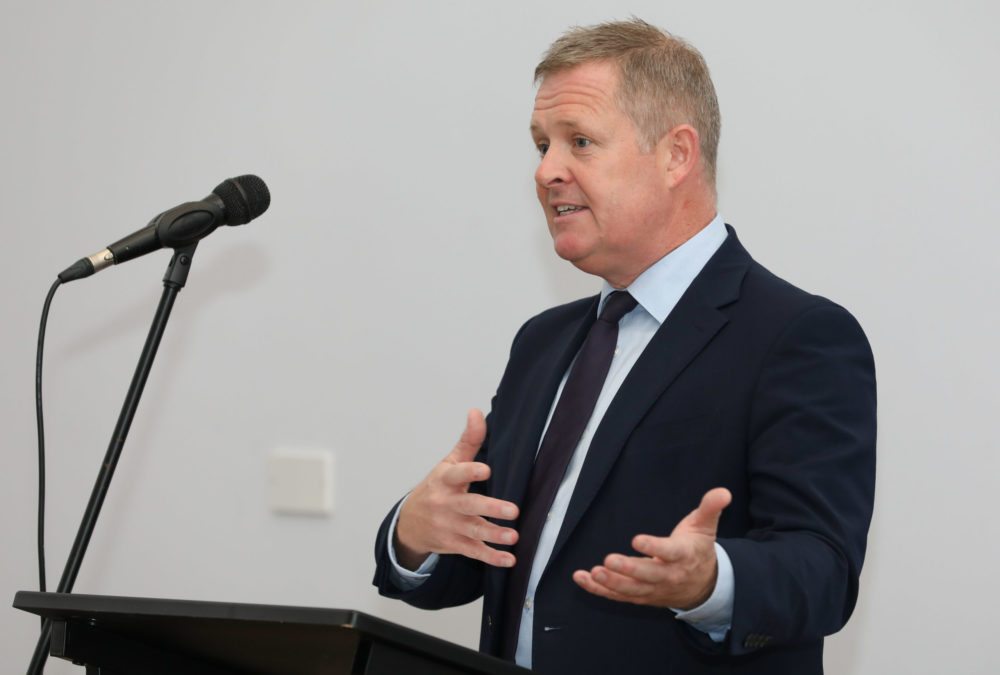
Welsh Government Health and Social Care Secretary, Jeremy Miles said: “Wales is proud to support this initiative which has real potential to see Welsh patients directly benefit from more organs becoming available for transplant.
“With many people across Wales waiting for an organ transplant, this innovative approach offers real hope for patients and families throughout our communities.”
Inovative
Anthony Clarkson, NHSBT Director of Organ and Tissue Donation and Transplantation, said: “There is an urgent need to innovate in organ utilisation. Survival on the transplant waitlist is a daily struggle, and hundreds of patients will die this year before they can receive a life-saving transplant.
“Donation alone cannot close the gap. The ARCs programme will help us preserve donor organs so we can assess them and make the best use of the gift of donation.”
John Richardson, NHSBT assistant director of Organ and Tissue Donation and Transplantation, said: “Demand for organs is growing but the donor population is reducing
“Maximising the number of organs that each generous donor can donate is key to meeting this unmet demand.
“ARCs have the ability to deliver a step change increase in the number of organs suitable for transplant.
“Currently, many organs are declined for transplant as there’s not enough time to know if they function well enough to be safe to transplant.
“In the ARCs pilot, machine perfusion unlocks our ability to better assess an organ’s function and identify if an organ is safe to transplant; organs which could not otherwise be used despite the gift of donation.
“Every transplant, including those which will be done through ARCs, rely on the gift of donation and the generous decision that donors and their families make to donate. Arcs will help us to better honour the gift of donation, by enabling us to assess organs that have been donated and identify more that are safe to transplant.”
Derek Manas, Medical Director for Organ and Tissue Donation and Transplantation at NHS Blood and Transplant, said: “This is a pilot, which could lead to full ARCs. These will be unique clinical facilities where precious donated organs can be sent to be evaluated and assessed for suitability to be transplanted.”
Support our Nation today
For the price of a cup of coffee a month you can help us create an independent, not-for-profit, national news service for the people of Wales, by the people of Wales.


