


Welsh hospital joins world-first cancer breath test trial
Nation.Cymru staff
A hospital in north Wales has become the first outside England to take part in a major trial of a potentially groundbreaking breath test for pancreatic cancer.
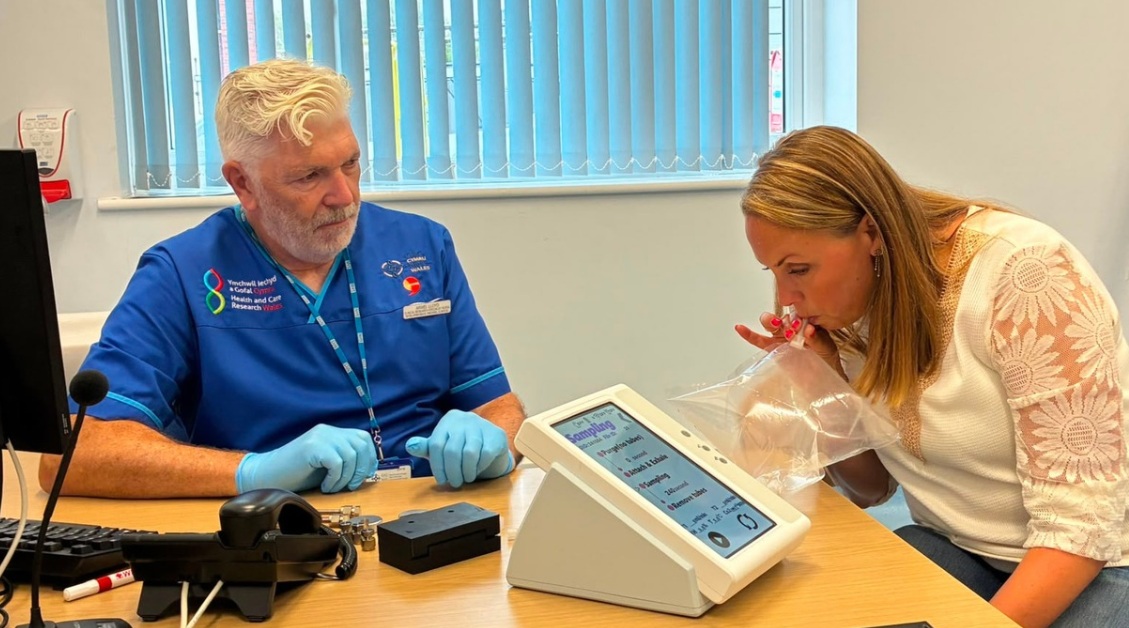
Wrexham Maelor Hospital is joining a UK-wide clinical trial involving more than 6,000 people as scientists investigate whether the breathalyser-style test can detect the disease at its earliest stages.
The development has been welcomed by Gresford resident Louise Dale, whose mother Carol Purchase died just 12 weeks after being diagnosed with pancreatic cancer in March 2024.
Hundreds of people in Wales who are suspected of having the disease are expected to participate in the trial, which is backed by more than £1.1m from Pancreatic Cancer UK.
The test, developed by scientists at Imperial College London, analyses compounds in a person’s breath that can change when cancer is present.
Professor George Hanna, who leads the research team, hopes it could eventually be available in GP surgeries, potentially within the next five years.
Ms Dale’s mother had experienced indigestion and stomach pain during the year before her diagnosis, but the symptoms were initially attributed to stress.
Her appetite later changed and she began losing weight rapidly. Several tests proved inconclusive before an ultrasound resulted in a referral for a CT scan.
With Ms Purchase in severe pain and facing a three-week wait, her family paid for a private scan which revealed pancreatic cancer.
She underwent one round of chemotherapy but became too unwell to continue and died aged 69, eight days before her 70th birthday.
Ms Dale said: “Losing my mum so quickly to pancreatic cancer changed our family forever. As someone from Wrexham who knows how devastating the disease is, it means so much to know our community is helping to improve the future for other families who face it.”
Around 529 people are diagnosed with pancreatic cancer in Wales each year, but there is currently no screening or early detection test.
Its symptoms can be vague, making it difficult for doctors to determine which patients require further investigation.
Exhaled
The new test detects volatile organic compounds (VOCs), which circulate in the bloodstream before being filtered through the lungs and exhaled.
Cancer can produce different combinations of these compounds, potentially allowing scientists to identify people who should be urgently referred for further investigation.
Taking a breath sample can take as little as 30 seconds, with researchers believing results could eventually be returned to GPs within three days.
An earlier two-year study analysed more than 700 breath samples from people with and without pancreatic cancer and those with other pancreatic conditions. Initial findings suggested the technology could detect pancreatic cancer with a high degree of accuracy, including at an early stage.
Duncan Stewart, consultant surgeon at Betsi Cadwaladr University Health Board, said: “We are proud that our research facility in Wrexham is the first site outside England to take part in this landmark study.
“Through this research, patients from North Wales will play a vital role in helping to evaluate an innovative breath test which has the potential to support earlier diagnosis in the future.”
‘Exciting’
Pancreatic Cancer UK chief executive Diana Jupp said: “The breath test has the potential to revolutionise the early detection of pancreatic cancer, and it is hugely exciting to see this vital clinical trial expand into Wales.
“While more years of development are still needed, local patients with an unknown diagnosis will now help refine the breath test in the real world.”
Professor Hanna said researchers ultimately hope to develop a single breath test capable of detecting and distinguishing between several gastrointestinal cancers.
He said: “If our findings from the initial phase can be validated in participants with an unknown diagnosis, the breath test has huge potential to influence clinical practice and improve pancreatic cancer diagnosis.”
Support our Nation today
For the price of a cup of coffee a month you can help us create an independent, not-for-profit, national news service for the people of Wales, by the people of Wales.
Get more trusted Welsh news
Choose Nation.Cymru as a preferred source in Google News to see more of our journalism.



An electronic version of the dogs used to diagnose diseases by odour. Bladder cancer and Parkinson’s and Covid are examples.