Welsh Language Commissioner steps down from role
Stephen Price
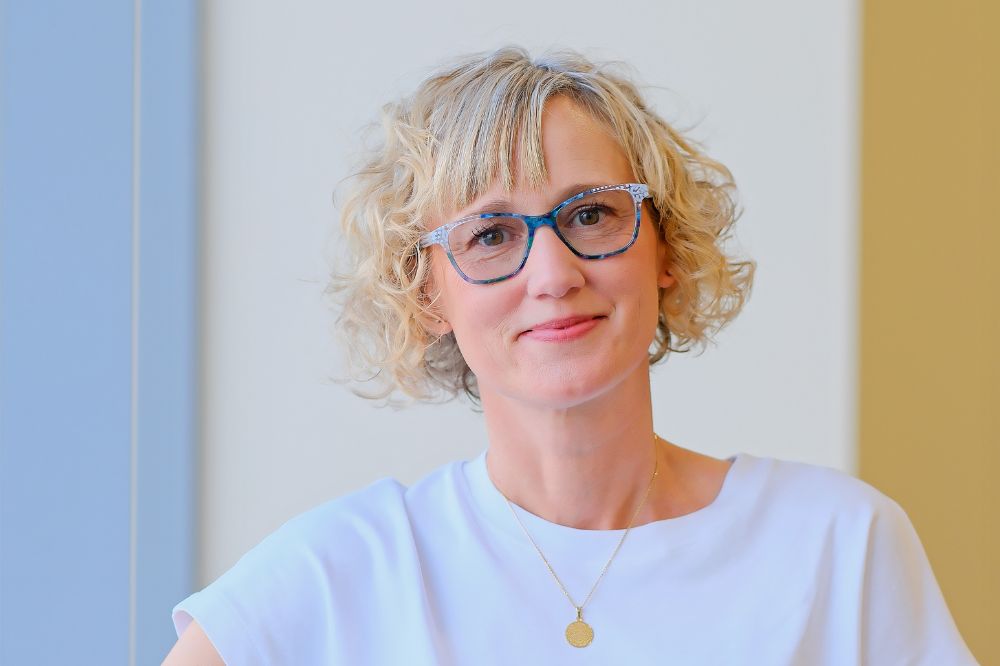
Efa Gruffudd Jones has resigned from her position as Welsh Language Commissioner today, citing personal reasons.
In a Written Statement by Rhun ap Iorwerth MS, the First Minister of Wales shared: “I have today accepted the resignation of the Welsh Language Commissioner, Efa Gruffudd Jones for personal reasons.
“I thank her for all her work since her appointment in 2023.
“A full public appointments process will now be undertaken for a new Commissioner.
“In the meantime, Ms Gruffudd Jones appointed Lowri Williams as Deputy Welsh Language Commissioner, who will therefore exercise the functions of the Commissioner until the appointment process concludes.”
No further statements have been made about Gruffudd Jones’ reason for stepping down from the role.
The commissioner had come in for criticism this month, following the news of the final decision on the ‘ridiculed’ Welsh name for Varteg.
Throughout her tenure, she had faced repeated criticism for her inaction on many controversial decisions on place names across Wales – including the location in Torfaen, Llanelly Hill in Monmouthshire and others, as well as discussion over the ‘over-use’ of hyphens in Welsh place names that has taken place on her watch.
Unlike the village formerly known to locals as Rhiw Llanelli, however, in the case of Y Farteg, The Welsh Language Commissioner had recommended the use of Y Farteg, with their website sharing: “Y Farteg is the form recommended in the national standard reference work, A Gazetteer of Welsh Place-Names (University of Wales Press, 1967). One should not deviate from its recommendations without good reason.
“The form Y Farteg would ideally be the only form used in both Welsh and English, as it is a Welsh name and the ‘English form’ represents a non-standard spelling. It should be noted, however, that the form Varteg is commonly used, and that this is the only form officially adopted by the local authority.
“The Welsh definite article (y/yr) should be included in full and capitalised when preceding the Welsh form on signage where the place-name is the main focus of the sign. Further advice on how to display place-names on signage can be found in the technical guidance on our website.
“When writing this name as part of a Welsh sentence, the definite article should be shown in lower case, e.g. ‘yn y Farteg’ (in Varteg). It can also be contracted following a vowel in accordance with the rules of Welsh grammar, e.g. ‘mynd i’r Farteg’ (going to Varteg).”
A plan to settle on a formally agreed list of names, in English and Welsh, for towns and villages across Torfaen in 2013 led to a row when residents in Varteg on the outskirts of Pontypool objected to using an F in the Welsh spelling.
They feared they would be ridiculed if Y Farteg was placed on the village road sign, with the F proposed as there is no V in the Welsh alphabet. Following a consultation in 2013 Torfaen Borough Council agreed to continue using the spelling Varteg in both languages.
Though the council had sent its list of approved list of place names to the Welsh Language Commissioner in 2013 they were never adopted on a national level.
In January last year the commissioner approached the council to look again at the issue and come to a consensus on standardising Torfaen place names.
As a result a list of 54 names to be recognised as the official names in both English and Welsh has been agreed between the council and the commissioner.
The list also confirms Varteg will continue as the official spelling for the village in both languages.
In Cwmbran the name for Fairwater will continue to be used as the official name for the area in the south west of the town in both English and Welsh while Sebastopol, between Cwmbran and Pontypool and named for the siege of that name during the Crimea War, will continue with the same spelling in both languages.
The council’s Welsh language compliance notice has been in place since 2016 with the overarching principle of “treating the Welsh language no less favourably than the English language.”
The list has been approved for use throughout the borough and further afield in a decision taken by the council’s cabinet member for corporate governance, Labour’s Peter Jones, who represents Cwmbran’s Two Locks ward whose officially agreed name in Welsh is ‘Dwy-loc’.
A report by the council’s Welsh language policy-officer Alan Vernon-Jones said the failure to adopt the names on a national level had been causing confusion.
He stated: “Despite sending the Welsh Language Commissioner our approved list of names, these were never adopted on a national level. This has proved problematic in recent years, with the majority of external organisations looking at the commissioner’s website for official Welsh names, rather than consulting with the local authority.”
A revised list was compiled using a combination of the consultation findings from 2013 and expertise from the commissioner’s office.
Mr Vernon-Jones said the process had taken longer than expected, following the approach in January 2025, due to the standardisiation panel only meeting at certain times of the year.
Any required changes to bilingual names on signs will only be carried out as a result of replacement or scheduled renewal.
The list will also be distributed to council teams and staff and managers will be made aware of the agreed standardised list to ensure that staff use the Welsh language names in the course of their work.
Standards
In August, Gruffudd Jones called for Welsh language standards to be expanded as she marked a decade since their introduction at the National Eisteddfod.
Her hope was for the next decade to be used to expand and strengthen the standards in order to respond to new challenges and support the Cymraeg 2050 aspirations.
According to the Commissioner, Welsh language standards have been crucial in ensuring a consistency among Welsh language services across the public sector.
Efa Gruffudd Jones had also recently said existing Welsh language promotion strategies had yet to reach their full potential and should play a greater role in creating opportunities for people to speak the language in their daily lives.
The issue became the focus of a conference in Cardiff in September, bringing together around 150 representatives from organisations working to promote Welsh across the country.
She also recently raised concerns about the impact of BBC cuts on minority-language services alongside the Irish Language Commissioner for Northern Ireland
Efa Gruffudd Jones and Pól Deeds emphasised the vital role broadcasting plays in promoting regional and minority languages worldwide and warned that recent BBC announcements could be a threat to that.
Call for urgent appointment ‘with a deep commitment to language rights’
Cymdeithas yr Iaith has called for the urgent appointment of a new, permanent, Welsh Language Commissioner with a track record of taking action to defend language rights, following the resignation of the current postholder.
In August this year, the campaign group voiced serious concerns about the Commissioner’s failures to regulate properly, pointing to the lowest number of complaint investigations on record, concerns about the relocation of the Commissioner’s office to the Welsh Government’s headquarters, and the weakening of a range of language rights policies.
While welcoming the appointment of Lowri Williams as Deputy Commissioner and wishing her well, Cymdeithas yr Iaith is calling for a swift appointment of a permanent Commissioner who will take forward the role’s core duties of regulation by expanding and strengthening Welsh language standards, holding public bodies and companies to account for their shortcomings, and re-establishing the Commissioner’s independence.
Heledd Gwyndaf, Chair of Cymdeithas yr Iaith’s Language Rights Group, said: “Having an effective regulator with a deep commitment to language rights is essential. Cymdeithas yr Iaith has long expressed concern about the weakening and devaluing of the Commissioner’s important regulatory role.
“What we have seen is the erosion of the office’s independence and its transformation into a body that promotes the Welsh language through soft approaches, siding with institutions while becoming increasingly dismissive of ordinary people’s experiences and the barriers citizens still face when trying to live their lives through Welsh.
“The new Welsh Government has been elected on ambitious promises to expand and strengthen rights, including extending them to banks, supermarkets and private car parks. We must have a Commissioner who is prepared to return the institution to its core function of standing up for Welsh-language rights.
“To turn the tide in favour of our language rights, the next Commissioner must start with a clean slate by committing to abandon the failed experiment of co-regulation. That work should begin immediately under the new leadership of Lowri Williams as Deputy Commissioner.
“We need the appointment of a permanent Commissioner that will restore confidence in the role as a serious, independent regulator – someone with the determination and commitment to exercise the full force of the law for the benefit of the Welsh language.”
Support our Nation today
For the price of a cup of coffee a month you can help us create an independent, not-for-profit, national news service for the people of Wales, by the people of Wales.
Get more trusted Welsh news
Choose Nation.Cymru as a preferred source in Google News to see more of our journalism.