

Welsh language school set for closure publishes counter-proposal
Stephen Price
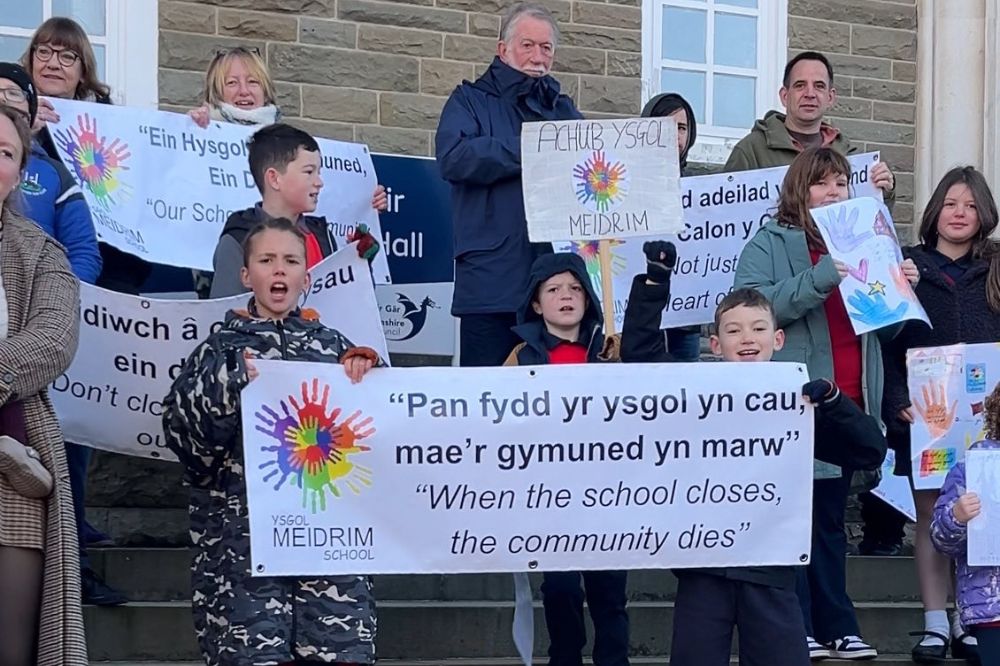
Governors at a Welsh language village school have published a counter-proposal to plans to close the school, which they say will save the local council millions of pounds and help provide a much needed community hub.
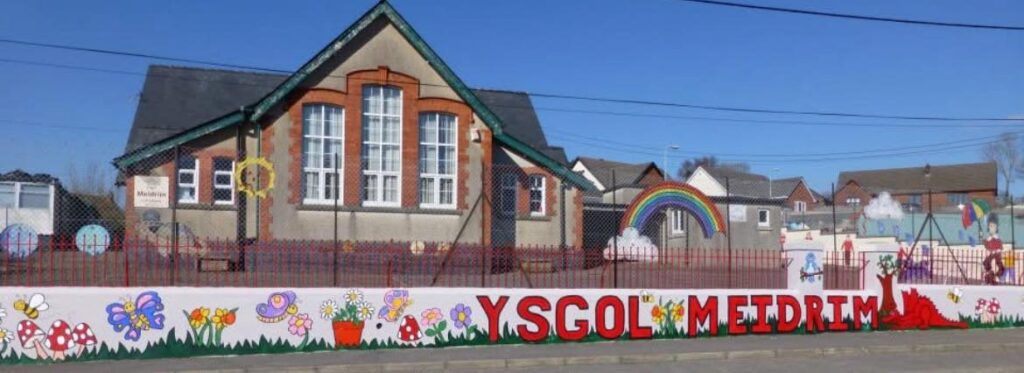
Ysgol Meidrim in Carmarthenshire is currently facing a 6-week consultation on a proposal to close their school began on 16 January, according to a message received by Chair of Governors Ann Jones from the Council’s Chief Executive Wendy Walters.
The consultation was published on Friday 16 January, with consultation documents published in both Welsh and English, at the same time.
Members of Carmarthenshire council’s cabinet agreed to publish a statutory notice to close Ysgol Llansteffan, Llansteffan, and start a formal consultation about Ysgol Y Fro, near Kidwelly, and Ysgol Meidrim, west of Carmarthen. But a formal consultation about Ysgol Pontiets, Pontyates, is being delayed.
People will be able to respond to the statutory notice and consultations for the three affected schools and any final closure decisions would be made by full council.
Councillors Meinir James and Jean Lewis, whose wards include Ysgol Y Fro and Ysgol Meidrim respectively, addressed cabinet urging members to think again, with some parents having no option but to home-educate or send their children to dual stream or English-speaking schools.
The Governors of Ysgol Meidrim have responded by publishing a counter-proposal which they have been working since the Cabinet decision in November to go to consultation.
The Governors proposal is to plan a viable future for the school by developing it in parallel out of school hours as a viable Community Hub. Their 73-page document contains detailed research and a cost-benefit analysis of the project including lists of the various funding sources available to get the project running. The viability does however depend on the school being retained on the premises as a focal point for young families and as an integral part of the funding model. In addition, the governors have published a helpful supplement detailing ways by which the Council could save a quarter of a million pounds from its education budget without depriving communities of their schools.
The hope now is that Council officers will be asked by elected members to use the 6-week consultation period to engage with the Governors to discuss the proposals in detail during the 6-week period in a genuine attempt to reach a positive outcome.
Proposal
On behalf of the Governors, Sian Straczek of Meidrim said: “When a rural school faces closure, the public debate often follows a familiar pattern. Communities understandably respond with anger, fear and grief, while decision-makers brace themselves for what they sometimes dismiss as “emotional opposition.” Too often, this dynamic leads to entrenched positions and a narrow choice between closure or protest.
“What is happening in Meidrim is different.
“The proposal developed by the Governors of Ysgol Meidrim does not simply object to closure; it offers a credible, lawful, and forward-looking alternative that aligns with Wales’s long-term policy direction on education, community sustainability, and wellbeing. In doing so, it reframes the discussion entirely.
“The possibility of closure has concentrated minds not in resistance, but in innovation. Governors, parents, and the wider community have worked together to produce a detailed counterproposal that shows how Ysgol Meidrim could remain open while evolving into a community, wellbeing, and resilience hub, serving both pupils and the village as a whole.
“This matters because the law matters. Under the School Organisation Code (2018), councillors must be satisfied that closure is demonstrably the best option for pupils’ outcomes. Under the Well-being of Future Generations (Wales) Act, public bodies are required to think long-term, prevent harm, and work with communities rather than against them. A viable alternative therefore cannot simply be acknowledged and set aside it must be properly considered.
“The Governors’ proposal does exactly what these duties require. It keeps children learning locally, protects Welsh-medium provision, and places particular emphasis on supporting pupils with Additional Learning Needs children for whom stability, familiarity and small, nurturing environments are often essential. Evidence shows that longer journeys, larger settings and disrupted relationships can disproportionately disadvantage these learners.
“Beyond education, the proposal recognises the wider role schools play in rural Wales. Time and again, research and lived experience show that when a village school closes, the effects are not immediate but cumulative. Within five to six years, younger families leave, services decline, Welsh language use weakens and community life erodes. Preventing that long-term harm is precisely what the Future Generations Act was designed to address.
“Crucially, this is not an abstract vision. The proposal is grounded in practical delivery. It draws on proven models such as community hubs elsewhere in Wales, identifies grant funding streams already available, and explores realistic governance and financial arrangements. Work is already under way on elements such as community energy and shared-use facilities early action that demonstrates intent and credibility.
“This is why the proposal should be seen not as an obstacle to decision-making, but as an opportunity. It offers councillors and officers a positive narrative: that a closure proposal prompted a pioneering, community-led solution; that engagement led to better outcomes; and that Carmarthenshire can pilot a model for rural education and regeneration that others may follow.
“Importantly, this is not about mass campaigning or winning an argument in the abstract. It is about persuading the right people through serious discussion, evidence, and collaboration – that a better option exists. If decision-makers engage with the proposal, they may not own it, but they can become stakeholders in its success.
“Ysgol Meidrim’s future does not have to be framed as a loss to be managed. It can be framed as a success to be enabled. The Governors’ counterproposal shows that, when communities are treated as partners rather than obstacles, better solutions emerge for pupils, for villages, and for Wales’s long-term wellbeing.”
Support our Nation today
For the price of a cup of coffee a month you can help us create an independent, not-for-profit, national news service for the people of Wales, by the people of Wales.



Look at Bontddu and Ganllwyd, not a soul in sight anymore, Bontddu should surrender its 20mph status, absolute no need for it…
Killing Welsh language schools kills Wales.