


Welsh locations named among most ‘spectacular’ places to see bluebells
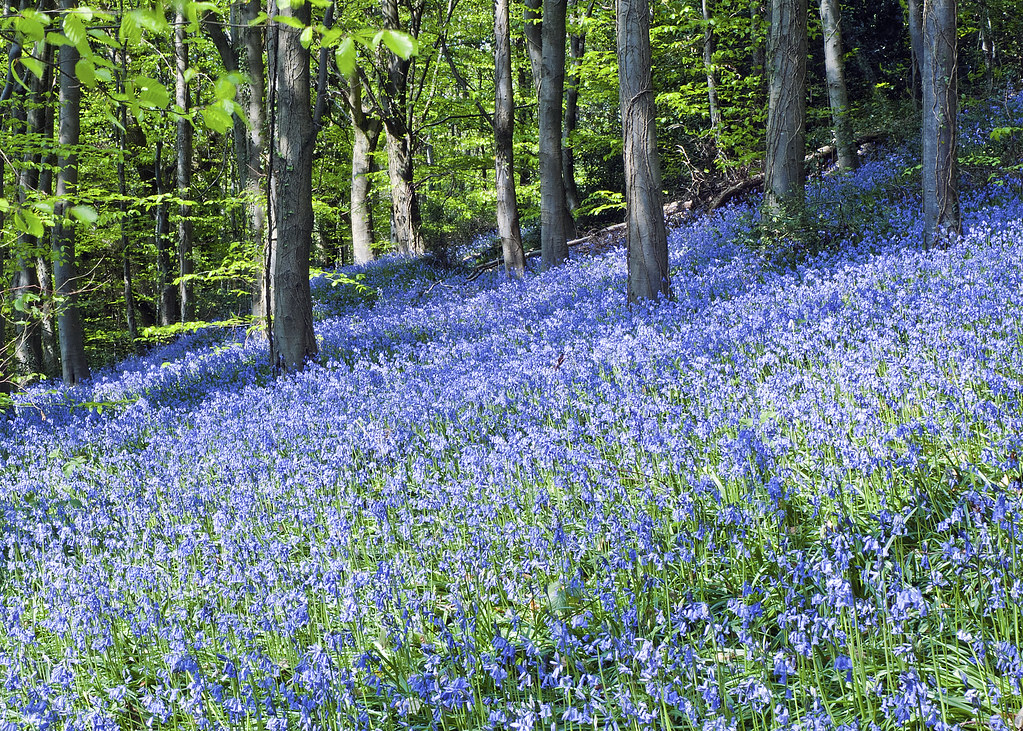
Five Welsh locations have been named in a ranking of the UK’s most ‘spectacular’ bluebell woods to visit this spring.
The UK is home to over half the world’s bluebells, usually blooming from late March to early May and flowering for only a few weeks.
The perennial plants are an indicator of ancient woodlands and are very sensitive to footfall, struggling to recover once damaged. They are protected in Wales and the UK under the Wildlife and Countryside Act, 1981.
Ceci Browning, writing in The Times, noted that the flowers have bloomed a fortnight early this year “thanks to the soggy winter”, and encouraged readers to immerse themselves in floral walks.
Browning ranked the 20 best spots to see the flowers across the country before woodland canopies close and they disappear for another year.
Priory Grove, Monmouthshire
Part of the Wye Valley Area of Outstanding Natural Beauty and the Fiddlers Elbow Site of Special Scientific Interest, Priory Grove is renowned for its ‘swathes’ of bluebells, alongside a variety of wildlife and spring flora
The woodland is also home to spring-flowering plants including cuckoopint and wood anemones, as well as tawny owls, blackcaps, badgers, dormice and even roe and fallow deer.
The Woodland Trust offers a podcast with Kate Humble, who lives nearby, to listen to on walks around the woods.
Wentwood, Monmouthshire
The largest ancient woodland in Wales, this majestic spot once played host to hunts for residents and guests of nearby Chepstow Castle.
Wentwood, which rises to over 1,000ft in elevation, offers views over the Severn estuary and, of course, of large patches of bluebells. As well as turtle dove and muntjac deer, visitors can also look out for Bronze Age burial mounds elsewhere in the forest.
The Woodland Trust has made efforts to restore the woodland, thinning conifers planted in the 1960s and improving wildlife habitats.
Graig Fawr, Port Talbot
A popular hike in Port Talbot, the 8km ring around this woodland in Margam allows ramblers to see bluebells in bloom throughout the trees.
Venturing into the wood, there are six sites of archaeological interest to find, including a World War II radar station and a monk’s bathhouse from the 14th century.
Browning suggests that visitors also take the trip to nearby Margam Castle to explore the 19th century Gothic mansion and its grounds.
Coed Cefn, Powys
Coed Cefn in Crickhowell is another ancient woodland that has the bluebells and an Iron Age hill fort to prove it.
Although it is known locally as ‘Bluebell Wood’ for its vast displays of the flower that dominate the woodland floor in spring, it is also home to woodpeckers, tree creepers, and sparrowhawks.
Taking the circular path around the woods, visitors can also see hazel, sycamore and beech trees, and perhaps spot wood mice, voles, stoats, rabbits and hares around their trunks.
Green Castle Woods, Carmarthenshire
The last of the Welsh locations on The Times’ list, Green Castle Woods in Llangain actually comprises three woodlands; two of ancient oak and one planted in 1996. Bluebells are visible from the various winding paths and are most abundant in the ancient woods.
In warm spring weather, visitors may also see lizards lazing in the sunshine, smell the perfume from the orchard of fruit trees planted in 2012, as well as spot the first signs of wildflower meadows bringing even more colour to the area.
Read the full list of ‘The UK’s 20 best places to see bluebells now’ here.
Support our Nation today
For the price of a cup of coffee a month you can help us create an independent, not-for-profit, national news service for the people of Wales, by the people of Wales.
Get more trusted Welsh news
Choose Nation.Cymru as a preferred source in Google News to see more of our journalism.



