


Welsh locations named in Britain’s ‘best places to retire’ list
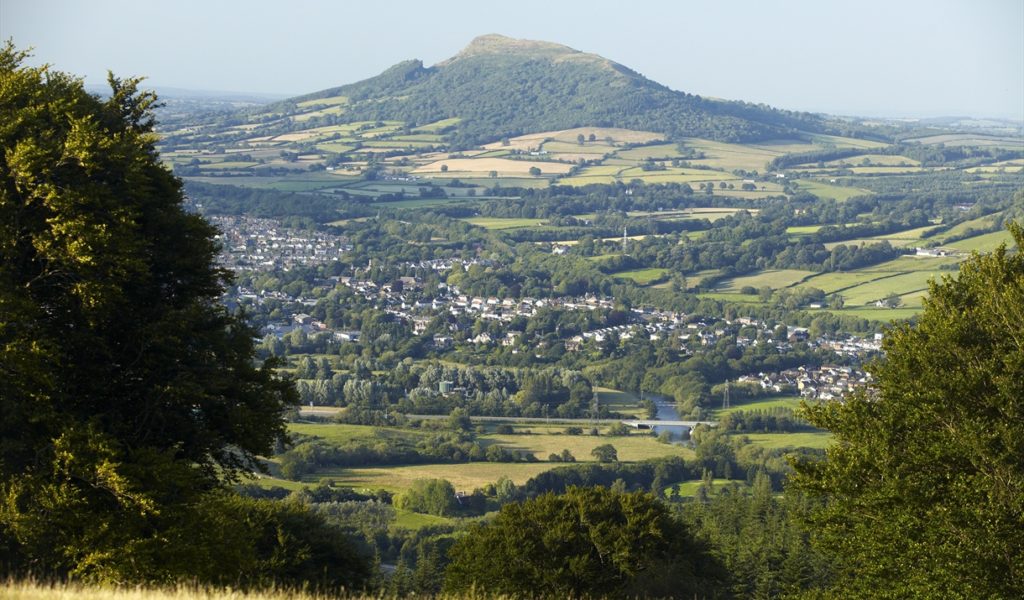
Visit Monmouthshire
A study scoring areas that make up a happier later life has revealed the top places for retirees in the UK, and named the best counties for people ‘to retire to’ in Wales.
The study from L&G looked at factors including access to healthcare, opportunities to build social connections, access to nature, local amenities and financial security
Monmouthshire came top of the list in Wales, followed by Dwyfor Meirionnydd, Vale of Glamorgan and Ynys Mon in the index compiled by L&G.
L&G said the areas performed “exceptionally well” on its health measure, reflecting a strong proportion of over-65s in good physical and mental health.
They also scored highly on financial security and in other areas, such as access to nature and community, making it a well-rounded environment for later life, according to the index.
The index was compiled by scoring areas against six “pillars” – housing, health, social and community, financial, nature, and amenities.
This was based on analysis of a wide range of existing data including Office for National Statistics (ONS) figures, census data and housing and house price reports.
Opinium survey findings from research among 3,000 UK retirees in April 2024 were also analysed. The happiest retirees were defined as those with a life satisfaction score greater than the sample median average.
“A happy later life”
Lorna Shah, managing director – retail retirement, L&G, said: “This research gives us a more complete picture of what shapes a happy later life. It’s not just about one factor – it’s the combination of health, social connections, environment, and financial security that all play a part in retirement wellbeing.
“Financial security in particular, is an enabler for many of the other measures, giving people the freedom to choose where and how they want to live in later life.”
L&G said the south west of England performed well in its index in relation to housing, which considered factors such as access to residential care homes and the availability of suitable senior housing in the region.
Bristol Central in Bristol, Gloucester in Gloucestershire, and Bournemouth East in Dorset all performed well for suitable housing for those in retirement.
Meanwhile, Lancashire’s Fylde area was the top performer in terms of social and community connection, followed by Lowestoft in Suffolk and Dorking and Horley in Surrey.
This pillar considered the number of adults in the area aged 65 and over, life satisfaction levels, reported levels of happiness, and distance to the nearest station.
The East of England scored well when ranked according to the nature pillar with Castle Point, Essex, South Holland and The Deepings, Lincolnshire, and South Cambridgeshire, Cambridgeshire, making the top three.
This pillar involved looking at air quality, reported summer days, the percentage of addresses with private outdoor space, and the average size of private outdoor space.
London constituencies claimed the top spots when assessed against the amenities pillar with Cities of London and Westminster, Holborn and St Pancras, and Islington South and Finsbury, all making the top three.
Wales and Scotland also made the top five with Dwyfor Meirionnydd (Wales, Gwynedd) and Glasgow East taking fourth and fifth spots respectively.
This pillar considered access to chemists, supermarkets, post offices, banks, libraries, and theatres, among other amenities.
Here are the best places to retire in Britain, according to L&G’s index:
1. Chesham and Amersham, Buckinghamshire
2. Beaconsfield, Buckinghamshire
3. Dorking and Horley, Surrey
4. Godalming and Ash, Surrey
5. Mid Sussex
6. Woking, Surrey
7. Farnham and Bordon, Surrey
8. Esher and Walton, Surrey
9. Suffolk Coastal, Suffolk
10. East Grinstead and Uckfield, West Sussex
11. Henley and Thame, Oxfordshire
12. Sevenoaks, Kent
13. New Forest West, Hampshire
14. Ruislip, Northwood and Pinner, Outer London
15. Tatton, Cheshire
16. West Dorset
17. Surrey Heath, Surrey
18. Maidenhead, Berkshire
19. Windsor, Berkshire
20. Guildford, Surrey
Here are the best places to retire in Scotland, according to L&G’s index:
1. Mid Dunbartonshire
2. Stirling and Strathallan
3. East Renfrewshire
4 West Aberdeenshire and Kincardine
5. Na h-Eileanan an Iar
6. Argyll, Bute and South Lochaber
7. Perth and Kinross-shire
8. Caithness, Sutherland and Easter Ross
9. Berwickshire, Roxburgh and Selkirk
10. Dumfries and Galloway
11. Inverness, Skye and West Ross-shire
12, Edinburgh North and Leith
13. Edinburgh West
14. Gordon and Buchan
15. Dumfriesshire, Clydesdale and Tweeddale
16. Angus and Perthshire Glens
17. Arbroath and Broughty Ferry
18. Ayr, Carrick and Cumnock
19. North East Fife
20. Aberdeenshire North and Moray East
Here are the best places to retire in Wales, according to L&G’s index:
1. Monmouthshire
2. Dwyfor Meirionnydd
3. Vale of Glamorgan
4. Ynys Mon
5. Mid and South Pembrokeshire
6. Bangor Aberconwy
7. Caerfyrddin
8. Gower
9. Bridgend
10. Brecon, Radnor and Cwm Tawe
11. Cardiff North
12. Clwyd North
13. Ceredigion Preseli
14. Clwyd East
15. Llanelli
16. Newport West and Islwyn
17. Pontypridd
18. Wrexham
19. Cardiff South and Penarth
20. Neath and Swansea East
Support our Nation today
For the price of a cup of coffee a month you can help us create an independent, not-for-profit, national news service for the people of Wales, by the people of Wales.



So promoting colonization.
They are mostly coming home.
Where is the proof?
All population increase in Wales is due to influx – mainly from across the border. This is evident from the census data, and the fact that the natural Welsh population is falling. This influx is in such large numbers that it can now be called colonization.
And the fact our young leg it from Cymru across the border at an at alarming rate and have always done so.
Yes when they are young, but they tend to to return to some part of Wales at a larger stage.
Rather a lot of the most attractive job prospects for talented younger folk demand a move to London and its environs because too little of that nature is to be had here in Wales. And of course this isn’t just something that uniquely affects Wales: both my own and my partner’s family come from England’s north-west, but several of them have, in pursuit of their careers, moved down to south-east England. Though of course there are exceptions: my daughter, born when we were living in Wales but who grew up from the age of four in north-west England after we’d… Read more »
Sais dw i, ond Cymraes ydy fy mhartner. Mae hi wedi ymddeol i wlad ei hen mamau. Dw i mor ddiolchgar am y croeso cynnes, a’r cyfle i ddysgu iaith y Nefoedd. Dach chi’n dweud y dylwn i fod wedi aros yn Lloegr?
The English colonists (as long as you keep south) are not the problem, those who own a second home are the problem, especially if they don’t invest in the local area or live there.
The Welsh invaded and pushed the builders of stonehemge into the fringes
Not in our area. Almost all Saes.
Yeah right. Lots of South Wales has no Welssh voices to be heard. Doubt Abergavenny any different. Moved housing issues from elsewhere onto Wales
‘So promoting colonization.’
Sort of, maybe.
But I’d argue that there are colonists and colonists! I grew up in England’s north-west, came to Wales as an undergraduate, took to it and ended up living and working here for a full two decades. I only moved back because of my father’s deteriorating health, and then got rather stuck there because my then young kids had settled in school.
Once my partner and I reached retirement, we opted – by preference – to come back here. So am I a ‘colonist’ who should go back whence he came?
Surely the problem expats are those that make it their retirement project to abolish Wales.
Fair comment: there are indeed people like that: maybe especially along our northern coastline where quite a lot of relatively well-heeled folk from Merseyside and Greater Manchester opt to retire.
But even so, all of us can’t be tarred with that brush. I made the effort to learn Welsh during the course of my years here, and while I’m still not entirely fluent, my Duolingo scores suggest that I can at least get by!
The Welsh invaded as much as English did. But remember without the emglish sword then the Welsh would’ve been destroyed by the Scottish. The Welsh fought alongside Aethelstan and together you crushed the scots amd safeguarded wales
Until they arrive and realise they are now under the auspices of The Senedd .
They will soon be weasling their way into the Senedd just you wait and see.
Contributing to the loss of our youth, economy and culture.
True, very few have even a basic level of respect where they’ll bother to learn any Welsh, and worst still, they bring their strange ideas of Wales being an extra county in England.
That’s because most of the retirees are English with plenty of money to spend .