


Welsh Parkinson’s patient says wearable technology trial has transformed daily life
Nation.Cymru staff
A retired teacher from Wales has praised the impact of NHS-backed research after taking part in a clinical trial using wearable technology to help people with Parkinson’s disease walk more confidently.
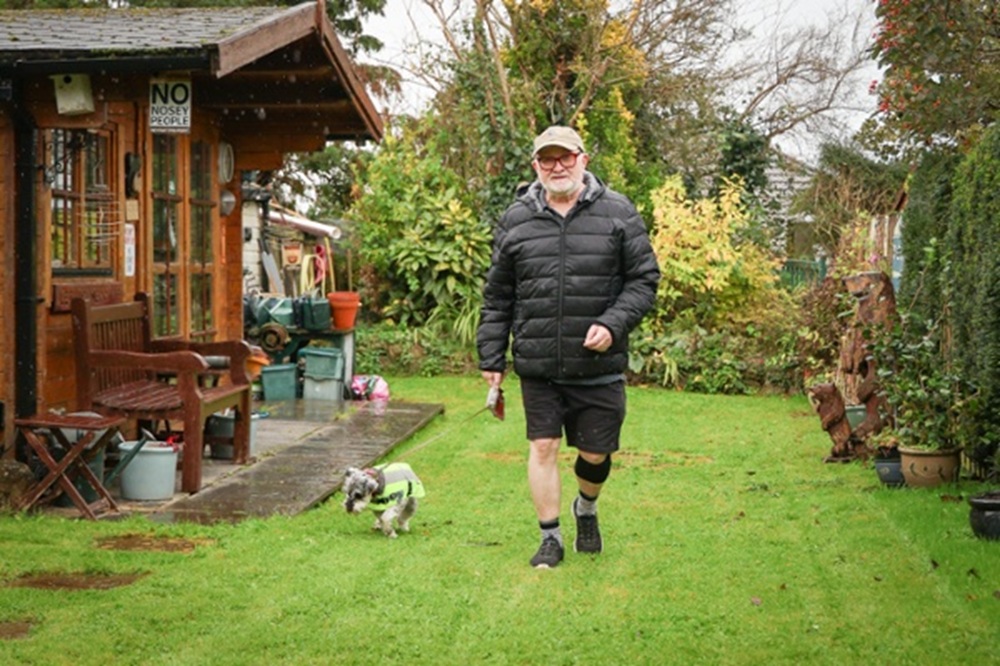
Malcolm Sims, 75, from Kittle on Gower, said the experimental treatment had transformed his mobility and allowed him to keep active after he was diagnosed with the neurological condition.
The study, known as STEPS II, investigated whether a small electrical device could help reduce symptoms such as slow movement and “freezing”, which can increase the risk of falls among Parkinson’s patients.
The trial was carried out at Swansea Bay University Health Board and involved patients across Wales, including participants at Betsi Cadwaladr University Health Board in north Wales.
The research is funded through a partnership between the Medical Research Council and the National Institute for Health and Care Research, with contributions from Health and Care Research Wales.
The project has been highlighted as part of International Clinical Trials Day on Tuesday, which celebrates the role of medical research in improving healthcare.
Around 60% of people living with Parkinson’s experience at least one fall each year, with falls among older people estimated to cost the NHS more than £1 billion annually.
Researchers hope the technology could help patients remain independent for longer while reducing hospital admissions linked to falls.
Malcolm said he initially struggled to understand why his walking had deteriorated.
“My wife Jayne and I enjoy going for walks with friends, but I felt like I was shuffling rather than striding out,” he said.
“I was referred to physiotherapy and then neurology, who sent me for a CT scan. We really weren’t expecting the doctor to tell us it was Parkinson’s; it hadn’t even crossed our minds.”
The device used in the study, known as the ODFS Pace, works through sticky pads attached to the lower leg which deliver small electrical impulses to stimulate nerves and help lift the foot while walking.
Malcolm said the changes had become increasingly noticeable over time.
“Jayne is a fast walker and I can keep up with her now,” he said.
“It’s made it much easier to keep active and keep going to the gym. My foot would feel like it was stuck to the treadmill, but now I’m lifting it much more normally.”
A former science teacher, Malcolm said he was keen to support research that could help others living with Parkinson’s.
“When I was diagnosed, I said I’d get involved in any research I was offered,” he said.
Similar technology
Lorna Tasker, Head of Rehabilitation Engineering at Swansea Bay University Health Board and one of the study’s principal investigators, said the health board had more than 20 years’ experience using similar technology with stroke and multiple sclerosis patients.
She said researchers hoped the study would provide a clearer understanding of how the device could benefit people with Parkinson’s disease and help prevent falls.
Professor Isabel Oliver, Wales’ Chief Medical Officer, said clinical trials were central to improving treatment and care across the NHS.
She said more than 800 clinical research studies had taken place across Wales during the last year.
“By taking part in research, you are shaping your own care and helping to improve health and services for future generations,” she said.
The Welsh Government recently announced a £22.1 million investment in industry-led research aimed at strengthening Wales’ role in clinical trials and medical innovation.
Support our Nation today
For the price of a cup of coffee a month you can help us create an independent, not-for-profit, national news service for the people of Wales, by the people of Wales.
Get more trusted Welsh news
Choose Nation.Cymru as a preferred source in Google News to see more of our journalism.



I was diagnosed with Parkinson disease in 2018, I had tremors and severe muscle weakness, I also had stiffness and balance issues. In 2022, I was introduced to PD-5 Ayurveda treatment program from Limitless Natural Wellness (Go to Limitlessnaturalwellness .com). I read some studies and immediately started on the PD-5 protocol; I noticed changes within months. I noticed the tremors stopped and my mobility improved; the body weakness and balance/gait issues also improved significantly. After completing the treatment, I am happy to report that my Parkinson disease is well under control. I feel very good and energetic these days!