


Welsh researcher joins Antarctic glacier mission
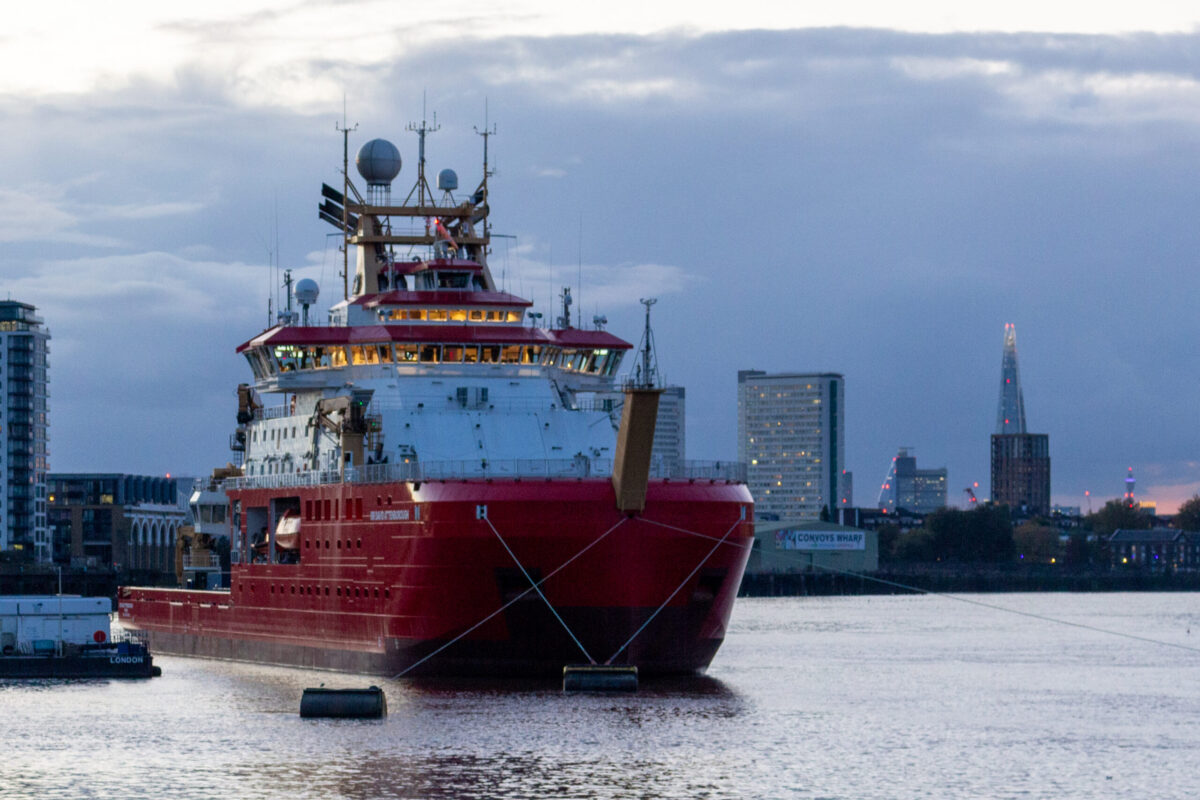
A Welsh researcher has travelled to Antarctica as part of an international mission studying glaciers and climate change.
Bangor University PhD student Kate Retallic is part of the international research team for the pioneering POLOMINTS project – led by the British Antarctic Survey (BAS).
The retired Royal Navy Officer from Penmachno, near Betws-y-Coed, made the journey on board Royal Research Ship Sir David Attenborough, and is now staying at the Rothera Research Station on the Antarctic Peninsula.
Kate’s career has taken her all over the world to conduct hydrographic surveys to improve the safety of maritime navigation and conduct scientific research.
She has discovered previously undetected shipwrecks while working in the Far East, dodged pirates in the Indian Ocean and mapped shallow estuaries and beaches around the UK.
The POLOMINTS (POLar Ocean Mixing by INternal Tsunamis) project aims to discover the effects from powerful underwater tsunamis triggered when blocks of ice fall from glaciers into the water around the enormous frozen continent.
The project is a collaboration led by BAS, and includes Bangor University, the Scottish Association for Marine Science, the University of Southampton, the University of Leeds, the National Oceanography Centre, and the University of Exeter.
International partners are from the Scripps Institution of Oceanography (USA), the Institute of Geophysics of the Polish Academy of Sciences (Poland), the University of Delaware, and Rutgers University (both USA).
Kate said: ”It is a privilege to work in such an inaccessible place where so much is still unknown.
“Examining processes in Antarctic fjords is complicated as there are a lot of variables which interact but ultimately have a wide-reaching impact when you consider the vast number of fjords across the continent.
“I am excited to have this opportunity to use my professional training using multibeam echosounders in a scientific context to examine how the underwater shape of the glacier affects calving processes and the generation of internal tsunamis.
“I am extremely grateful to both Bangor University and the British Antarctic Survey for enabling this work and I look forward to generating some exciting results”.
Kate’s PhD supervisor, Professor Katrien Van Landeghem, added: “As part of this truly exciting POLOMINTS project, the first of two field campaigns in Antarctica has just finished.
“Kate travelled to the West Antarctic Peninsula on the RRS Sir David Attenborough, one of the most advanced polar research vessels in the world. In freezing temperatures and challenging environments with icebergs all around, Kate then got closer to the ice margin with the smaller workboat Erebus to collect acoustic data from the ice front using Bangor University’s state-of-the-art sonar equipment.
“With this data she will make maps of the shape of the actively calving glacier all the way to the seabed, and these maps will help the team investigate how the physical and biological environment changes when large block of those glaciers break off and tumble into the ocean and stir the water.”
POLOMINTS is funded by the Natural Environment Research Council.
Support our Nation today
For the price of a cup of coffee a month you can help us create an independent, not-for-profit, national news service for the people of Wales, by the people of Wales.
Get more trusted Welsh news
Choose Nation.Cymru as a preferred source in Google News to see more of our journalism.


