


Welsh researchers join global study into cancer ‘super-survivors’
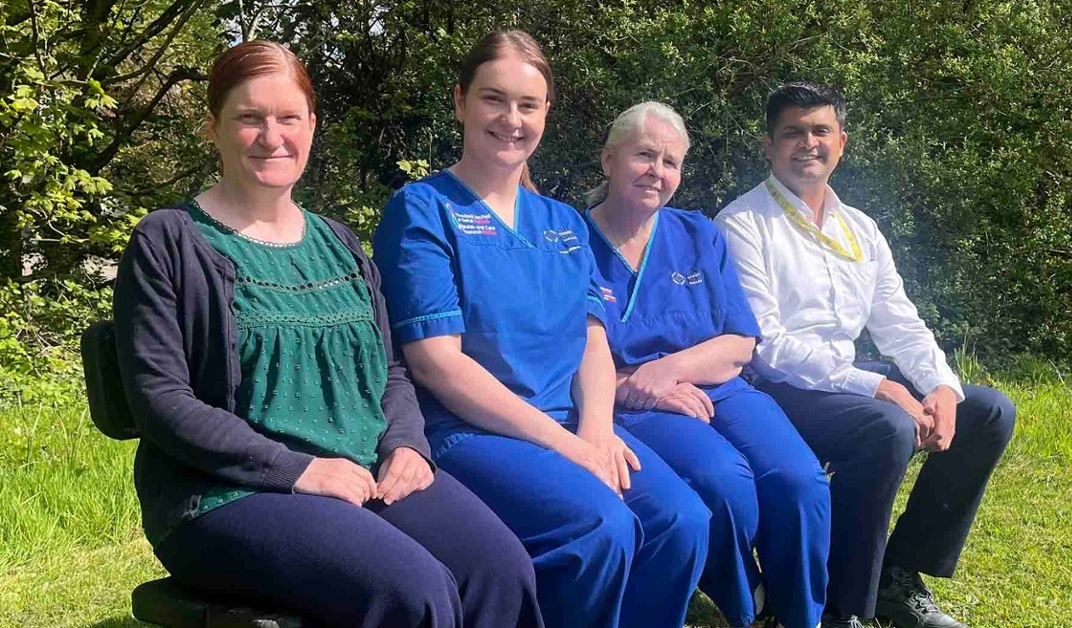
Cancer patients who have defied the odds are helping scientists unlock new treatments through an international study into so-called “super-survivors”.
The South West Wales Cancer Institute at Singleton Hospital is one of just 17 oncology centres across the UK taking part in the Rosalind study — and was the first in Wales to recruit a patient.
The research focuses on people who have survived more than five years after being diagnosed with particularly aggressive cancers, including metastatic pancreatic cancer and glioblastoma, a fast-growing form of brain cancer.
Clinicians at the Swansea centre have already recruited patients to both strands of the study, which is led by French techbio company Cure51.
Researchers hope that by analysing these rare long-term survivors, they can identify the biological factors behind their resilience and use those insights to develop more effective treatments.
Dr Prashanth Kainthaje Bhat, a neuro-oncologist involved in the study, said while outcomes for many cancers have improved over time, some remain extremely difficult to treat.
He said: “Over many decades we have seen improvements in cancer outcomes in most cancer sites.
“But with certain cancers there have not been new treatments and outcomes remain very poor.
“However, we know from our experience… that there is a small group of patients who have an exceptional outcome.”
He added that while the median survival for glioblastoma is around 15 months, around five per cent of patients survive for many years.
“So this study is looking at this cohort of patients as to why, in cancers with such poor outcomes, these patients are surviving longer,” he said.
The study involves detailed analysis of tissue samples taken during diagnosis and treatment, alongside a comprehensive review of each patient’s medical history, treatments and lifestyle factors.
Research nurse Rebecca Griffiths said: “We go through every cycle of treatment these patients have had and what their blood results were before each cycle.
“We send their GP records, any past medical history, all medications they were on, lifestyle factors, any family history of cancer, smoking, alcohol, and things like that.
“This provides Cure51 with a whole picture of them.”
Patients only need to give consent to take part, with no additional procedures are required.
The centre runs around 30 cancer trials at any one time and is regarded as one of the UK’s leading sites for patient recruitment.
Further phases of the Rosalind study are set to include patients with other cancers, including metastatic colorectal cancer, triple negative breast cancer and non-small cell lung cancer.
Unique population
Dr Bhat said it was important that centres like Swansea were involved to ensure a broad range of patients were represented.
He said: “It shouldn’t just recruit from big centres… To get true answers it has to recruit from all across them wherever possible.
“Our motivation to be involved is because our centre will represent a unique population which is quite rural but also a population which was previously quite industrial.”
Support our Nation today
For the price of a cup of coffee a month you can help us create an independent, not-for-profit, national news service for the people of Wales, by the people of Wales.
Get more trusted Welsh news
Choose Nation.Cymru as a preferred source in Google News to see more of our journalism.



