


Welsh share of Wylfa nuclear contracts unspecified as developers set 70% UK target
Nation.Cymru staff
Developers behind the planned nuclear project at Wylfa have set a target for UK companies to supply 70% of its content, but have not specified how much should go to Welsh businesses.
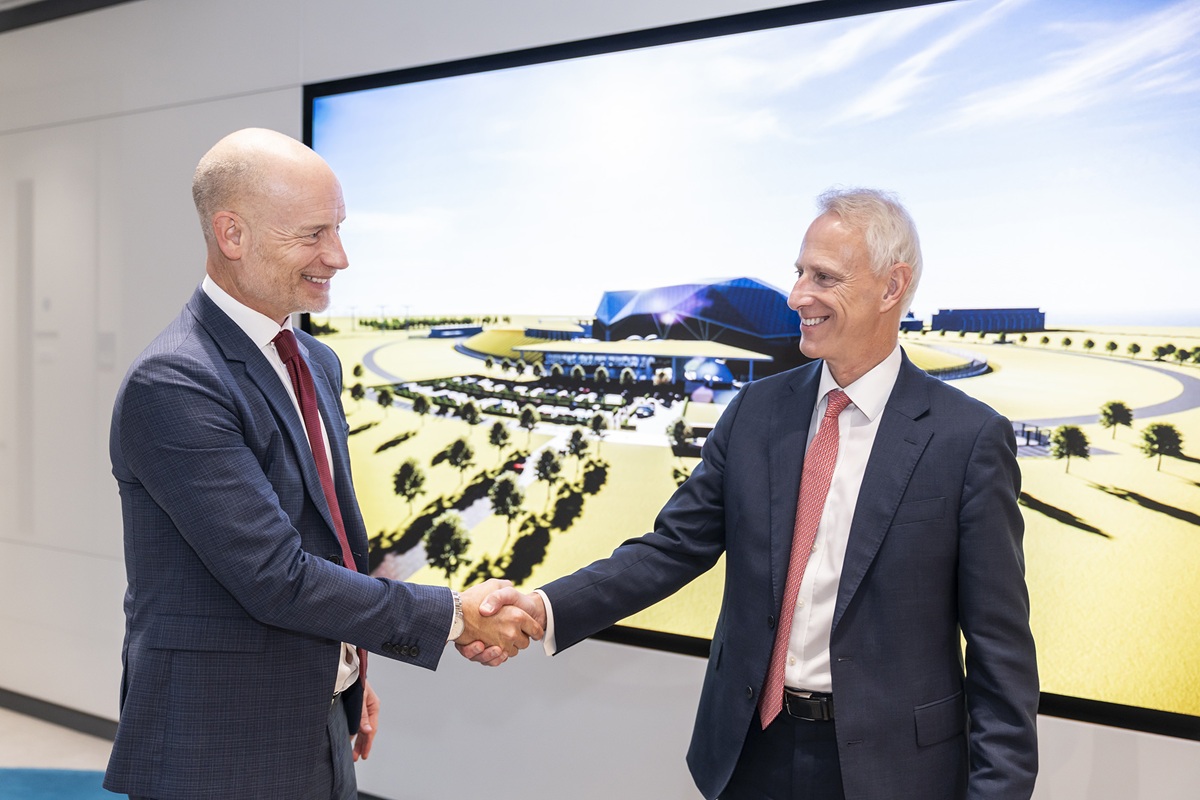
The ambition was outlined as more than 400 suppliers gathered at Coleg Menai’s Llangefni campus to explore opportunities linked to Gwyndod, the project to build the UK’s first small modular reactors on Ynys Môn.
Welsh ministers said the development must deliver lasting benefits for Wales, while anti-nuclear campaigners questioned its cost and the prospect of radioactive waste remaining at the site for generations.
Rolls-Royce SMR and Great British Energy – Nuclear (GBE-N) say the programme would create and sustain thousands of jobs locally and across the UK. More than 300 apprentices are expected to be supported during construction, with an ambition to fill opportunities locally wherever possible.
However, their announcement gives no separate target for Welsh contracts or recruitment.
Welsh Government Cabinet Minister for Enterprise, Connectivity and Energy Adam Price said securing benefits for Welsh workers and businesses was a priority.
“Our ambition is not simply to host the project, but to secure lasting value through skilled jobs, opportunities for Welsh businesses and stronger local supply chains,” he said.
“Wales brings an experienced and highly skilled workforce, with expertise spanning professional, technical and trade roles.”
The two-day “Delivering Together” conference brought suppliers together with the project team for presentations, practical guidance and meet-the-buyer sessions. Smaller businesses received advice on preparing to join the supply chain.
Anti-nuclear campaign group PAWB described the gathering as a “public relations exercise” and said politicians should be cautious about the project’s prospects.
The group questioned how much additional public funding would be needed beyond the £2.6 billion it said had already been promised to Rolls-Royce by the UK Government.
It pointed to the collapse of Hitachi’s previous Wylfa Newydd proposal as evidence that substantial spending on development did not guarantee reactors would be built.
PAWB argued that further costs could fall on taxpayers and electricity customers, and challenged the developers to explain the long-term arrangements for radioactive waste.
The group warned that spent fuel could remain at Wylfa for many decades, raising concerns about the implications for neighbouring communities, farming and tourism.
It also disputed descriptions of nuclear power as clean, citing the environmental effects of uranium mining, fuel processing, construction and waste management.
The planned development comprises three Rolls-Royce reactors with a combined generating capacity of at least 1.4 gigawatts. GBE-N has previously said it could support around 3,000 jobs on site at peak construction, alongside thousands more across the supply chain.
‘Uncertainty’
Rolls-Royce SMR chief executive Chris Cholerton said the company’s approach would help reduce uncertainty over delivery.
“Our repeatable, factory-built approach will provide greater certainty and reduce delivery risk, while creating a national industrial capability that can support a UK fleet of Rolls-Royce SMRs,” he said.
GBE-N said in June that more than 70% of the value of nearly £900 million in contracts it had awarded since 2023 had gone to UK-registered companies. That announcement also gave no separate figure for Wales.
Support our Nation today
For the price of a cup of coffee a month you can help us create an independent, not-for-profit, national news service for the people of Wales, by the people of Wales.
Get more trusted Welsh news
Choose Nation.Cymru as a preferred source in Google News to see more of our journalism.


