


Welsh skygazers face cloudy outlook for ‘blood moon’ eclipse
Nation.Cymru staff
People hoping to see a partial lunar eclipse over Wales could be left disappointed, with cloud and rain forecast to obscure the spectacle across much of the country.
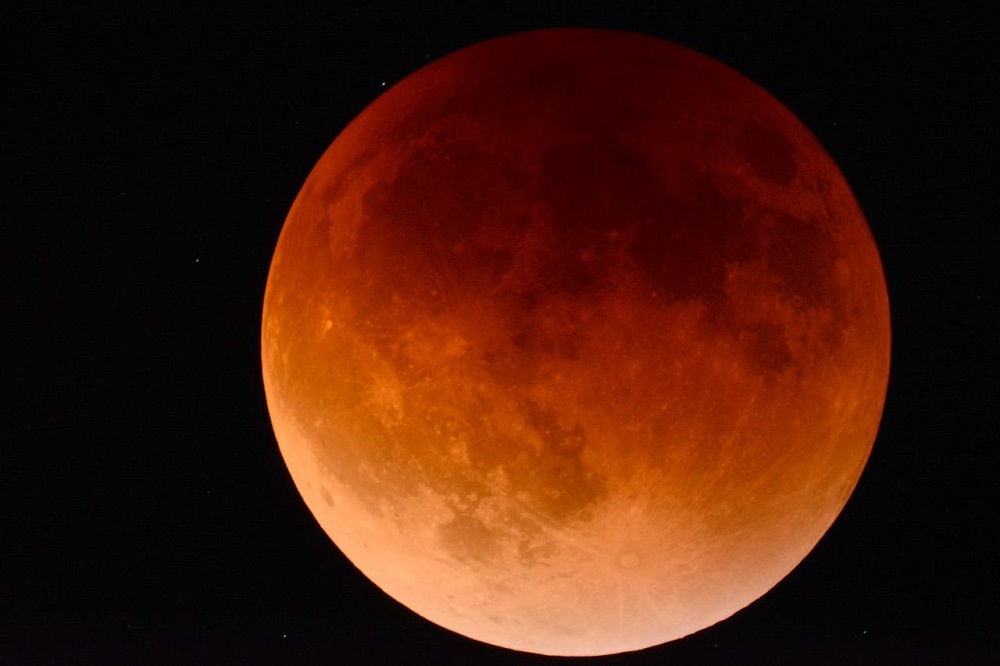
The Moon is expected to turn a reddish-orange colour in the early hours of Friday as it moves into the Earth’s shadow, creating what is often known as a “blood moon”.
Unlike the recent solar eclipse, the lunar eclipse can be viewed safely with the naked eye.
The event is expected to begin at 2.23am, with the eclipse becoming visible from around 3.30am before reaching its peak at 5.12am.
However, the forecast suggests much of Wales could be under cloud at the crucial time.
Met Office operational meteorologist Niamh Murray said: “The majority of the UK is going to be quite cloudy, particularly anywhere north of the M4 corridor and even below that, there’s quite a lot of cloud around.”
The M4 runs across south Wales from the English border to Carmarthenshire, meaning even southern parts of the country could struggle for a clear view.
Ms Murray said rain and cloud were expected in areas north of the motorway as unsettled conditions continue.
“We have had quite a lot of unsettled weather over the last 24 to 48 hours and that is set to continue for many overnight into tomorrow morning,” she said.
The Moon will also be relatively low in the sky during the eclipse, potentially making it more difficult to see from locations without a clear view of the horizon.
Partial eclipse
In a partial lunar eclipse, the Sun, Earth and Moon are almost, rather than completely, aligned.
Zoe Parker, a PhD researcher at the University of Leeds School of Physics and Astronomy, said: “In the early hours of Friday morning, the full Moon will pass through Earth’s shadow, producing a partial lunar eclipse.
“Up to around 96% of the Moon will be darkened and it may appear to have a reddish-orange glow due to the Sun’s light being bent and scattered through Earth’s atmosphere.”
The event comes just over two weeks after the total solar eclipse on August 12.
Ms Parker said the proximity of the two events was explained by eclipses tending to occur in relatively quick succession when the Sun, Earth and Moon are closely aligned.
Astrophysicist Emma Alexander said opportunities for a lunar eclipse occur only twice a year during what is known as an “eclipse season”.
She said: “We usually get them in pairs during ‘eclipse season’, separated by around two weeks, or half of a lunar cycle.
“Solar eclipses happen at new Moon, and lunar eclipses happen at full Moon.
Support our Nation today
For the price of a cup of coffee a month you can help us create an independent, not-for-profit, national news service for the people of Wales, by the people of Wales.
Get more trusted Welsh news
Choose Nation.Cymru as a preferred source in Google News to see more of our journalism.


