


Welsh university project aims to turn wastewater into low-carbon hydrogen
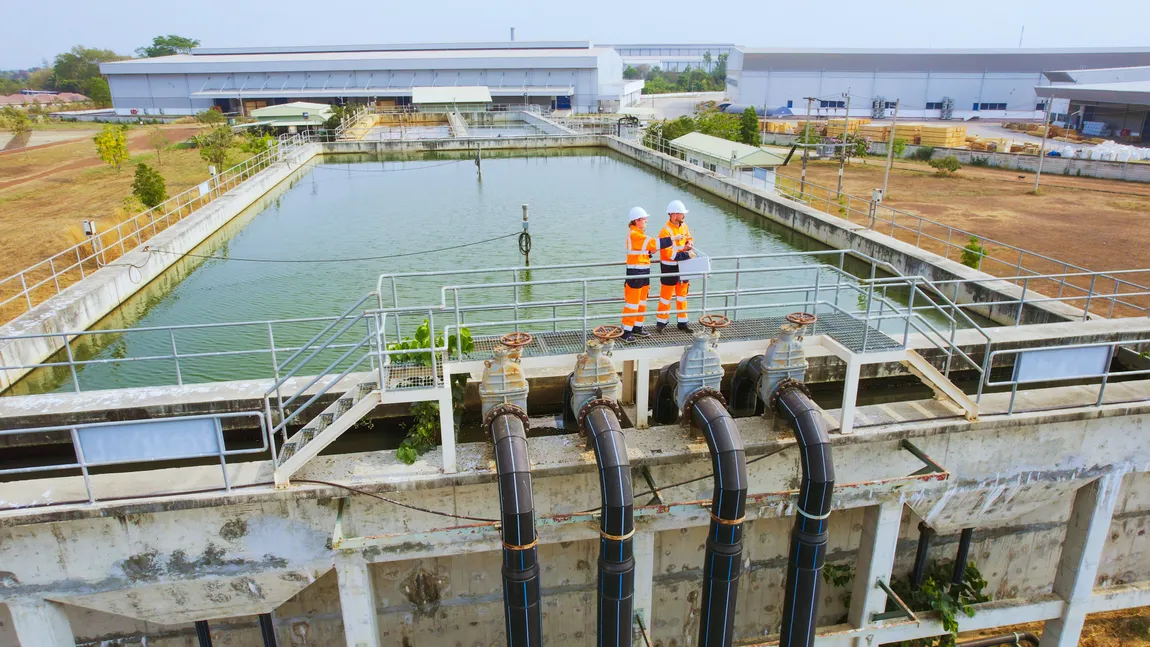
The work at University of South Wales builds on a successful Knowledge Exchange and Innovation Fund (KEIF) project, which awarded £35K to Professor Alan Guwy and Dr Jaime Massanet Nicolau.
The funding was used to develop OXYHYWATER, a novel wastewater treatment technology which uses pure oxygen rather than atmospheric air to treat effluent.
Delivered in collaboration with Dŵr Cymru Welsh Water, the project demonstrated the potential to significantly reduce both environmental impact and operational costs.
Initial findings showed that using pure oxygen could halve treatment costs, while also reducing sludge production and the associated energy demand for downstream processing.
The enclosed design also offers the potential to significantly reduce emissions of nitrous oxide, a greenhouse gas with a global warming potential far greater than carbon dioxide.
Building on this success, USW is now leading HYDROLOOP, a new project funded through the UKRI-supported GW SHIFT programme.
The project has been awarded £65,000, with a further £65,000 of matched in-kind support from industrial partner HydroStar Europe Ltd, alongside continued collaboration with Dŵr Cymru Welsh Water.
HYDROLOOP integrates wastewater treatment with hydrogen production in a closed loop system. Treated wastewater is used as the feedstock for hydrogen generation via an innovative electrolyser, while the oxygen produced is captured and reused to enhance the treatment process.
This circular approach reduces energy demand, lowers emissions, including nitrous oxide, and removes the need for freshwater in hydrogen production.
It also offers the potential to improve treatment performance, including the removal of emerging contaminants such as PFAS and antimicrobial resistance markers.
The system will be demonstrated at pilot scale at one of Dŵr Cymru Welsh Water’s wastewater treatment plants in south Wales, generating real-world data to support future scale up and commercial deployment.
Professor Alan Guwy, Head of the Sustainable Environment Research Centre at USW, said: “HYDROLOOP is about fundamentally rethinking how we view wastewater.
“Instead of treating it as waste, we are demonstrating how it can become a valuable resource, supporting both clean energy production and more efficient treatment processes.”
The project could also support wider decarbonisation by producing low-carbon hydrogen for use in transport, energy storage and industry, reducing reliance on fossil fuels while making better use of existing infrastructure.
Charlie Newbold, Head of Operations at HydroStar Europe Ltd, said: “This collaboration demonstrates how hydrogen can be produced from treated wastewater, removing a key barrier to sustainable production and creating a system with real commercial potential.
“With strong industry backing, including support from Wales & West Utilities, HYDROLOOP offers a scalable model for decarbonising both water and energy systems, turning waste into a resource for a low-carbon future.”
Support our Nation today
For the price of a cup of coffee a month you can help us create an independent, not-for-profit, national news service for the people of Wales, by the people of Wales.
Get more trusted Welsh news
Choose Nation.Cymru as a preferred source in Google News to see more of our journalism.



