


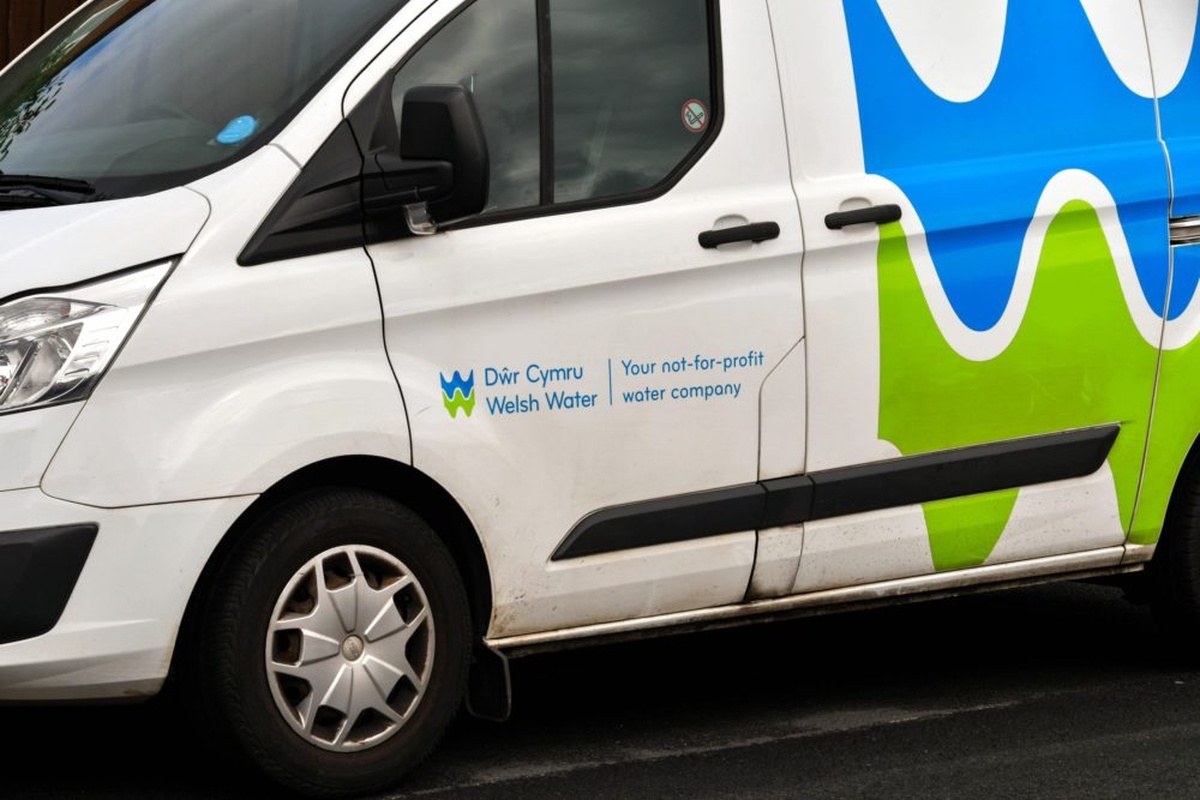
Welsh Water’s business model ‘is not working for Wales’ says report
Martin Shipton
The “not-for-profit”, bond-based business model of Dŵr Cymru/Welsh Water is not serving its customers well, according to a report produced by a research group that includes one of Wales’ best-known academics and a former Welsh Government minister.
Professor Kevin Morgan of Cardiff University and former Labour economy minister Andrew Davies are part of a recently established group known as Foundational Economy Research.
Their report, What We Need to Know (and Do) About Water, examines the business models of Dŵr Cymru in Wales and the privatised Thames Water in England, and finds both inadequate.
The report explains that Glas Cymru, Welsh Water’s parent company, operates differently from water companies with shareholders.
It states: “The English companies (whether public companies or investment fund owned) have shareholders. Glas Cymru, which is the parent company of Dŵr Cymru, has 50 or so appointed Members (with no financial interest in the firm) to ensure provision of high-quality services. The English companies distribute dividends to shareholders, but Glas Cymru is a private company limited by guarantee which reinvests all surpluses in the business.
“From its foundation, Glas Cymru has obtained outside funding by selling bonds which oblige it to pay a fixed interest rate. Our analysis focuses on what we need to know about and what we need to do about Dŵr Cymru and its English peers.”
The report argues that several misunderstandings need to be addressed, including claims that Dŵr Cymru offers a better Welsh approach for customers and the environment.
It states: “The Dŵr Cymru website continues to assert that this is a ‘not-for-profit company whose issuance of corporate bonds at a low cost produces benefits passed on to our customers in the form of lower bills and improved services’.
“These claims have generally been uncritically accepted by Welsh politicians, civil society and media with the company widely represented for the past 20 years as part of ‘Team Wales’.
“What we need to know is that accumulating evidence undermines the company claims. Environmental problems have been uncovered by the water regulators, noted by a Senedd Committee, and advertised by civil society activists.”
A Welsh Water spokesperson said: “Welsh Water’s not-for-profit model has delivered substantial, tangible benefits for customers. Since Glas Cymru acquired the company in 2001, more than £600 million of value has been returned to customers through lower bills, additional financial support and extra investment in services. With no shareholders to pay, all surpluses are retained for the benefit of customers.
“We recognise that our performance has fallen short of the standards customers rightly expect. Our ownership model does not diminish our responsibility to deliver better services and protect the environment. We must demonstrate its benefits through results.”
The report also challenges comments by Welsh Water chief executive Roch Cheroux in a Financial Times interview, interpreting them as a departure from the company’s claims about its ownership model.
It states: “The CEO now admits Dŵr Cymru’s infrastructure is in a mess just like the other companies despite not-for-profit ownership. And then (like the industry’s trade association Water UK) adroitly blames the regulator for blocking investment: ‘I don’t think it’s ownership, it’s the regulatory model’.”
Welsh Water said the interview took place in July, rather than September as stated in the report.
The spokesperson said: “Roch Cheroux’s Financial Times interview took place in July and addressed whether Welsh Water’s ownership model could, on its own, resolve the challenges facing other highly indebted water companies. Recognising that ownership alone cannot solve every challenge does not negate the substantial benefits our model has delivered.”
Revenue
The report argues that revenue going into the water industry in Wales and England is insufficient to cover day-to-day services, infrastructure renewal and the costs of financing through bonds and/or equity.
It says this applies both to for-profit Thames Water and to not-for-profit Dŵr Cymru/Welsh Water, which has no shareholders receiving dividends.
Under the current household charging system, the authors argue, even publicly owned water companies would lack sufficient revenue to secure drinking water supplies, treat sewage spilling into rivers or prepare for climate change.
According to the report, since 2001, Dŵr Cymru’s finance expenses have accounted for 27p of every pound of revenue. This is only slightly below the 30p in every pound spent on finance expenses at Thames Water.
The report says bond finance was not much cheaper at Dŵr Cymru because its bonds were inflation-linked and tied to a derivatives portfolio.
A publicly owned company could borrow more cheaply, but the authors argue that, at 2026 interest rates, the difference would not be enough to resolve the business model’s problems.
They say Dŵr Cymru’s experience shows that bond finance only secures sustainability during periods of cheap money, such as the 2010s, when general interest rates were low.
The report states: “Our accounting research presented in this briefing discounts the importance of ownership and regulation. Instead, it highlights the activity-related business model problem of financial unsustainability, showing for the first time that bond finance in a not-for-profit does not deliver low-cost finance.
“What we need to know is that there is no ‘one and done’ solution to water’s embedded, wicked problems. Neither public ownership nor tighter environmental regulation will do much to reduce sewage spills without complementary policies of charging reform which get high-income households to pay their fair share and ease the burden of higher water bills on low-income households.”
Restraint
Welsh Water said the need for investment followed a prolonged period of restraint on bills.
Its spokesperson said: “The report recognises the prolonged restraint on water bills. For nearly two decades, the regulatory regime kept bills below inflation, but the sector now faces a substantial need to renew ageing infrastructure, strengthen resilience and improve environmental performance. We need to invest further and faster, while protecting customers who struggle to pay.
“Welsh Water is investing £4.2 billion between 2025 and 2030, the largest investment programme in our history, including £2.5 billion on environmental improvements. Regulatory reform must support sustained investment, clearer long-term priorities and faster delivery, alongside rigorous scrutiny of performance and value for money.”
Charging reform
The report calls for a charging system that raises more revenue from wealthier households, alongside stronger public oversight.
It states: “The business model problem is that the regressive charging system does not generate the revenue to cover the activity’s large investment needs. The current system of charging for water is regressive. It bears heavily on low-income households, and this limited water bill increases in the 2000s and 2010s. When water bill increases could no longer be avoided in the 2020s, high-income households are still not paying their fair share which limits an increase in revenue.
“The limited revenue from household charging has not been able to cover the demand for physical investment in a hugely capital-intensive activity. In the 2010s the industry was not upgrading sewage treatment or building reservoirs and despite that patch-and-mend investment took 40p of every pound of revenue.
“Progressive charging linked to household income should be the long-term objective because it could double revenue with most households paying no more. For immediate action on affordability, the Westminster Government should mandate a more generous national social tariff for all households on Universal Credit, with most of the cost funded by a charge on full-bill payers.”
The authors argue that establishing Wales-only water regulation offers an opportunity to give the public a greater role in decisions about the industry.
Their proposals include a costed programme of works to clarify policy options, a citizens’ assembly advised by experts, a Water Observatory with activist representation and a standing Senedd committee resourced to examine financial and environmental performance.
The report states: “If we accept that Dŵr Cymru has not delivered, the Welsh Government now has the unique opportunity to take the first steps towards social control of water.”
Welsh Water said a new leadership team, organisational restructure and changes to how it operates were intended to strengthen oversight and accountability for performance and customer service.
The spokesperson said: “We welcome scrutiny and know that the success of this transformation, alongside our record investment, must be demonstrated through sustained, measurable improvements for our customers and the environment.”
Support our Nation today
For the price of a cup of coffee a month you can help us create an independent, not-for-profit, national news service for the people of Wales, by the people of Wales.
Get more trusted Welsh news
Choose Nation.Cymru as a preferred source in Google News to see more of our journalism.



Clearly it is not for profit with its CEO taking over 800000 pounds in annual salary.
I think the Welsh investigative journalist Paddy French comprehensively took this outfit, it’s hyped claims and it’s actual practices, to pieces several years ago. His work may still be around on the internet. No-one took much interest at the time as its “Welsh” imaging & PR defected all criticism.
There’s another GOOD lesson there
This is one of Paddy’s articles from 2014 comparing remuneration received by directors compared to the nationalised company in Scotland that was twice Welsh waters size but that Welsh Waters remuneration was twice as large as the Scottish company.
https://paddyfrench1.wordpress.com/2014/07/01/the-great-welsh-water-robbery/
Nothing has changed in that regard. In addition Welsh Water is wedded to out-sourcing which is another way of channeling profit to outside interests and reducing the work of actually managing the company.
Exactly that! I think he said that at one point they were paying out bonuses for getting bonuses!