


Welsh women’s peace group urge UK and Welsh governments to oppose ‘genocide’ in Rojava
Caitlin Thomas
A Welsh women’s peace group has called on the UK and Welsh governments to oppose what it describes as a genocide unfolding in Rojava, north east Syria, amid ongoing fighting and threats to women and minority communities.
Merched Cymru Dros Heddwch (Welsh Women for Peace) said it was standing in solidarity with the people of Rojava as they face attacks by Turkish-backed forces and Hay’at Tahrir al-Sham, and urged both governments to publicly declare their opposition to the genocide and provide humanitarian support.
Genocide has been declared in Rojava by a number of peace organisations and Merched Cymru Dros Heddwch are calling on the UK Government and the Welsh Government to declare their opposition to the genocide.
In the wake of the genocide that threatens Kurds in Rojava, North East Syria, Merched Cymru Dros Heddwch draws attention to the implications of that for women and minorities there.
As the fighting between the Syrian Democratic Forces and the Syrian interim government led by Ahmed al-Sharaa continues, despite a temporary ceasefire, the lives and freedom of Kurdish women are threatened. Not only are women being killed throughout the war and by joining the fight with the Kurdish-led Syrian Democratic Forces (SDF), religious fundamentalism enabled by the Syrian interim government threatens their freedom.
The Rojava Women’s Revolution came to fruition in 2012 and has brought confederal democracy and an economy based on co-ownership and communalisation of Kurds in north east Syria. Community structures have been jointly led by a man and a woman and there is a representative from every religion and ethnicity in the groups that govern their communities.
According to multiple reports, SDF militants have been cutting off Kurdish women’s braids to silence and humiliate them, one militant was filmed showing a Kurdish fighter’s braid as a trophy just after he’d killed her.
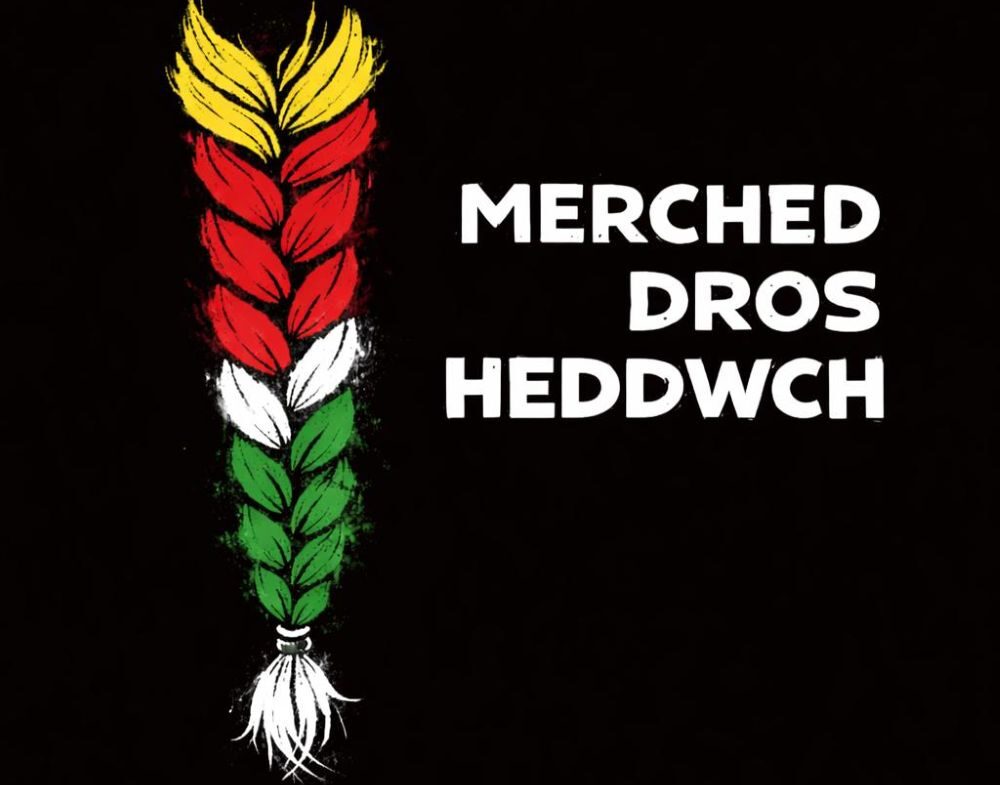
So Kurdish girls, and solidarity groups have been braiding their hair in solidarity – hence the braid in Kurdish colours used by Merched Cymru Dros Heddwch during their campaign.
Heledd Willams, on behalf of Merched Cymru Dros Heddwch, said: “The Rojava Women’s Revolution has survived the ISIS period and created truly radical communities and transformed the lives of the people of Rojava but all this is under threat.
“The provisional government is using violent force to undermine the SDF and several militias in the name of the provisional government have attacked prisons and ISIS prisoners have been released as a result.”
There is a long connection between the Kurds and Wales as many Kurds are refugees in Wales as a result of the political implications of the Lausanne Treaty created in 1923 by the Welshman who was Prime Minister of Britain during that period, Lloyd George.
The Kurds have faced linguistic oppression, speaking Kurdish in public was illegal in Turkey until 1991 and people were imprisoned for doing it. Plaid Cymru was part of campaigning to save Hasankeyif from being drowned for 20 years and there were protests in Kurdistan to stand together with the residents of Tryweryn.
Heledd Williams added: “A threat to the freedom and life of any person is an issue for all of us, and the connection between us and the Kurds in the east and here in Wales underlines that.
Support our Nation today
For the price of a cup of coffee a month you can help us create an independent, not-for-profit, national news service for the people of Wales, by the people of Wales.


