


Why Wales must rekindle its love of languages
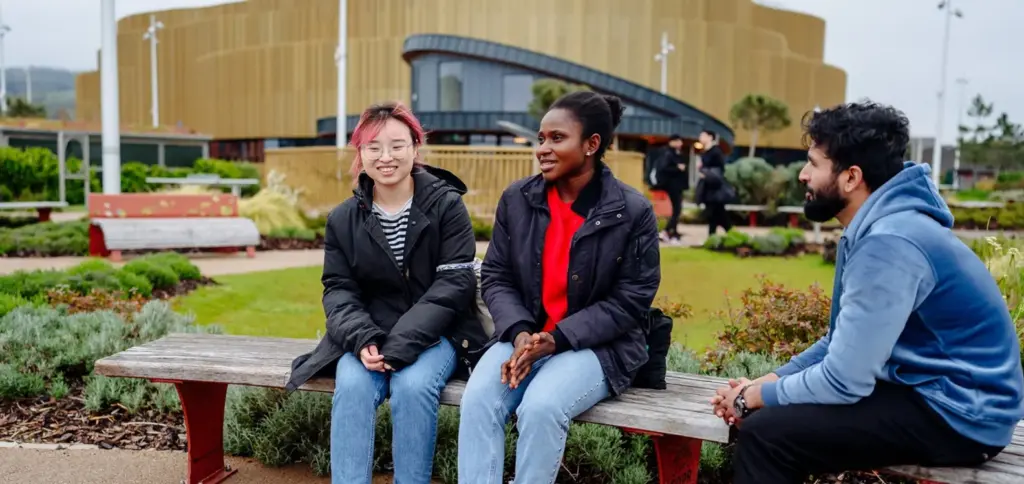
Ruth Cocks, Director, British Council Wales
International language learning in Wales is at a worrying low, and that should concern us all. What disturbs me most about this statistic is not only what it says about the linguistic skills of our future generations, but what it might reveal about our global outlook and confidence as a nation.
For a country that aspires to be outward-looking, confident and internationally engaged, our language learning trends are a warning sign. The British Council’s Language Trends Wales research, now in its eleventh year, has tracked the story with stark clarity. Over the past decade, GCSE entries in French and German have halved. At A-level, French has declined by 63%, while German entries have fallen to just 42 – and could disappear entirely within the next three years. That is more than a statistic it marks the quiet disappearance of opportunity.
When I ask young people in Wales why they choose not to study a language, the answers are familiar. English, they say, is spoken everywhere, so what’s the point? Others mention that languages are “too hard” or “not useful enough.” These perceptions are powerful, but they are wrong.
Speaking another language opens doors that translation apps never can. It builds relationships, deepens understanding and creates opportunities in trade, diplomacy, science, culture and human connection. It gives insight into the customs, humour and values of another people. It teaches empathy, adaptability and curiosity, qualities that define truly global citizens.
At a time when the world feels increasingly fragmented, the ability to speak across borders and cultures is not a luxury. It is part of how we build trust, collaboration and peace. Wales cannot afford to lose that capacity.
Even for pupils who want to study languages, access is blocked by circumstance. Around two-thirds of Welsh secondary schools will not run GCSE classes if too few pupils enrol – mostly in less affluent areas – and two-fifths offer no post-16 provision. Where classes do exist, half are cancelled due to low numbers, leaving many with no path to continue at A-level. The result is a deep social divide: in some parts of Wales, learning a language is simply not an option. These gaps rob young people of confidence, communication skills and a global outlook. When classes are cut, Wales loses the chance to raise a generation that can engage with the world.
The perceived difficulty of exams is another barrier. Encouragingly, WJEC has been reworking modern language qualifications to reflect real-life use and communication. Whether this change will shift attitudes remains to be seen, but it is an important step.
The truth is that investment and leadership matter. Wales has a clear policy framework in Global Futures, our international languages strategy, but without sustained resources and coordination, even the best policy cannot deliver systemic change.
Learning from Our Own Success
Wales does not need to look far for an example of how ambition, planning and investment can transform the linguistic landscape.
The revitalisation of the Welsh language is one of our great national achievements.
Through long-term policy and consistent commitment, Cymraeg 2050 has inspired pride, built infrastructure and created more opportunities to learn and use Welsh across society.
That success should give us confidence. It shows that language policy works when it is treated as a national priority, not an optional extra.
The same energy and vision that has strengthened Welsh can now be applied to international languages. If we can nurture one national success story of linguistic renewal, we can do it again.
Signs of Hope
There are signs of renewal. At primary level, more than 80% of responding schools now teach an international language – double the figure reported in 2022, thanks to the introduction of international language learning as mandatory in the new Curriculum for Wales.
While at Key Stage 4, uptake in GCSE French is tentatively rising again after the Covid lull, while Spanish is bouncing back following a dip between 2023 and 2024.
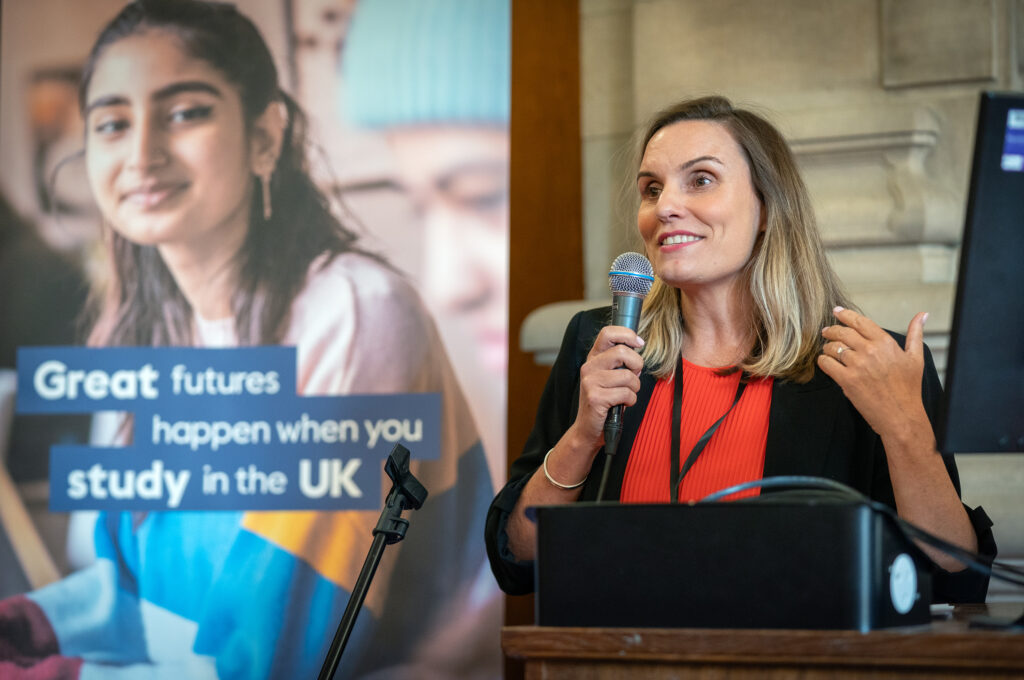
That growth reflects the dedication of teachers and schools who believe in the value of multilingualism. And with international languages now a statutory part of the new Curriculum for Wales at primary level, many schools are introducing pupils to the world’s linguistic and cultural diversity from an early age.
This shift is transformative. It plants the seed of curiosity and global awareness. But we cannot let enthusiasm at primary level lead into dead ends at secondary. Without a clear and supported pathway, early interest fades before it can flourish.
Wales at a Crossroads
After more than a decade of research and repeated warnings, the question is clear: are we serious about reversing the decline, especially at post-16? Wales is already a multilingual country; our report found that more than 45 languages are spoken by pupils in our schools. What a strength that is, and what a foundation to build upon.
We are also a Nation of Sanctuary, a country that celebrates diversity and belonging. Yet too often, with the exception of Welsh, we treat multilingualism as something to admire in others rather than nurture in ourselves.
With the Senedd elections approaching and the political landscape shifting, as seen in the Caerphilly by-election, this is a moment for renewal. Language learning should not be a niche concern. It should sit at the heart of our national conversation about education, opportunity and Wales’s place in the world.
Languages build bridges rather than walls. In an increasingly interconnected society, embracing multilingualism is both a practical necessity and a statement of the values we want Wales to champion and creates the global citizens of the Wales we want to be.
How we support young people to connect globally will shape our economy, our diplomacy and our cultural confidence for generations to come.
A Call to Action
The eleventh edition of Language Trends Wales is not just a report; it is a call to action. We can allow another decade of decline, or we can decide that the ability to connect across cultures and borders is essential to who we are as a nation.
Let us build on what Wales already does so well. Let us ensure that our young people have the skills and confidence to speak to the world and to listen to it too.
If we want Wales to continue not only to speak, but to be heard, then the time to act is now.
Language Trends Wales 2025 officially launched at the Senedd on Monday 3 November, bringing together educators, policymakers, and language advocates to discuss the state of international languages in Wales.
To find out more and read the full report, visit: https://wales.britishcouncil.org/en/language-trends-wales
Support our Nation today
For the price of a cup of coffee a month you can help us create an independent, not-for-profit, national news service for the people of Wales, by the people of Wales.



I suppose that one further issue we face is that, if we are to be a Nation of Sanctuary for refugees etc, then how do we meet their needs with regards to language? Do we focus on potential gaps in English and forget Welsh?
In the richest country in the world, Luxembourg, kids leave school fluent in at least three languages.
No, we teach both.
Latin kindled my love of languages, following my father’s interests in Swahili and Arabic. Always a poor scholar, I nonetheless believe that other languages offer much to ourselves and to our communities in the broadest cultural terms. I firmly support Cymraeg in parity with Saesneg in public life in Cymru. But we should be more ambitious. Typically, our European peers can manage 5 or 6, so why not more for us too? While Cymraeg and Saesneg should become standard for us all (and I’m sure will, despite hiccups), policy should also be focused on encouraging a modern European language and… Read more »
I know this might be a controversial opinion, but there is definitely an air of the colonial mindset responsible for this.
I hear something along the lines of “why would you learn that nonsense, just make them learn English” and I’m afraid this has rubbed off. Unfortunately, the anti foreigners brigade have caused real damage to attitudes to education.
I’ve always been fascinated by this subject. I’m originally from Cardiff but live in the Valleys now (Dw i’n dod o Caerdydd, ond dw i’n byw yn Cwm Rhondda nawr…I’ve probably got some of that linguistically wrong somewhere) so I’m not a native speaker unfortunately but currently learning, but I always thought there’s another modern resource the Welsh government has sorely overlooked: popular influencers. Corporations tend to use these popular people to flog some kind of product or service, usually online on platforms like YouTube etc. Why not do the same by utilizing this to promote an idea called “Cool… Read more »
I think speaking Cymraeg is increasingly “cool” especially amongst the young here in . We all want to feel like we are enjoying the party, not standing outside in the rain!
In an age where we encourage our young to think for themselves, get the facts for themselves, listen to all sides of an argument. So that they can make an informed decision. And in Wales even allowing them to vote for the future of their Country at sixteen.
I find it incomprehensible that we force them to learn Welsh, because the Senedd say so.