


Windfall tax on banks could recoup QE losses and raise £8bn a year – think tank
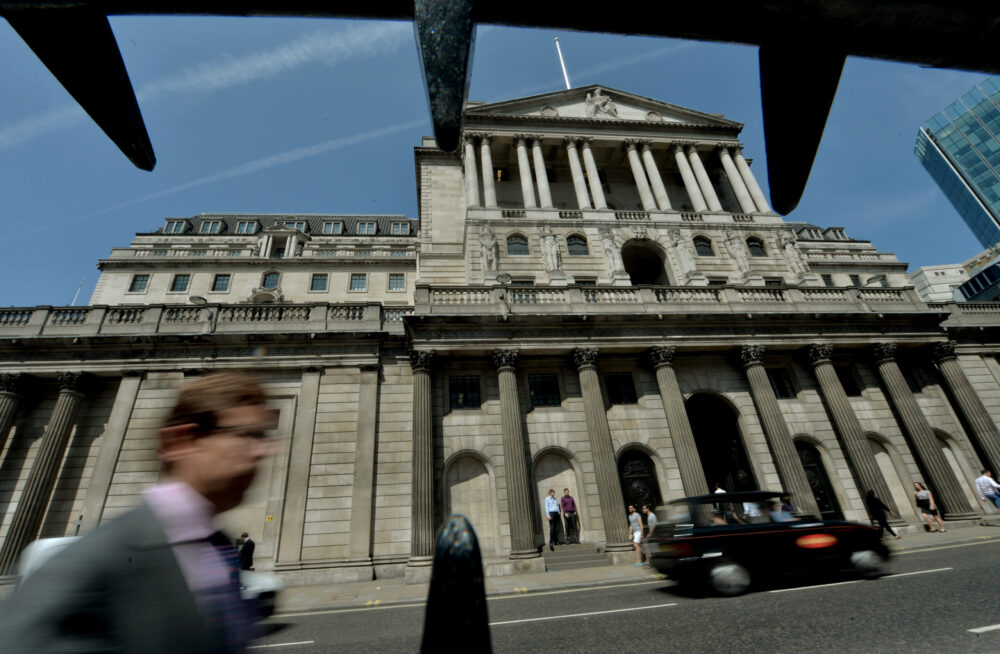
Rachel Reeves should tax bank windfalls to recover taxpayer money spent on compensating losses from the Bank of England’s cash-printing drive, an influential think tank has said.
Hiking a levy on the profits from major firms such as Barclays, Lloyds, HSBC and NatWest could raise up to £8 billion a year for public services, according to a report by the Institute for Public Policy Research.
The think tank argues the UK is an international outlier in having its Treasury pay for central Bank losses on its bond-buying quantitative easing (QE) programme.
After a period of making profits on this programme, the Bank of England is facing record losses, estimated to cost the taxpayer £22 billion a year, as interest rates have risen since 2021, it warned.
‘Flawed’
This money is then partly being funnelled to bank shareholders due to a “flawed” policy design, boosting profits while millions across Britain continue to face cost-of-living pressures, the report says.
It recommends the Treasury introduce a “QE reserves income levy”, similar to the 2.5% deposit tax imposed on banks under Margaret Thatcher in 1981, to rebalance the existing set-up.
The leading think tank, which worked closely with the Government on its industrial strategy, also calls on the Bank of England to slow down its sale of bonds – so-called quantitative tightening (QT) – to save more than £12 billion a year.
These two policies together could save more than £100 billion over this Parliament, opening up much needed fiscal headroom for the Chancellor, it says.
Banks levy
Under the proposals, the receipts from the banks levy would be used to support “households and growth” and would fall to zero once all QE-related gilts are off the Bank of England’s balance sheet, or when the bank rate reaches 2%, meaning the tax would be temporary.
Given the “targeted” nature of the tax, it should only have a “small impact, if any” on UK banks’ competitiveness and smaller banks should be exempted from the measure, the think tank said.
It comes amid warnings from economists that tax rises in the autumn budget are likely needed to plug a hole in the public finances, prompting speculation about which areas the Chancellor might target.
The Treasury has been contacted for comment.
Carsten Jung, associate director for economic policy at IPPR and former Bank of England economist, said: “The Bank of England and Treasury bungled the implementation of quantitative easing.
“What started as a programme to boost the economy is now a massive drain on taxpayer money.
“While families struggle with rising costs, the Government is effectively writing multi-billion-pound cheques to bank shareholders.
“A targeted levy, inspired by Margaret Thatcher’s own approach in the 1980s, would recoup some of these windfalls and put the money to far better use – helping people and the economy, not just bank balance sheets.”
UK Finance criticised the proposals, arguing that a further tax on banks would make Britain less internationally competitive.
“Banks based here already pay both a corporation tax surcharge and a bank levy,” the trade association said.
Adding another would “run counter to the Government’s aim of supporting the financial services sector to help drive growth and investment in the wider economy,” it said.
Support our Nation today
For the price of a cup of coffee a month you can help us create an independent, not-for-profit, national news service for the people of Wales, by the people of Wales.



Banks were the cause of the 2008 crash and are now raking it in again at our expense. Undoubtedly, they are still making money the same way that caused the crash, too. The system is crooked. A windfall needs to happen.
QE really was ‘the magic money tree’ for some. As usual, its the public coffers that bear the weight, as most of it found its way back into corporate hands. The debt from PFI is another millstone around the public finances.
Didn’t Boris drastically reduce the amount of tax banks pay to stop them leaving after brexit ?
Time for them to pay their fair share again.
You have to wonder why HM Treasury didn’t do this from the start. It’s time this legacy of empire was abolished and replaced with separate finance and economy departments.
Yes, the Treasury is long overdue for a complete shake up and review of its remit. Its power has been a drag on change for far too long.
Won’t happen though. Weak, indecisive, distracted government.
I think its more complicated. Elected as a centre-right Labour government, with promises not to scare the horses, they still face massive hostility from those quarters they had hoped to placate. The changes to employment law and zero hours contracts are a case in point.
This is the tightrope all Centre and Centre-Left Governments face. But the UK has supported finance almost to the exclusion of every other sector for decades, it needs to be re-balanced and earning interest on monies they did nothing to earn or create is ridiculous.
Yes, with the demise of our manufactoring base, thanks to Thatcher and the lack of investment in modern equipment, it was the easy, or possibly, the only path to take at the time. Ed Miliband’s project for green energy might just get us out of this hole. We will still need a major economic re-balancing for the future.
They are distracted by the boats, grooming gangs and anything the other guys can muster. France senses these distractions and to discourage talk of Frexit are allowing out the boats.
I presume an issue here is that the banks could move a lot of their operations away from the UK, London etc so the government needs to tread carefully?
Not really, its the bond markets and the fluidity of international finance that makes life tricky for a nation state.
If banks are only here because they’re being bribed with taxpayers money, is that sustainable?