


Work begins to restore some of the rarest habitat in Wales
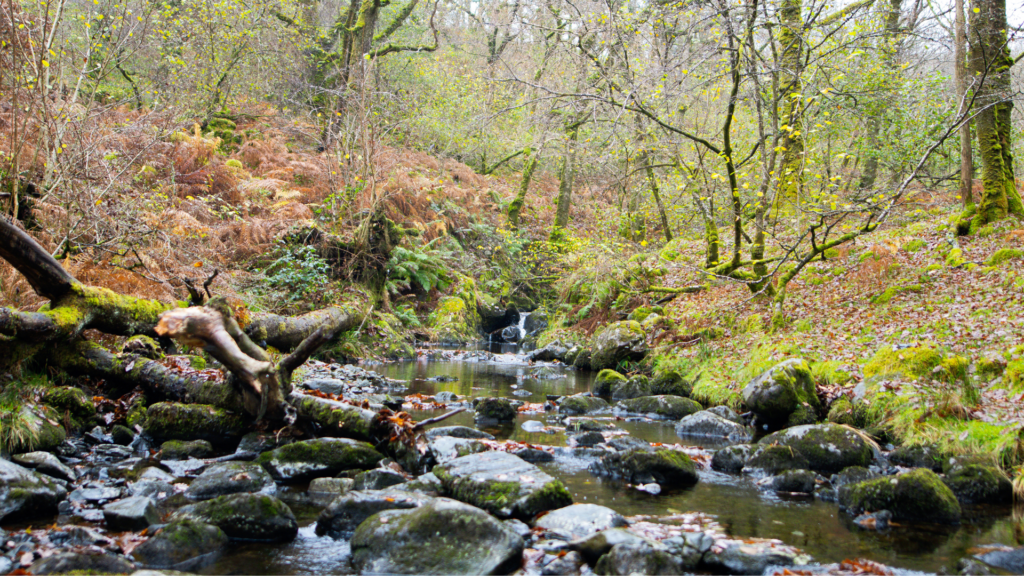
An ambitious new project to restore rainforest has begun in west Wales, which aims to restore and reconnect the remaining fragments of temperate rainforest across the British Isles
Rainforests dripping with moss and lichen used to cover much of the west coast of Britain but now make up less than 1% of the UK.
This ambitious 100-year project at Trellwyn Fach, located in North Pembrokeshire, is part of The Wildlife Trusts’ temperate rainforest recovery programme, in partnership with Aviva.
Adam Dawson, Senior Conservation Officer helping to deliver the project for The Wildlife Trust of South and West Wales said: “During the initial site preparation and planting it can look a bit messy with diggers and vehicles on site, but after a few months the peace will return and over the years a wonderful moss felted forest will emerge, just like it had always been there.”
What’s happening at Trellwyn Fach?
The process of restoring Welsh temperate rainforest has officially begun with the first trees in Wales now planted at Trellwyn Fach, Pembrokeshire.
New track: Diggers are currently on site creating a new track which will provide access for people to explore the 146-acre site. Once the site is open to the public later this year, the Trust is planning an exciting programme of events for people to get involved with various aspects of woodland restoration.
Tree planting: By Spring, the Trust plans to plant around 50,000 native trees, with the aim of restoring broadleaved woodland on two-thirds of the site. This new forest will be a nationally important habitat that links up existing woodlands in the Gwaun Valley to create a larger, more connected haven for wildlife.
Research: An area of the site has recently been cut and cultivated as part of the project’s cutting-edge rainforest research programme, conducted with Bangor University.
Creating new temperate rainforest is a tricky process so researchers are looking at the best way to accelerate woodland regeneration in bracken.
To understand the future forest’s potential climate benefits, researchers are also investigating the amount of carbon a rainforest can store both in the ground and up in the canopy.
Once restored, Trellwyn Fach will sequester tonnes of carbon; help to slow the flow of water in local catchments, reducing flood and drought risk; and act as a refuge for a range of species, including the elusive Pine Marten.
Dawson continued: “Now we’ve started, it’s exciting to imagine what Trellwyn Fach will look like in 10, 50 and 100 years’ time, as a rainforest thriving with life for people and wildlife to benefit from.”
The project at Trellwyn Fach has been made possible thanks to a £38 million donation from Aviva to The Wildlife Trusts.
Support our Nation today
For the price of a cup of coffee a month you can help us create an independent, not-for-profit, national news service for the people of Wales, by the people of Wales.


