


10 years after the referendum that took us out of the EU, it’s time to start reversing the process
Martin Shipton
The calamity that is Brexit became inevitable 10 years ago next Tuesday, when the people of the UK voted by a narrow margin to leave the European Union.
A book has just been published that captures perfectly how damaging Brexit has been. It’s called A History of Brexit in 256 Disasters and its author is Jonty Bloom, a former BBC Business Correspondent.
From the outset it sets out starkly what we’ve lost. The first of the 256 disasters states: “Brexit is the gift that keeps on taking. The cost of it continues to grow. The first estimates from the Office for Budget Responsibility (OBR), the independent public body funded by the UK Treasury that provides economic analysis of public finances, were that lost trade and productivity after leaving the EU would cost the UK a permanent loss of 4% of our gross domestic product (GDP) – the monetary value of all goods and services produced inside a country’s borders per year.
“In 2023, the economist John Springford calculated the real hit to GDP was 5%. Now, the latest work by US-based economic research organisation the National Bureau of Economic Research (NBER) – which the government believes is a better barometer than the OBR numbers – says that leaving the EU has cost us 6%-8% of our economy, The NBER says investment is between 12%-18% lower, employment 3%-4% weaker and productivity down by 3%-4% on what it would have been if we had stayed in. The additional damage, they say, reflects “the unexpectedly protracted nature of the Brexit process, which created uncertainty lasting nearly five years, rather than resolving quickly.”
I’m aware that economic statistics can appear abstract, and difficult to relate to one’s own everyday experience. However, the second disaster brings us right down to earth: “To put that lost 6%-8% into context, we spend 11% of GDP on the NHS, and 2.5% on defence. Without Brexit, we could have afforded to double defence spending and increase health spending by 50% and not have to raise taxes by a single penny.”
The book goes on to cover the huge range of areas where Brexit has made life more difficult, even for those people who don’t understand the causes of their disenchantment and get swept along by the pernicious racist nonsense that is meat and drink for so many on the right.
The 13th disaster concerns the latest blow to the struggling car industry – one that I wasn’t previously aware of. It states: “As the world moves to electric vehicles (EVs), the UK is hamstrung by new EU regulations on the rules of origin for British-built vehicles. From January 1 next year, 55% of a vehicle’s value and 70% of its battery pack and battery cell must originate from either the UK or EU to dodge extra tariffs.
“We do not make our own batteries for EVs and import most of them from the Far East, but they make up such a large part of the cost of an EV that we will fail to meet EU rules about how much of the vehicle has to be made in the UK.
“That means UK EVs exported to the EU after January 1 2027 will face tariffs of between 10% and 22% if exported to the continent, making them all uncompetitive. This is a huge problem – the UK exports 80% of the cars it makes, with well over half of those exports going to the EU.”
Haulage industry
Throughout the book, there are similar examples given of problems caused to areas of the economy we may not be familiar with. This, from the haulage industry, is the 81st disaster: “When we were in the EU, a haulage firm from Birmingham could move goods from Barcelona to Berlin with no problem at all, and a company from Toulouse could ship goods from Towcester to Tunbridge Wells just as easily. That all ended with Brexit.
“Now a British company can drive from Cardiff to Copenhagen so long as it has all the paperwork and checks necessary to enter the EU, but it can only do two other jobs in the EU in the next seven days (deliver Copenhagen to Calais, say). And after that it has to return home and start again. Previously you could deliver one load and then pick up other jobs while abroad, spreading the cost and making better use of your expensive lorries. That is why so many British firms have now built warehouses in the EU, costing the UK storage industry jobs and profits.”
So many such scenarios that are the direct consequence of Brexit are playing out to Britain’s disadvantage, and yet there is a reluctance on the part of most news outlets to call out those who were and are responsible.
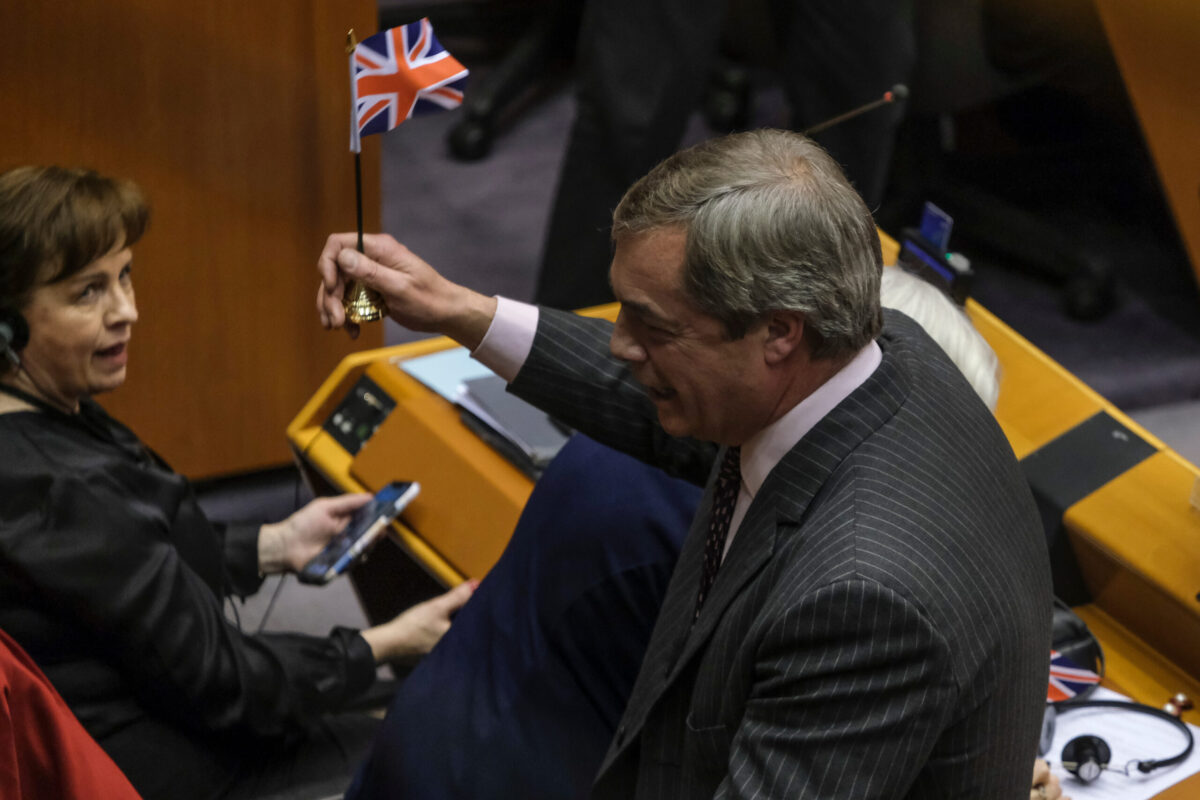
If there were any justice in this world, Nigel Farage would have been drummed out of public life years ago as a direct consequence of his sponsorship of Brexit. And yet his latest vehicle – Reform UK – is leading the polls and he could still, despite Andy Burnham’s victory in Makerfield, end up in Downing Street at the next general election.
There is now a clear majority for rejoining the EU, and yet because of the absurd first past the post electoral system that we still have for general elections, Farage won’t necessarily be excluded from power.
The Labour Party needs to lose its timidity about reversing Brexit and argue the case for a new referendum on rejoining the EU. That’s the way to neutralise Farage and halt the prospect of a fascist takeover of Britain, where ICE-style enforcers will cause havoc in communities by rounding up people from ethnic communities for mass deportation.
Freakish
This week we had a flavour of how the worst of Reform will behave at the Senedd over the next four years. The Reform MS who made a series of offensive comments dressed up as unfunny jokes reminded me of a freakish far right student who was at York University at the same time as me in the 1970s. He didn’t seem to have any friends, but liked drawing attention to himself by stomping round the campus residence blocks in the middle of the night dressed up like Mussolini.
One night he was shouting incoherently in a fascist kind of way and a sizeable proportion of the rest of the student body decided they had had enough and chased him to his room, where he barricaded himself in.
There was, as I recall, a stand-off for about half an hour until the domestic bursar arrived and told Young Mussolini that it would be best for all concerned if he moved off campus – something he agreed to do.
I can understand the frustration of Plaid MSs who took the view that the Reformer was bringing the Senedd into disrepute, and walked out. But the better way to defeat them is to take every opportunity to expose their vile philosophy for what it is and build momentum towards an unashamedly pro-EU campaign in the run-up to the next general election.
A History of Brexit in 256 Chapters by Jonty Bloom is published by The New World at £20.
Support our Nation today
For the price of a cup of coffee a month you can help us create an independent, not-for-profit, national news service for the people of Wales, by the people of Wales.
Get more trusted Welsh news
Choose Nation.Cymru as a preferred source in Google News to see more of our journalism.



I did not want Brexit. Apart from Welsh and English I can speak French, and tourist level German, Italian and Spanish. Naturally I favoured UK in the EU and the formation of a United States of Europe. just as Winston Churchill did. We came out of the EU based on lies. But look at the USA system. Each state held a Constititional Convention. (England never has, Wales not since Hywel Dda). Democratically based, each State can then vote whether or not to join the United body. The USA is soundly based in this way. I now believe that we can’t… Read more »