
24th February: Four years of war in Ukraine
Yuliia Bond
Why this date does not get smaller
Every year this day opens something inside me that I spend the rest of the year trying to keep contained.
People say “four years.”
As if time makes it smaller.
It doesn’t.
It lives in the body. In the nervous system. In the way your heart jumps at certain sounds. In the way sleep changes. In the way you never feel completely settled again.
For Ukrainians, 24th February is not just a date. It is the day the ground disappeared under our feet.
Most of us lost people. Many of us lost homes. Most of us lost entire futures we had carefully built. All of us lost a sense of safety that can never be fully restored.
I left Eastern Ukraine when staying could have cost everything. There was no dramatic moment. Just a quiet, devastating clarity that life as I knew it might be over. Forever.
You don’t “move on” from something like that. You learn to function with it.
To my Ukrainian friends: if today feels overwhelming; if you feel exhausted; if you don’t understand why your body is heavy – you are not weak. You are carrying a huge trauma.
To my Welsh friends: please understand, this is not history for us. It is ongoing. It is destabilising in ways that are hard to explain unless you have lived it.
Today is not about politics.
It is about people.
It is about grief.
It is about endurance.
And it is about remembering that behind every headline, there are nervous systems still trying to feel safe and alive again.
If you are struggling today – I am too.
And we are still here.
The scale, in verified numbers.
“Four years” can sound like an anniversary. The evidence reads more like a cumulative injury.
One reason it is so difficult to speak about this war without collapsing into abstraction is that the numbers are both vast and incomplete. The UN Human Rights Monitoring Mission in Ukraine verifies figures using a strict methodology and also states plainly that the real toll is likely higher, because many reports (especially early in the invasion and in areas it cannot access) cannot be verified.
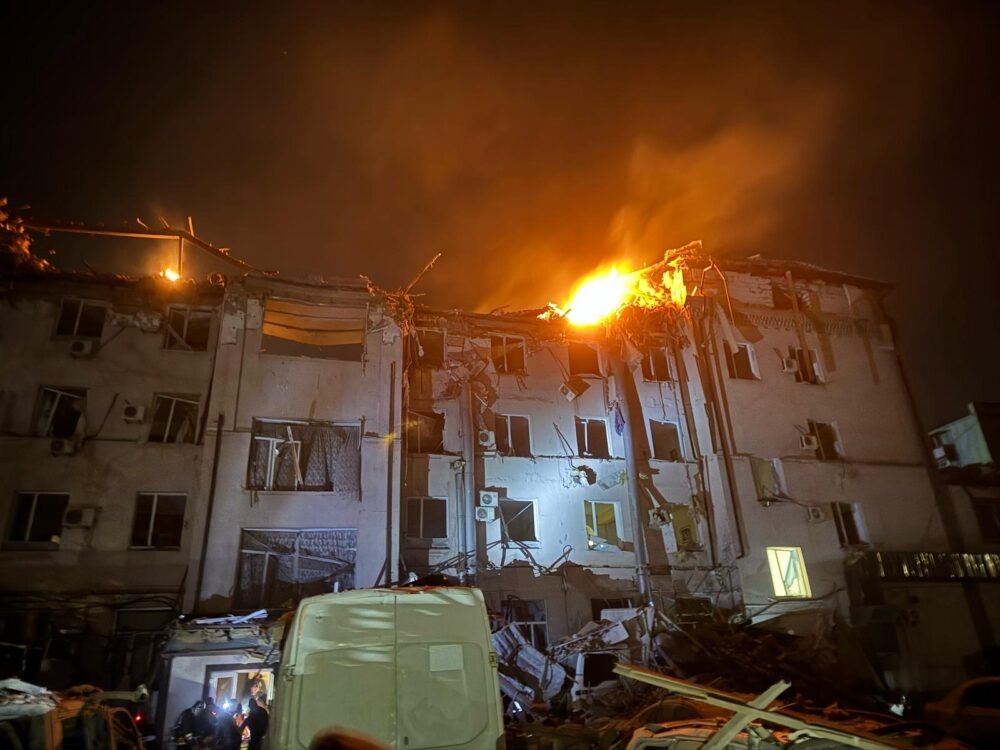
Even within that conservative frame, the verified civilian harm is staggering. As of 31 January 2026, Office of the High Commissioner for Human Rights had verified 15,172 civilians killed and 41,378 civilians injured since 24 February 2022.
The violence did not “stabilise” into something smaller. The same UN monitoring reports that 2025 saw at least 2,526 civilians killed and 12,162 injured, and that the overall level of civilian casualties was higher than in 2023 and 2024.
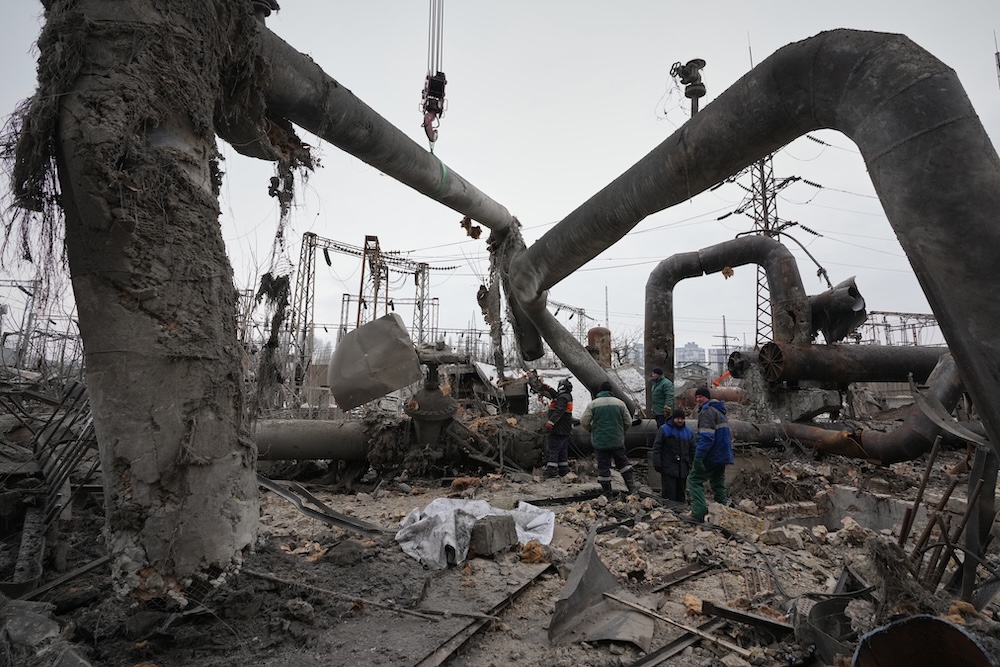
The war is also an infrastructure war and winter makes that fact impossible to ignore. UN monitors report sustained and systematic attacks on energy systems, concluding that by January 2026 Ukraine had lost more than half of its pre-invasion electricity generation capacity (because of occupation and damage), leaving it with 11 GW against an estimated 18 GW needed at peak winter consumption. They also record that, after January 2026 attacks, more than 1,100 multi-storey buildings in Kyiv were left without central heating for the remainder of the winter season.
Displacement
Displacement is not a side-effect; it is one of the defining features of the war. In a February 2026 statement, UNHCR reports that 5.9 million people have fled Ukraine globally, with 5.3 million hosted in Europe.
Then there is the question every survivor carries: what would it take to rebuild a country while the damage is still being done? The Fifth Rapid Damage and Needs Assessment (RDNA5), published by the World Bank with the UN, European Commission and the Government of Ukraine, estimates almost $588 billion in reconstruction and recovery needs over the next decade as of 31 December 2025, with direct damage exceeding $195 billion.
These are not just figures. They are a description of what it means to have your future removed: the physical absence of homes, schools, hospitals, jobs; and the psychological absence of predictability. The second absence is harder to photograph.
Trauma that lives in the nervous system
When I write that “it lives in the body”, I am not being poetic. I am describing a well-documented pattern: after trauma, many people develop a heightened state of arousal – feeling “on edge”, constantly scanning for threats, and becoming easily startled. The NHS lists hyperarousal and being “easily startled” among PTSD symptoms, alongside insomnia and difficulty concentrating.
The American Psychological Association similarly summarises PTSD as including re-experiencing (flashbacks, nightmares), avoidance, negative changes in mood and thinking, and increased arousal and reactivity – the cluster that includes jumpiness, sleep disruption, and hypervigilance.
In Ukraine, this is not confined to “patients” or “diagnoses”. It shows up as a population-level health issue. World Health Organization reporting on assessments in late 2024 found mental health problems among the most prevalent health issues reported by Ukrainians after years of full-scale war, with significant proportions of people reporting mental health concerns.
This is also visible in research specifically linking war exposure to sleep disturbance and trauma symptoms in Ukraine. A 2024 study examining war exposure across Ukraine investigated post-traumatic stress symptoms alongside sleep disturbance – a pairing many Ukrainians do not need a paper to validate, because it is already their nightly reality.
For children, the pattern is especially cruel: their bodies learn threat before they learn safety. UNICEF has reported that Ukrainian children describe anxiety, sensitivity to loud noises, and trouble sleeping.
This matters for one simple reason: if we treat 24th February as merely a date, we leave people alone with a physiological reality that does not obey calendars. Anniversaries can act like triggers – not because people are fragile, but because bodies remember what minds have worked hard to contain.
From war to Wales: why politics must grow up
I often hear politics in Wales described as a fight between good and evil. That framing is emotionally satisfying – and intellectually childish.
Politics, in practice, is a tension between necessary values.
Liberalism without roots can feel detached; nationalism without restraint can become dangerous. The answer is not to eliminate one, but to reconcile them, because balance is not weakness. It is adulthood.
I have seen nationalism in two very different worlds.
In Ukraine, nationalism is not theory. It is survival.
When your country is invaded, sovereignty is not a slogan. It is the difference between existence and disappearance. Language becomes resistance. A flag becomes defiance. Identity becomes armour.
That “survival nationalism” is often closer to what theorists call civic nationalism: belonging rooted in citizenship, shared institutions, and a commitment to political community, rather than descent. In one influential formulation, the civic nation is a community of equal, rights-bearing citizens, united by attachment to shared political practices and values.
But even that distinction has limits. Political theorist Yael Tamir argues that the line between “civic” and “ethnic” nationalism is blurrier than many democracies like to admit, and that self-congratulating stories about purely civic nationhood can hide exclusions that still operate in practice.
That is why I keep insisting: nationalism is not automatically the far-right.
Nationalism at its healthiest says: this is our home, and we govern it democratically. It becomes dangerous when it turns into a hierarchy of belonging, when it says only some people count as “real” members of the nation.
In Wales, nationalism is debated in government, not defended in trenches. It is tied to devolution, representation, and the cultural survival of a small nation inside a larger state.
It is also tied to language, and Wales has chosen, through law, to treat the Welsh language as having official status.
For someone shaped by war and resettlement, the Welsh debate is not “extremism”. It is democracy: an argument about how power should be held, shared, and made accountable.
False binary
What worries me, across Europe, and increasingly here too, is how politics are being reduced to a false binary: you are either for “open borders” or you are for “the nation”; either a liberal elitist or a patriot. Real life does not fit into that shouting-match.
From my perspective, shaped by invasion and displacement, I have learned something simple: a nation must be strong enough to defend itself, but confident enough not to invent enemies.
Liberalism gives us freedom. Nationalism gives us belonging.
We need both – not as slogans, but as responsibilities.
What solidarity looks like in Wales
Solidarity is not sentiment. It is practical.
Wales has made practical choices: welcoming Ukrainians through UK-wide schemes and a distinct Welsh approach. Audit Wales reports 7,118 Ukrainian arrivals with a host in Wales or via the super sponsor scheme between April 2022 and October 2023, with roughly half arriving through the Welsh Government super sponsor route in that period.
UK Government visa statistics also show thousands of arrivals linked to Wales through both individual sponsorship and Welsh Government sponsorship (data published to September 2025).
That welcome is happening inside a wider Welsh self-image as a place of sanctuary.
But solidarity is also emotional labour – especially for host communities who have not lived through invasion, and for displaced communities trying to function while their bodies remain in a loop of alarm.
So this is what I want to say, clearly, to my Welsh friends:
If a Ukrainian colleague is distracted today, it might not be “the news”. It might be their nervous system. If someone cannot explain why they are exhausted, it might not be weakness. It might be trauma doing what trauma does.
And to my Ukrainian friends here:
If you feel the pull of 24th February like gravity, you are not alone. The date is not only in memory. It is in the body, and bodies do not keep neat historical archives.
Four years.
Not smaller. Not finished.
Still here.
Support our Nation today
For the price of a cup of coffee a month you can help us create an independent, not-for-profit, national news service for the people of Wales, by the people of Wales.



What worries me is that in the West, we are the consumers of the daily curated news headlines, without considering that we are witnessing the experience of a population under continual threat. In Western Europe, we have little understanding of how our comfortable lifestyles rest on what happens elsewhere on the continent.