


A fork in the road – what next for education in Wales?
Dr Gareth Evans
It has been often said in the past 27 years that Welsh education ‘is on a journey’.
In some respects, this is a truism – there is no such thing as a ‘quick fix’ in education, and policy implementation is a notoriously difficult and protracted undertaking.
But it is also true that such characterisation takes the sting out of political debate and gives those in power wriggle room they seldom get in matters related to health or the economy.
Playing the long game in education has become a convenient reality for ministers whose bloodied feet are testament to the number of cans kicked down the road (recent dither regarding reading interventions is a good example of this).
The problem for Welsh Labour, as the only party to have led in each of the six Senedd Cymru terms, is that a quarter century is plenty long enough to have impacted positively on educational standards.
Covid-19 and a miserly Westminster budget settlement aside, there is, politically at least, no-one else to blame.
But it is certainly not for want of trying and Wales’ embattled education system – once said by the influential Organisation for Economic Co-operation and Development (OECD) to be suffering from ‘reform fatigue’ – has withstood near constant policy churn.
Eye-catching innovations like the Foundation Phase and Welsh Baccalaureate, which were introduced to much fanfare and at some considerable cost, and the ambitious Schools Challenge Cymru programme, designed to better support schools in most need, have all fallen short of expectation.
The earlier removal of secondary school league tables and Standardised Assessment Tests, or SATs as they were better known, was considered a way of lowering the temperature of accountability and giving teachers more space to manoeuvre, but neither would disappear for long.
A ‘wake-up call to a complacent system’
A disappointing return in the 2009 Programme for International Student Assessment (PISA) study precipitated further upheaval and the reintroduction of national testing and school categorisation (ministers’ proclivity to renege on the work of their predecessors has become synonymous with education).
Former education minister Leighton Andrews, never shy in coming forward, famously described Wales’ PISA outcomes as a ‘wake-up call to a complacent system’ and proof that ‘schools in Wales are simply not delivering well enough for students at all levels of ability’.
The results attracted widespread condemnation in the media and politically, with opposition parties lamenting a marked decline in standards of reading, maths and science, against which all of the world’s leading economies would now be judged.
Several ministers later and Wales remains rooted at the foot of the UK’s PISA rankings – an unenviable statistic that has been true of each of the six PISA studies Wales has participated in (Welsh scores in the most recent 2022 PISA tranche were the lowest on record across all three disciplines).
That is not to say that PISA is wholly reliable as a benchmark of performance, and its methodological limitations, disregard for other aspects of the school curriculum, and inevitable variation in test environments means it tells only a small part of an education system’s story.
There are simply too many variables to make reasonable comparative judgement, and PISA does not compensate for cultural difference.
Nevertheless, to dismiss its findings would be ignorant in the extreme and in the absence of any other such measure, PISA remains a useful yardstick of a nation’s proficiency in key skills.
What is more, PISA merely reaffirms that which we knew already.
Recruitment and retention crisis
Wales’ chief schools inspector Owen Evans announced in February that there were ‘significant weaknesses in the development of some of the basics of education’ and the system had been ‘held back by inconsistency, mixed priorities and at times a lack of good quality teaching and learning’.
His startling intervention, acerbic by Estyn’s standards, felt like a significant blow to the Welsh Government’s already tainted reputation for education delivery.
The stubborn attainment gap between deprived pupils and their more affluent peers – part of Welsh Labour’s educational raison d’être – remains impenetrable and there is concern in the corridors of power that Wales’ huge investment in the Pupil Development Grant, which provides extra money to schools based on their number of pupils eligible for free school meals, is not paying dividends.
All of this comes against the backdrop of an alarming teacher recruitment and retention crisis (the word crisis is often overused in the context of education, but it feels an apt description in this case), with a marked shortfall in those wanting to join the secondary and Welsh-medium sectors in particular.
Our failure to attract more university graduates into the teaching profession is already beginning to bite and with demand far outweighing supply in some subjects, we run the very real risk of hampering pupils before they’ve even got to the classroom.
These are testing times indeed.
Scotland a vision of Wales’ future
The latest in a long line of horses backed by ministers to revive Welsh fortunes is the amorphous Curriculum for Wales (CfW), a creeping behemoth with endless potential and multiple points of failure.
Based on Scotland’s controversial Curriculum for Excellence (CfE), CfW is less prescriptive than more traditional curricula, built around holistic educational aims and objectives, and significantly more reliant on the capacity and willingness of teachers to design their own ways of working.
Having started some decade or so sooner (CfE was introduced gradually from 2010), Scotland is in some respects a vision of Wales’ future, although the forecast is not nearly as favourable as one might have hoped.
A series of high-profile reviews into Scottish education have recommended substantial changes to curriculum and assessment, qualifications, and the national education infrastructure, and there is a perception that teachers in Scotland have not been supported well enough through the change process.
Scotland’s well-documented regression in PISA is the most concerning barometer of its policy agenda, with some commentators blaming CfE for a steady downward trend in maths and science, in particular.
Our infatuation with education north of the border (chiefly inspired by Huw Lewis, who taught there in the 1990s) was apparently based on a misguided belief that Scotland was some sort of educational nirvana.
Recent history would suggest it is not, but with a strong chance of closely-affiliated nationalist parties forming governments in Wales and Scotland, it will be interesting to see how education relations maturate after May 7.
Exacerbating the impact of disadvantage
Back home, issues related to the amount of prescribed content, professional learning and assessment approaches are as salient now as when curriculum reform first started and concerns remain that CfW could exacerbate rather than tackle the impact of disadvantage.
Based on the idea that key pedagogical decisions are best made in schools, CfW eschews more traditional ‘teacher-proof’ curricula that are mandated centrally and ‘delivered’ in a fashion that limits the agentic capacity of teachers.
Consequently, there is less detail and more freedom for teachers to educate their pupils as they see fit, within the confines of a much looser curricular framework that is consistent for all but allows room for adaptation, dependent on context.
The predominant issue inherent in such a model is one of inconsistency; a deliberate rowing back from specified content gives rise to concern that ‘anything goes’ – a charge that calls into question the equitable foundation on which education is built.
It cannot be assumed that children from disadvantaged backgrounds will have access to and benefit from the same resources, technologies and parental support as those more privileged, which is why exposing pupils to so-called ‘powerful knowledge’ (seemingly lacking in Wales) is considered a necessary antidote to inequity.
Take history, for example; it is entirely plausible that as a consequence of subsidiarity pupils in different part of Wales will leave school with different understandings of the seminal events of our time.
Calls for a stronger focus on Welsh history and the mandatory teaching of black, Asian and minority ethnic histories have been accepted and acted upon, but such is the vaguity of curriculum documentation, the issue is less a matter of which histories are represented and more a question of whether any substantive historical content is present at all.
Curriculum for Wales renewal
So where do we go from here?
As a starter for 10, whomever wins power in the forthcoming Senedd election must review CfW as a matter of urgency. That does not mean I advocate a complete reversal, or indeed deviation from the principled purposes that frame, neatly I think, what we aspire for our children and young people.
This is more about renewal than relaunch and it is entirely normal that a curriculum should be subject to ongoing evaluation; what and how we teach is always open to negotiation and never set in stone.
We owe it to future generations to pause, draw a line in the sand and check with greater surety that we are on the right educational course.
Scotland’s nascent Curriculum Improvement Cycle, designed to ensure the Scottish curriculum remains up to date and relevant, offers a useful model in this regard; though something shorter and sharper is needed in the first instance.
There are some who think that CfW is a sunk cost fallacy, a multi-million-pound project we are sticking with to save face rather than a genuine belief in its transformative potential.
I disagree, and having worked in and around schools for almost 20 years, would warn very strongly against ripping up and starting again – far too many tears have been shed getting the curriculum to where it is today. Pulling the plug now would only serve to alienate those who have bought in so enthusiastically to its vision for a brighter future.
We need a stocktake, not a completely different shop.
But that does not mean pretending all is well with CfW, either – longstanding issues with literacy and numeracy, quality of teaching, and rampant variation between schools cannot be ignored.
Playing the right notes in the right order
Neither can the obvious deficiencies in our professional support for teachers; the Welsh Government’s failure to prepare our industrious workforce for the challenges inherent in CfW have left many in our system flailing around in its wake.
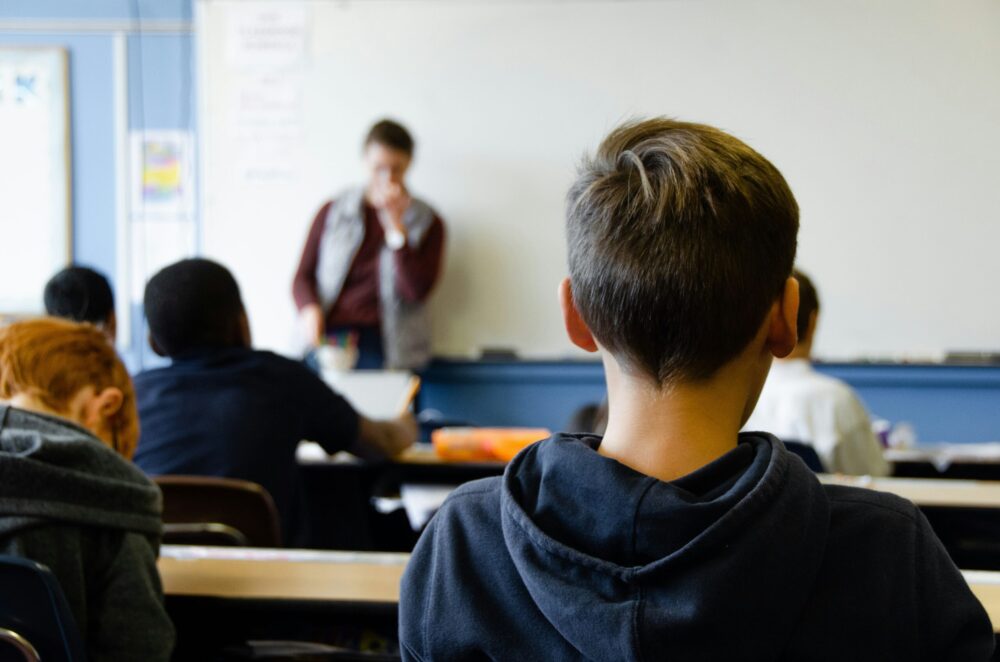
All of a sudden, and through no fault of their own, teachers have gone from a position of strength – based on their understanding of what to do within much tighter curricular parameters – to one of relative weakness.
This does not mean that good teachers become any less good as a consequence, more that they need additional support – and, in some cases, new skills – so as to respond most appropriately to what is being asked of them.
I like to think of this as a form of musical composition – if we take away teachers’ score, they’ll need absolute confidence that they can play all the right notes together, in the best possible order.
The problem, as it stands, is that professional learning is of variable quality and, rather like curriculum documentation, light on detail; which leads to mixed messaging, misinterpretation and the potential adoption of approaches that do not align with CfW principles.
Former education minister Jeremy Miles’ conceded in 2022 that Wales’ professional learning offer was not ‘as accessible and useful as it could be’, and there is little to suggest that meaningful progress has been made since.
Teachers are our most valuable asset and the suggestion, by renowned educationalist Lawrence Stenhouse, that there can be no curriculum development without teacher development seems entirely apposite in this context.
Consensus culture
There is perhaps one other thing to which I would like to draw attention in this deliberately potted review of education in Wales since devolution; namely our vulnerability to ‘groupthink’.
In its long-term strategic plan for education, the Welsh Government advocates a self-improving system in which ‘all parts of the education system become participants’.
As appealing as this collective responsibility sounds, the involvement of all key players in the education improvement agenda has limited the space for independent analysis; genuine challenge has been conspicuous by its absence.
That so many academics and policy experts have been invited back by the Welsh Government to advise on education policy (some having advised on and off for two decades or more) is another factor contributing to what might be considered a ‘consensus culture’ that marginalises outsiders and rewards those who worship at the same altar.
Moving forward, it is important that ministers are receptive to the fullest possible range of views and draw on insight from pupils, parents and educators the length and breadth of the country.
So contested is the education policy space that surrounding yourself only with those sympathetic to your vision for change will limit your capacity to make informed decisions for the betterment of all.
This feels like a significant and possibly defining moment for education in Wales; the journey has been long and arduous, but we have reached a fork in the road.
Do we hold course? Do we cut our losses? Or do we settle upon a new middle ground?
It is for the next Welsh Government to choose which path we take, but one thing is certain – after 27 years of devolved education policy, Wales can’t afford too many more wrong turns.
Dr Gareth Evans is an education policy specialist based in South Wales.
Support our Nation today
For the price of a cup of coffee a month you can help us create an independent, not-for-profit, national news service for the people of Wales, by the people of Wales.
Get more trusted Welsh news
Choose Nation.Cymru as a preferred source in Google News to see more of our journalism.



A lot of diffuse words; here’s a tip: an iron clad focus on the old fashioned: 3Rs at primary/junior level (i.e., Reading, wRiting and aRithmetic). It is shameful that pupils are not getting a good grounding in these subjects. Once mastered, the teaching of scientific method can follow. Then PISA results will surely improve.
Indeed. 25 years in and they can’t even do the basics. Admire Eagle the Education Minister in a way as she has kept a lower profile than Lord Lucan.
I am awed by your detailed and truly deep insight.
A very good precy of where we are at. My hopes would be:
A national college of pedagogy to drive professional development
A national advisory board for curricula to make sure what is taught reflects the needs of our society.
Increase PPA time and wages to enable schools to compete in the graduate recruitment market.