


A lobbying register would strengthen Welsh public life
Rhodri ab Owen, Managing Director of Camlas, Wales’s largest independent public affairs company
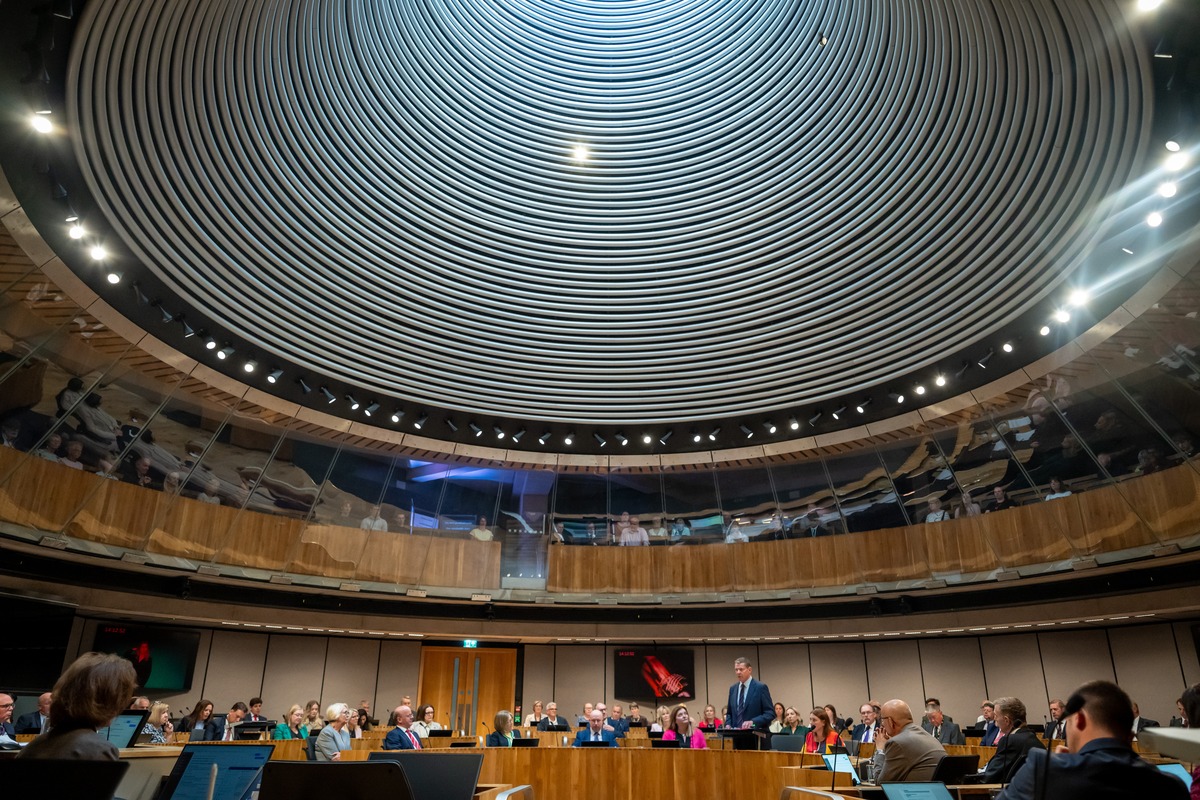
This week’s Senedd debate tabled by Reform UK on a statutory register of lobbyists was an important one for Welsh democracy. It was also a debate that those of us who work in public affairs should welcome.
Lobbying is not always an easy word to defend. To many people, it suggests private access, quiet conversations and influence exercised out of public view. In a period when trust in politics is already fragile, it is not enough for those involved in public life simply to say that they are acting properly. The rules should help the public see that for themselves.
That is why Camlas supports the principle of a statutory register for Wales.
Public affairs done properly has a vital place in Welsh civic life. Our work at Camlas is to help organisations understand how Welsh politics and government operate, how policy is made, and how to engage with elected representatives and officials in a clear and responsible way. That includes businesses, charities, professional bodies and others who are affected by public decisions and want to make their case. Very often, the clients we support have limited staff numbers – with engagement part of a wider set of responsibilities. We ensure that they make best use of the time they have available.
The Senedd should hear from the organisations and people affected by the laws it passes and the decisions it scrutinises. Better policy is usually made when Ministers and Members are exposed to evidence, practical experience and challenge from outside government.
The difficulty comes when the process is unclear. If the public cannot see who is seeking to influence decisions, and on whose behalf, suspicion will inevitably grow. That suspicion is bad for politics, but it is also bad for those public affairs companies that already operate openly and professionally.
A register would help set clearer expectations. It would make visible the professional lobbying that is already taking place, and it would give elected representatives, clients and the public a more consistent understanding of what good engagement looks like. It would also help draw a line between legitimate public affairs work and any behaviour that falls below the standards Welsh public life should expect.
Public affairs should never be about implying special access. No client should be encouraged to think that hiring a consultant gives them a private route into government. The value of good advice lies in political judgement, understanding of the devolved system, preparation, evidence and honest counsel. It does not lie in creating an impression of influence that cannot be justified.
The debate also rightly recognised that professional public affairs is not the same as ordinary democratic advocacy. Constituents, small charities, community organisations, trade unions, campaigners and businesses all need to be able to speak to their representatives. A register should not make that harder. It should not deter people from raising issues with Members of the Senedd, nor should it wrap normal civic engagement in unnecessary bureaucracy.
Organised lobbying activity
The focus should be on professional and organised lobbying activity, especially where someone is being paid to represent a client’s interests. That is where transparency is most needed, and where a proportionate statutory framework would be most useful.
There will be detailed questions to settle. The Senedd will need to decide who should register, what activity should be declared, how often information should be updated, how in-house lobbying should be treated, and how any new system should sit alongside ministerial transparency, Members’ conduct rules and guidance on events held on the Senedd estate.
Those questions need careful work. They should not be used as a reason to let the issue drift. Wales has been discussing this for years. As a former Chair of Public Affairs Cymru, back in 2013, I’m very aware that this issue has been on the table for many, many years. Other parts of the UK already provide examples, including examples of systems that have proved too narrow or cumbersome. Wales has the chance to build something that fits its own political culture and the scale of its institutions.
The tone of this week’s debate was encouraging. Members came at the issue from different angles, but there was broad agreement that transparency in public life should be strengthened. That matters in a Senedd that is larger, more powerful and under greater scrutiny than at any point since devolution began.
Boundaries
The public affairs industry should be part of the work that follows. We should be prepared to explain what we do, how we do it, and where the boundaries should lie. We should also be willing to support clearer guidance for Members, Ministers, officials, lobbyists and clients alike.
At Camlas, we would welcome that. Our work is not underhand, and it is not unethical. It is part of the normal process by which organisations engage with democracy and seek to understand decisions that affect them.
A statutory register would not prevent lobbying. Nor should it. It would make professional lobbying more transparent, better understood and more clearly governed. That would be good for the public, good for the Senedd, and good for reputable public affairs companies operating in Wales.
The Senedd should now take the work forward.
Support our Nation today
For the price of a cup of coffee a month you can help us create an independent, not-for-profit, national news service for the people of Wales, by the people of Wales.
Get more trusted Welsh news
Choose Nation.Cymru as a preferred source in Google News to see more of our journalism.



Rhodri and Camlas are the good guys! Nice piece.
Lobbying is the world’s most corrupt profession. There are no good guys.
Completely disagree Jacob as someone who has worked in public affairs for years!
I’ve got many friends in public affairs and you are the first one to ever claim it is anything but the darkest and dodgiest of vocations. The new register will bring it all into an uncomfortable light.
I doubt that you know many in Welsh public affairs as it is anything but dark and dodgy!!
Interesting. That’s quite the claim. Now there is a challenge to NCymru. PA worker claims that nothing dodgy ever happens (or has ever happened) in Welsh public affairs…
Erthygl arbennig o dda. Cytuno pob gair. Da iawn Rhodri.
This is a welcome intervention- da iawn!
Agree 100%. It can only enhance the reputation of the Senedd.
The only mystery is why there isn’t one already.
Bemused that there wasn’t one before. Shocking endictment on our politicial class for a practice that should be outlawed. Well, now there is one, it should provide NC with swathes of stories – be it PC and the cracach, Deform and the Russians etc. Obviously one wonders what they’ve all been getting away with for 25 years so there’s also a chance for some retrospective digging…
If there was transparency with lobbying influence it might be OK, but we really need to know when a devision is made if that person has received money from any lobby group. We don’t get that with our supine media, so hopefully Nation will lead the way.
The transparency question is important. As is moving the debate on from “all lobbying bad” to “how can it be done well”. Because politicians need to hear from organisations to understand the consequences of their proposals. If that input makes better laws that’s good for everyone. It’s influencing outcomes that go against the public interest that needs to be stopped.
I would suggest that the first story of interest would be Huw ID. After all, his son is a lobbyist. Shouldn’t take NC long to analyse his work, whether his father opened any doors, what doors, who benefitted etc etc. I’m sure it’s all fine but best to have a good old check. I would also suggest that, for reasons of transparency, this new register of interests etc is backdated five years or more as that would be interesting. In the name of transparency of course.
We already have and he isn’t working as a lobbyist any longer.
Let’s remind ourselves that Camlas is the rebadged Positif Politics which was led by one Daran Hill.