

A New Hope: What Cymru’s new Government can learn from others
As a new Star Wars film hits the big screens, Iwan Williams looks at Cymru’s potential and what the brand new Welsh Government can learn from others
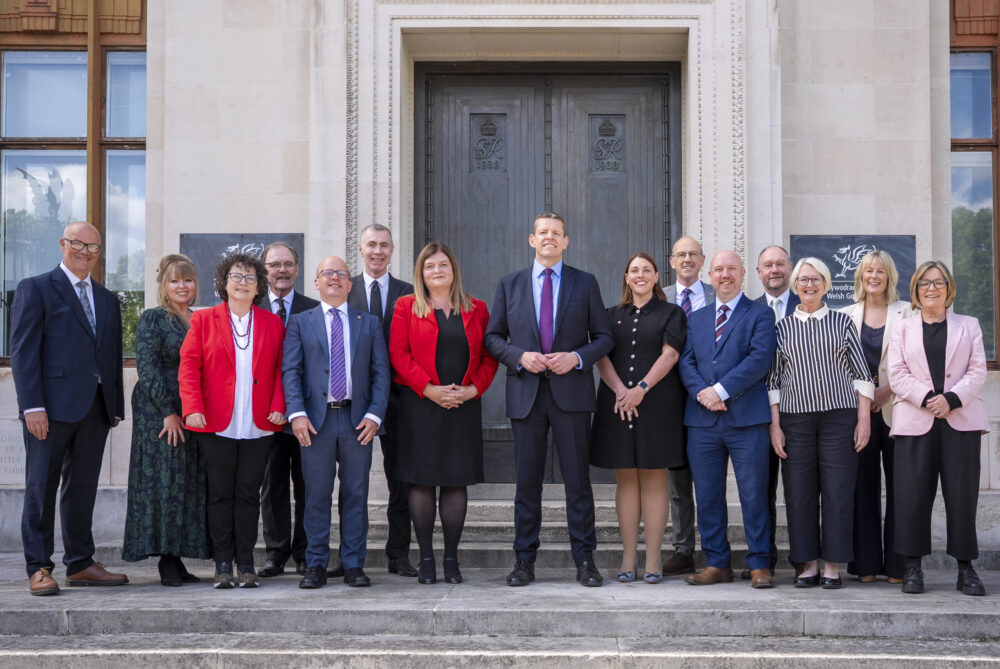
Between the national election, the election of Rhun ap Iorwerth as Cymru’s new First Minister and the announcement of his cabinet, it’s been a whirlwind few days.
I won’t compare Rhun with Luke Skywalker (nor Dafydd Wigley with Obi-Wan Kenobi for that matter), but there’s something that binds the Star Wars universe with this new chapter in Welsh political history: giving people hope.
Let’s begin with a reality check, and a sobering reality it is for the new Welsh Government. Cymru is the UK’s poorest nation, over 30% of children live in poverty (around 200,000 children), the unemployment rate is 3.5% and there’s around a £1 billion reduction in funding following Brexit.
Between much needed building repairs, staff shortages and patient waiting times, our NHS requires urgent attention. With around 30% of the population aged 60+ (around 866,000 people), funding for health and social care and preventative measures is insufficient. In education, Cymru has performed lower than the other UK nations in the PISA rankings, whilst ageing school and college/university infrastructure needs addressing.
Our town and city centres require economic renewal and regeneration, whilst nearly a quarter of those living in rural areas experience rural poverty. There’s an ongoing cost of living crisis, Cymru (and beyond) has a climate and nature emergency and we’re all affected by the unpredictable actions of a certain President across the Atlantic.
It’s an incredibly challenging starting point. Nevertheless, Rhun ap Iorwerth is very ambitious for Cymru and determined to improve things. What’s clear is that new, alternative and innovative ideas and solutions are required.
Considering our situation, the approach that the Welsh Government has taken over the past 27 years has not worked. Repeating the same things over and over has not led to the step change we require in education, health and social care, a prosperous economy, job creation and so on.
Cymru is not suddenly an independent sovereign nation, and the new Welsh Government will operate in restricted parameters set out by London. Funding is scarce, our devolved powers are insufficient to enable real change and tangible differences in people’s lives.
But you get the feeling that Rhun ap Iorwerth won’t accept ‘That’s just the way it is, we’ve always done it this way’, and will challenge the status quo in terms of our funding settlement and devolved powers.
Practical improvements
And as always, there are some excellent examples in other regions and countries that we could adopt in Cymru in order to make real, practical improvements for our people. If it works elsewhere, why can’t they work here? Are the challenges and barriers insurmountable?
Where are the low cost, high impact interventions that make a positive difference? What can we introduce relatively quickly? Here are a few examples that the new Welsh Government cabinet can draw inspiration from:
Anna Brychan’s education brief could take inspiration from Finland (5.6 million people). Long regarded as a beacon for educational standards, Finland’s emphasis on play-based early learning, minimal standardised testing and high teacher autonomy remains widely respected. Whilst some aspects of the Finnish model would be difficult to replicate, such as shorter school days, there are others that could help Cymru close the PISA rankings gap in reading, science and mathematics.
Brychan’s responsibilities also include Cymraeg, where there may be lessons from Quebec (8.5 million people) and the Basque Country, whose population is not dissimilar to Cymru’s. Both have developed approaches to strengthening minority languages alongside dominant national languages. Whilst Quebec’s strict Bill 96 would not translate directly to Wales, there are ideas worth exploring around encouraging businesses, public services and federal agencies to operate through French.
Closer to home, the revival of Euskara through immersion schools and embedding the language into public life is a journey that will feel familiar to many working to strengthen Welsh in communities and workplaces across Cymru.
In sport, Heledd Fychan could look to Croatia. With a population of just 3.8 million, the country consistently produces elite footballers, handball players, water polo stars, tennis players and basketball talent. Wales cannot replicate Croatia’s climate, but there may be lessons in participation, youth development and investment in sporting infrastructure.
Digital governance
For Government Effectiveness, Dafydd Trystan could draw inspiration from Estonia and Iceland, both widely recognised for digital government, transparency and public trust. Their progress in building digital public services, involving citizens in data ownership and developing robust cyber security and anti-corruption systems has earned international recognition.
Sioned Williams’ social justice portfolio could also look abroad. Denmark’s commitment to work-life balance, a shorter working week, flexibility and social cohesion is widely admired. The country’s cultural emphasis on equality and modesty has helped create one of Europe’s most cohesive societies.
Meanwhile, Adam Price has no shortage of examples to draw on in energy and enterprise. Iceland, Norway, Denmark and Uruguay have all become leaders in renewable energy. Given Wales’ abundance of wind, water and coastline for tidal generation, and the fact Cymru already produces almost twice as much energy as it uses, there is clear potential to join those countries at the forefront of the transition.
Health and Care Minister Mabon ap Gwynfor could examine the approaches taken in the Netherlands and Sweden, both recognised for high quality care and strong public services. The Netherlands is known for healthcare innovation and long-term care, while Sweden is frequently cited for its decentralised model, hospital standards and mental health provision.
For rural resilience, Llyr Gruffydd could look west to Ireland. Investment in digital infrastructure, transport, remote working and bringing vacant properties back into use has become central to rural regeneration there.
One area where Cymru has performed strongly in recent years is recycling and the ambition to become a zero-waste nation. Austria continues to set the pace and there may be lessons that help Wales close the gap and become Europe’s top performer.
Sustainable tourism
Sustainable tourism also offers useful comparisons. Slovenia, with its mountains, lakes and strong environmental identity, shares more than a few similarities with Wales. Through green tourism policies, low-carbon travel and support for eco-friendly accommodation, it has built an international reputation that could provide useful inspiration.
Cymru isn’t a poor nation, or need not be. Our potential is huge, and we require the ideas, tools and solutions to unlock this potential. Let’s look at league tables and rankings on e.g. Happiest Countries, Least Corrupt, let’s look at wellbeing indices and discuss with Finnish, Swedish, Danish, Icelandic, Dutch, Canadian etc. colleagues on how we can adopt and take lessons from their achievements and progress. Let’s empower our Wellbeing of Future Generations Act further to make the changes we need.
Rhun ap Iorwerth’s drive and determination to reverse our decline and make us a prosperous, inclusive and ambitious nation is to be welcomed. Returning to the Star Wars theme, no doubt The Empire Strikes Back when he negotiates with London for a just funding settlement and the return of our £4Bn in HS2 funding alongside the need to devolve the Crown Estate with broadcasting, policing and justice etc in order to put us, at the very least, on a level playing field with Belfast and Edinburgh.
New chapter
It’s an exciting new chapter for Welsh politics. Forty seven years after rejecting an Assembly, and twenty seven years since the National Assembly began, a Plaid Cymru Welsh Government now has the mandate to deliver on its election promises and show the electorate what it can do in power.
Rhun ap Iorwerth and his cabinet have the opportunity to bring change and address our challenges in new, radical and innovative ways, adopting good practice from partners in Europe and beyond. Our situation requires urgent answers with hope, ambition and energy. In the words of The Mandalorian:
This Is The Way. Ymlaen / Onwards Cymru.
Support our Nation today
For the price of a cup of coffee a month you can help us create an independent, not-for-profit, national news service for the people of Wales, by the people of Wales.
Get more trusted Welsh news
Choose Nation.Cymru as a preferred source in Google News to see more of our journalism.



Rhai syniadau radical da fan hyn.
Some exciting new radical ideas here.
Diolch.
Excellent ideas from other countries. Why was it that we never seemed to copy best practice examples from Europe when we were in Europe.
The dead hand of Westminster rule, perhaps?
That we haven’t been doing this for 25 years is the real scandal. Appalling.
Finland hasn’t been very high in the PISA rankings anymore. Their ranking was a bit of a fluke but the media lapped it up. The UK as a whole isn’t even that far-behind Finland now, which is largely due to England’s increase in PISA scores (https://worldpopulationreview.com/country-rankings/pisa-scores-by-country).
The UK is even higher than Finland for Maths and Reading, for example.
Scotland and Wales are trying to emulate Finland but it’s not gone very well for Scotland at all – so be cautious. The most successful systems are in East Asia.
Good point. It would nice to know what Lynne Neagle and other education ministers have been doing for the last 25 years though. Bet not one has visited groundbreaking and successful schools anywhere, let alone those over the border such as the Michaela Academy in a deprived area of London.
The myth that ‘Cymru produces more energy than it consumes’ is hard to kill but myth it is. Yes, we produce more electricity than we consume but electricity accounts for only a sixth of total energy consumption. For heating, transport and industry, we remain overwhelmingly dependent on imported fossil fuels.
…which reinforces the urgency of transition to renewablerenewables
Well said. Very odd that this misinformation keeps going around and around. We need an energy policy that makes use of all energy sources while phasing out fossil fuel etc as soon as we can. We have the most expensive energy costs in Europe which is crippling both consumers and businesses.