


A Tale of Two Governments
Ben Wildsmith
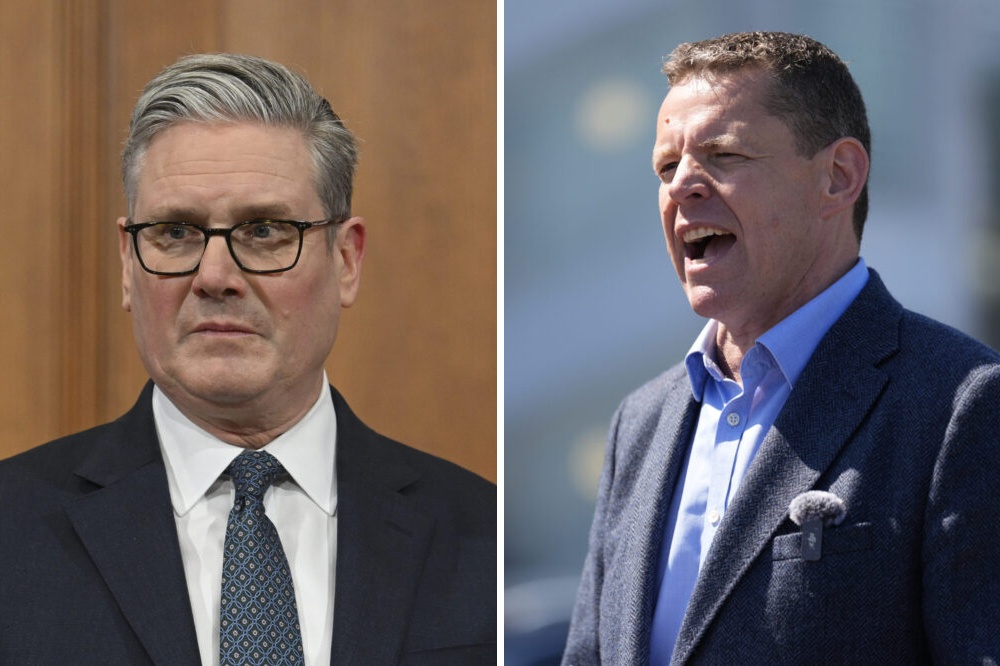
Keir Starmer’s government had inevitable chaos built into it long before the election in 2024.
Elected with no substantial programme, after watering down its party’s principles to homeopathic levels, it would have taken Tony Blair levels of political salesmanship to present this nothingburger of an administration as a success.
Starmer, bless him, couldn’t sell Elvis a cheeseburger, so Labour has been left to defend a project with neither style nor substance and its representatives received their customer satisfaction survey last Thursday.
Not being the Tories, all the rage in 2024, is less of a plus now that so many of the Tories are no longer Tories either.
With the right-wing of British politics rebranded by Nigel Farage into a faux-revolutionary, populist engine of discontent, Labour’s play-it-safe appeal to the middle ground has soured like milk in the sun.
All of this has long been apparent to Labour MPs. Outside of those who owe their advancement to the Starmer/McSweeney project (step forward the members for Swansea West and Cardiff West, for instance) the PLP has watched in horror as goodwill has evaporated from their constituencies.
Policies aimed at persuading Reform voters that Labour is listening to them were simply outflanked by Reform’s populist appeal.
Crackdowns on benefits only served to alienate traditional Labour voters, whilst harsher messaging on immigration was disbelieved by Nigelists. The net result has been a solidifying of Reform support whilst the insurgent Greens and Lib Dems have eaten into Labour’s share of the progressive vote.
In trying to be all things to all voters, Starmer only succeeded in angering nearly everyone. As if determined to mop up the rest, he then reversed the policies long after the point he could earn any credit for flexibility.
The baked-in chaos of this project finally broke out into open warfare yesterday, after MPs returned from their chastening stint on the doorsteps, where dissatisfaction with the Prime Minister was reported as the number one issue. The very real prospect of having to get a real job was enough to motivate dozens of them to go for the nuclear option.
How that unfolded suggests that the upcoming months are set to be unedifying. Wes Streeting’s resignation, confirmed this afternoon, was leaked ten minutes before the king spoke in parliament to open the new session.
Indecent haste
Streeting, we were told, had acted with indecent haste, alienating his colleagues by briefing the press at such a moment. It seemed plausible.
Shiny Wes approaches personal advancement like a crack addict with a broken lighter, so to imagine him sweatily lunging for the keys to Number 10 was all too easy.
By today, however, the Westminster rumour was that Number 10, not Streeting, had tipped off The Times.
If that seems beneath our ‘thoroughly decent’ Prime Minister then consider the recent experience of Karl Turner, the MP for Kingston upon Hull. Turner, until recently, was on friendly terms with the PM, going for a monthly pint where they bonded over football and discussed the mood of the parliamentary party.
That ended when Turner expressed opposition to the widely reviled policy of curtailing jury trials. In the following days, he discovered that Number 10 had been briefing the press about his mental health condition.
If Starmer himself is as decent as is relentlessly insisted upon by his supporters, he remains culpably weak in allowing those around him to practice the dirtiest of politics.
What’s to come won’t be for the fainthearted.
Meanwhile, the new Welsh Government has been formed with little controversy. Save for Darren Millar’s comically silly attempt to turn the election of Huw Irranca-Davies as Llywydd into a John Le Carre plot, the transition has begun serenely enough.
Much to learn
For Rhun ap Iorweth, there is much to learn from Starmer’s predicament. Voters will need to see concrete action on proposals like nationwide clinical centres, and they will need to see it quickly.
The drift of Labour’s first year in Westminster squandered whatever fractious goodwill the government had, and with so many of Plaid’s votes being leant to stop Reform, they should not expect much latitude for inaction.
Ongoing chaos in Westminster would affect us all. Particularly if the bond market decides that Nigel Farage will do its bidding more favourably than Labour.
In those circumstances, the Welsh government will see much of its bandwidth taken up with insulating us from the consequences of failure in Westminster.
Defining itself against the causes of that will be key to Plaid’s prospects.
Support our Nation today
For the price of a cup of coffee a month you can help us create an independent, not-for-profit, national news service for the people of Wales, by the people of Wales.
Get more trusted Welsh news
Choose Nation.Cymru as a preferred source in Google News to see more of our journalism.



It’s essential that differences to people’s lives are felt as soon as possible. Not easy but I believe just a few life changing policies should be focused on to begin with. The policy regarding child poverty, announced today, is a great start. People need to see real change quickly if this Plaid government is to be successful.
What a challenge but unlike Labours Welsh branch a Plaid Cymru go er will be focused on Y Cymry & our betterment
Hopefully
Plaid Cymru will put Wales first. Labour & Tories did not, the two big bullies in Westminster talked a good game, just words. Watch this space….
Westminster is just a constant mess, let’s distance ourselves as much as possible for the sake of Cymru.
Yes, the new FM has a lot to learn from Starmer’s demise; but what this article doesn’t cover (and nor did Plaid’s manifesto) is how policies are going to be funded. The unrealistic – and somewhat dishonest – commitments in Starmer’s manifesto are at the root of his undoing.
Reports of Starmer’s demise have been greatly exaggerated.
“Starmer, bless him, couldn’t sell Elvis a cheeseburger”
He doesn’t need to. He just needs a Secretary of State for Cheeseburger Sales who can.
“Ongoing chaos in Westminster would affect us all. Particularly if the bond market decides that Nigel Farage will do its bidding more favourably than Labour.”
Just about sums it up, big business supported fascists in the past and there is no reason to assume they won’t in the future. Capitalism and democracy don’t mix as the capitalist class will always put their profits before democracy.