


After Labour: The end of Wales and the rise of Cymru
Jonathan Lee
In 1957, the Welsh nationalist writer Islwyn Ffowc Elis imagined a future Wales that had been completely transformed in his political sci-fi novel, Wythnos yng Nghymru Fydd (A Week in the Wales of the Future).
He envisioned dual destinies for Wales in the far distant future of 2033. In one of them, his time travelling protagonist, Ifan Powel, arrives in Cardiff and encounters a confident modern Welsh nation; politically self-assured, culturally alive, and no longer psychologically subordinate to England.
In the other, he discovers a dystopian land called “Western England”, where the language and sense of identity have died out and the country is rife with petty violence and social tension.
His novel was part science fiction, part political prophesy that dramatized his vision of a Wales where the language flourished, democratic institutions reflected national priorities, and Welsh people viewed themselves not as a regional appendage of Britain but as a nation capable of shaping its own destiny.
For generations, that future seemed impossibly distant. Modern Wales instead became defined by another political inheritance: Labourism.
The industrial south built not only the electoral foundation of the British Labour Party, but one of the strongest working-class political identities anywhere in Europe. The red banner of the coalfields became inseparable from Welsh political consciousness itself. Socialism – merged with a distinctly left-wing chapel morality, trade unionism, and community-led mutual aid – fused together into a distinctly Welsh political culture that survived the collapse of coal, the neoliberal assault of the Thatcher years, and the managed decline of heavy industry ever since.
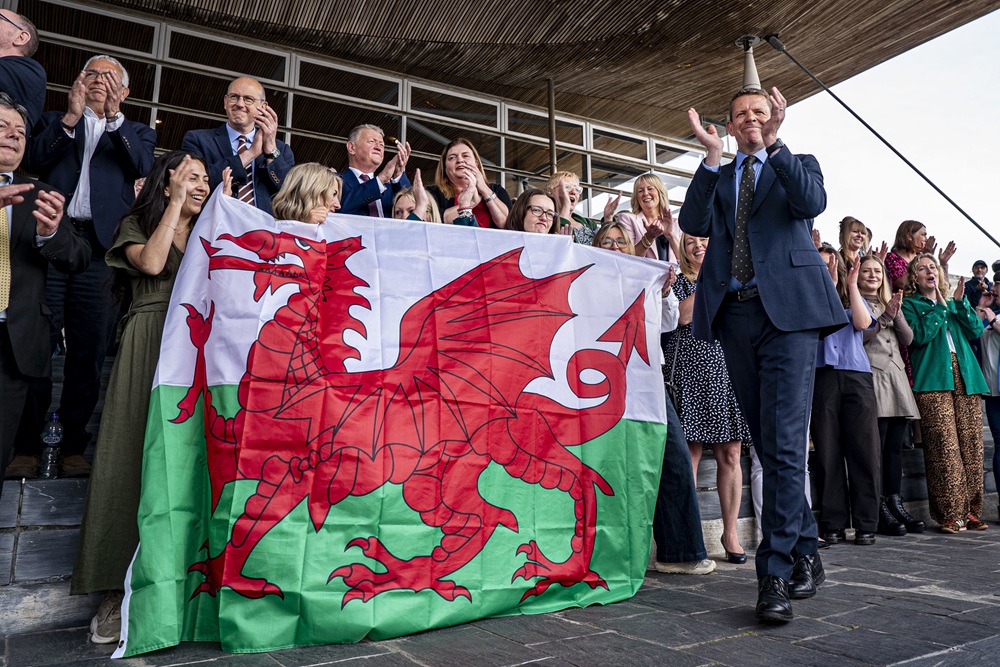
The victory of Plaid Cymru over Labour in the Senedd elections of 2026 marks the end of that era. But it also may ultimately be remembered as a turning point for the emergence of one of the Wales imagined in Wythnos yng Nghymru Fydd.
The question is whether that is Islwyn Ffowc Elis’s utopian ‘Cymru’, or dystopian ‘Western England.’
The end of one-party dominance does not automatically produce liberation. Throughout history it has more often produced fragmentation, uncertainty, and openings for forces profoundly hostile to democratic and civic ideas.
Also riding the wave of Plaid’s electoral triumph over Labour is Reform UK, a party whose politics represent perhaps the clearest modern expression of English nationalist centralism yet seen in British electoral politics.
To bastardise Gramsci: the old Wales is dying, the new Wales has not fully decided what it will become.
The Calamitous Collapse of Welsh Labour
The historic victory of Plaid Cymru is more than just an electoral upset. It is the collapse of a political order that dominated Welsh life for more than a century. Wales has voted for a Labour majority at every electoral opportunity since 1922: one of the longest political legacies anywhere in the democratic world.
Now, that old assumption that Wales would forever return Labour governments as naturally as valleys return echoes has dramatically fallen apart.
There is a temptation, particularly among Labour’s opponents, to portray the party’s collapse as simple punishment for incompetence or exhaustion, and certainly, there is an argument that Welsh Labour bears enormous responsibility for its own decline.
The party had become complacent after generations of near-unchallenged dominance, mistaking inherited loyalty for an eternal mandate, while all the while failing to see the writing on the wall over the past decades.
Any chance of survival for Labour in Wales means the party disabusing itself of the notion that the emotional and cultural attachment many Welsh communities felt toward Labour can survive indefinitely without any political renewal, imagination, or ideological clarity from its politicians.
Perhaps the most striking failing of Welsh Labour has been the gradual shift over recent decades in which the party ceased to look like the Wales it claimed to represent.
Historically, Labour politicians in Wales emerged directly from working life. Miners, teachers, union organisers, local activists, steelworkers, tradespeople. Even long after the decline of heavy industry and the chapel-going, rugby-playing Wales that existed until the 1980s, Welsh Labour still retained representatives who felt rooted in ordinary communal experience: politics that was not viewed as a profession but as an extension of collective struggle, and politicians who had normal jobs prior to becoming politicians.
That connection has weakened dramatically.
Increasingly, Welsh Labour appears (certainly in the eyes of many voters) as another professional political class. There is now a generation of politicians more comfortable navigating Cardiff Bay institutions and media management than the lived realities of struggling post-industrial communities. In the past, they may have been derided as being ‘just committee men’. Today they resemble managerial technocrats; polished administrators without the emotional vocabulary necessary to sustain Labour’s historic relationship with Welsh working-class life.
The contrast became particularly stark after the departure of Mark Drakeford.
Drakeford was hardly a revolutionary figure, but he possessed something increasingly absent from modern politics: a coherent moral worldview. He articulated a recognisably Welsh social democracy rooted in solidarity, public provision, and national distinctiveness. After him came leadership that felt managerial rather than visionary; possessed of the veneer of technical competence perhaps, but bloodless. The party no longer seemed animated by a larger purpose and increasingly there was very little of Rhodri Morgan’s ‘Clear Red Water’ between Welsh Labour and the British Labour Party in Westminster.
At the same time, Welsh Labour also became trapped by structural realities beyond its control.
The current devolution settlement grants Wales responsibility, but without any genuine sovereignty. Welsh governments manage public services but lack the fiscal powers necessary to reshape the economy fundamentally. This constitutional straitjacket means Welsh Labour took all the flak while Westminster bore much of the real blame.
Under this system, the government in Cardiff Bay came to be seen as responsible for a decline it largely did not create and often lacked the authority to reverse. Labour ministers administered austerity they did not choose, constrained inside a constitutional framework designed to limit meaningful autonomy and preserve the unequal, colonial makeup of the Union.
Since Kier Starmer’s premiership in Westminster, and the lack of a proper distinct Welsh national media, Welsh Labour also has become permanently associated with the failures of the wider British Labour Party. Welsh voters angry at Westminster punish those in Cardiff Bay because the distinction between the two is politically blurred.
In that sense, Welsh Labour became partially a victim of the constitutional system it so naïvely defended. In the end, voters rarely reward justifications and explanations. Governments are judged not by the limits placed upon them but by the realities people experience around them, and Welsh Labour failed to improve the lives of Welsh people in many ways that matter since devolution.
Wales without Labour
The deeper significance of this election is cultural rather than parliamentary. Since the rise of trade unionism and socialism in the Welsh industrial heartlands, Welsh cultural identity and Labour identity became intertwined to a remarkable degree, especially in the South Wales Valleys and major urban centres where most of the population live. To vote Labour for many became something akin to an inherited moral instinct; an affirmation of class solidarity, mutual aid, trade unionism, and community dignity.
It is hard to hyperbolise the extent to which, in many communities, Labour loyalty carried an almost familial significance. Amidst the myriad new interviews with former Labour voters who switched to Plaid, many expressed a sense of discomfort, even guilt, with their vote. In an interview with ITV, one 91-year-old lifelong Labour voter in Tredegar said his father “probably would turn in his grave” at his decision not to vote Labour. When asked the question “who is Labour for now?” however, another man said emphatically, “not for the people, not for the working class.”
For many, the uneasy feeling of betrayal they harbour for abandoning Labour will feel partly like abandoning part of themselves and with it a political expression of Welsh working-class existence itself.
Now that the Welsh Labour certainty has fractured, what replaces it is still far from certain. Plaid Cymru hopes to construct a broader civic nationalism capable of uniting Welsh-speaking and English-speaking Wales, the urban south and the rural west and north, progressive social democracy combined with national self-confidence.
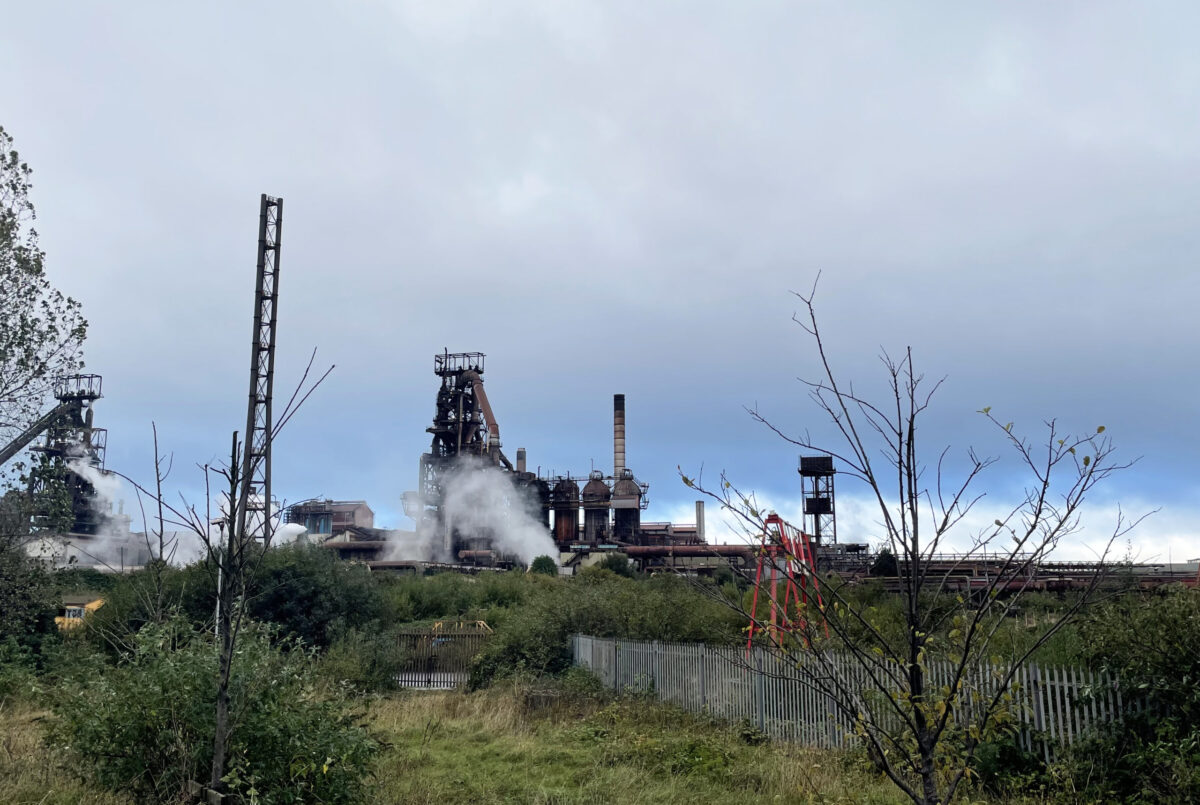
The opportunity now exists for Welsh identity to become less dependent on Labour tradition and more consciously rooted in nationhood itself. But transitions of identity are rarely smooth. The emotional architecture of Labour Wales shaped communities for over a century. Its collapse leaves a vacuum not only of governance but of meaning, amidst the ruins of industry that litter the Welsh landscape.
Gwalia Deserta
Few Welsh writers captured the emotional devastation of political and industrial abandonment in Wales more powerfully than Idris Davies. In Gwalia Deserta, Davies wrote of the ruined mining communities left behind after industrial collapse. His verses spoke of a hollowed-out Wales stripped bare by economic exploitation and indifference. His poetry mourned not simply unemployment or poverty but the destruction of an entire communal world.
“I stood in the ruins of Dowlais
And sighed for the lovers destroyed
And the landscape of Gwalia stained for all time
By the bloody hands of progress.
I saw the ghosts of the slaves of The Successful Century
Marching on the ridges of the sunset
And wandering among derelict furnaces,
And they had not forgotten their humiliation,
For their mouths were full of curses.
And I cried aloud, O what shall I do for my fathers
And the land of my fathers?
But they cursed and cursed and would not answer
For they could not forget their humiliation.”
– Gwalia Deserta XXII
Davies understood, even back in 1938, that Welsh industrial decline was never purely economic. The collapse of heavy industry shattered systems of belonging that had once given working-class Welsh life its coherence and pride. That sense of abandonment still hangs over modern Wales, as Davis described in Gwalia Deserta XXXVI:
“The slopes of slag and cinder
Are sulking in the rain,
And in derelict valleys
The hope of youth is slain.”
Decades after the pit closures, many communities continue to experience managed decline, precarious employment, weakened public infrastructure, and generational economic insecurity. The British government extracted Welsh resources for centuries while leaving many Welsh communities structurally dependent and economically fragile once those industries ceased to be profitable.
Welsh Labour long functioned as the political response to that devastation; imperfect, compromised, but still rooted in the belief that collective institutions could protect communities from total abandonment. Now even that political certainty has weakened and the fear underlying much of contemporary Welsh politics is not simply economic hardship, but the fear that Wales may once again become what Davies described: a deserted land; politically marginal, economically exploited, and culturally diminished. In this deserted Wales, the perfect conditions could be produced for the introduction of a new brand of far-right politics in the shape of Reform UK.
Reform and the Threat to Welsh Nationhood
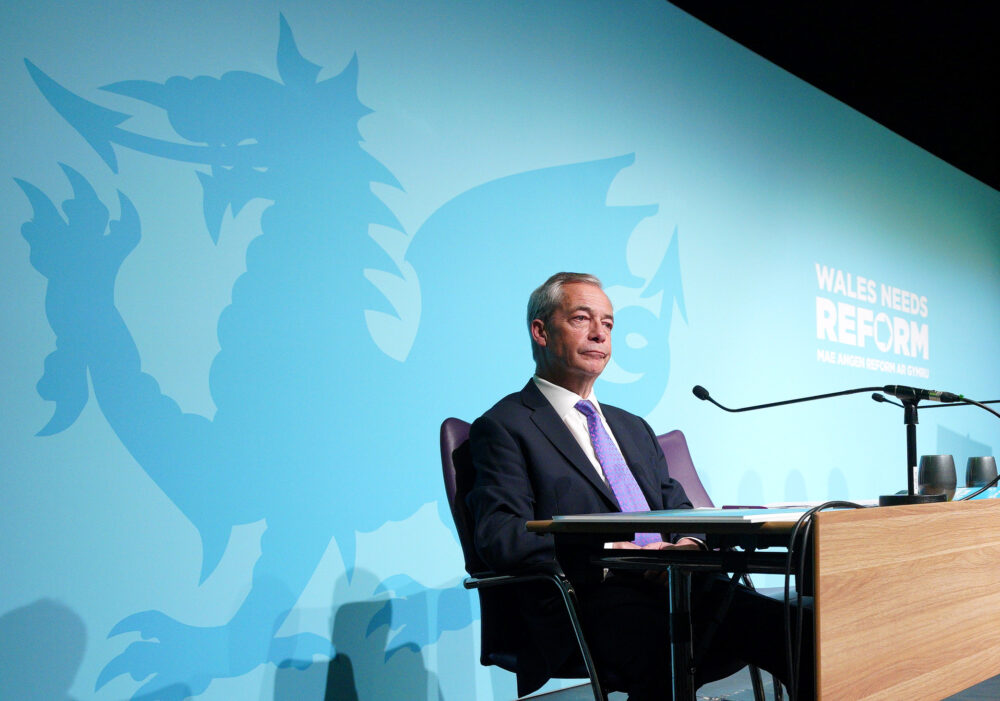
Reform UK presents itself as a populist anti-establishment movement, but in Wales its politics function fundamentally as a form of British (see English) nationalist centralism. Its hostility toward devolution, its contempt for Welsh political autonomy, its attacks on the Welsh language, and its disdain for social democratic traditions place it directly at odds with much of modern Welsh political culture and history. Reform’s vision of Britain is aggressively unitary: centralised, culturally homogenised, and deeply suspicious of multinational constitutional arrangements.
Beyond electoral dangers, Reform challenges the very legitimacy of Welsh nationhood itself as a meaningful political category. It seeks to frame devolved democracy as a wasteful obstruction, and Welsh national consciousness as a type of artificial grievance politics. In doing so, it threatens to reverse decades of democratic and cultural development achieved since devolution.
Whilst none of this means that Wales is necessarily on the verge of cultural annihilation – Cymru has survived much worse historically for it to be erased by a single electoral cycle or political movement – Reform could still absolutely set Wales back politically and culturally for a generation or more. And at a moment when Wales is already weakened by decades of neoliberal economics, resource extraction, and managed decline, that danger matters enormously.
Britain Without Wales? The Brewing Constitutional Crisis of the Union
The wider implications of the Scottish and Welsh Parliament elections for the United Kingdom are becoming increasingly difficult to ignore. For the first time in history, all three Celtic nations are politically dominated by nationalist parties: Plaid Cymru governs Wales, the Scottish National Party (SNP) in Scotland, and Sinn Féin remains the largest party in the North of Ireland. If Reform were eventually to capture Westminster and politically dominate England, the Union would increasingly resemble a state governed by competing nationalisms pulling in entirely different directions.
Of course, important caveats remain.
Neither Plaid nor the SNP took an absolute majority in the elections, and neither possess overwhelming mandates for independence (with Plaid Cymru actually stating they would not seek independence in the short term). At the same time, the general election remains some distance away, and British politics is volatile enough that Labour could yet regenerate itself under new leadership before Reform ever reaches government in Westminster.
But many old constitutional assumptions are collapsing rapidly. The United Kingdom at the moment looks less like a unified political culture (the extent to which it ever was is debatable, of course) and more like a collection of nations developing fundamentally incompatible understandings of identity, democracy, economics, and sovereignty.
The vain hopes Mark Drakeford espoused in 2021 that the UK could be turned towards a federal Union of equal nations now seem, as Plaid Cymru referred to them at the time, like “yesterday’s ideas.”
Whereas before, independence felt emotionally understandable but strategically uncertain to many, now in 2026 the calculation has changed. For many Welsh people, annibyniaeth (independence) is no longer merely a romantic aspiration of the heart.
It is now seen more as a practical necessity of the head; a recognition that Wales cannot indefinitely entrust its political future to the electoral instincts of a much larger neighbour moving steadily toward a very different understanding of the world around them. Ironically, Mark Drakeford’s emotionally charged call for “Home Rule” in 2021 now sounds much like the reasoning of the current independence movement for cooperation between sovereign nations on these islands:
“Outward facing, not inward looking…Yes to a Wales that takes ownership of its own destiny alongside working people in Scotland, England and Northern Ireland who share our progressive values.”
The Wales of the Future
In the wake of the Welsh Parliament elections, the Cymru imagined in Wythnos yng Nghymru Fydd suddenly feels much closer than it once did. Neither secure nor inevitable but, for the first time, visible.
The collapse of Labour dominance marks the end of one era of Welsh history and the dawn of a genuinely new political age. Whether what follows becomes a democratic national renewal, or a period of fragmentation and reaction remains frighteningly uncertain. Perhaps it feels so frightening precisely because it represents something Wales has never really had: political choice.
Throughout the economic industrial exploitation of Wales, and the proletarian political response to it, Wales never really had an option other than the political path it has already tread for a hundred years and more. In the last decades, that political accommodation has felt stagnant, and because nations cannot remain politically frozen forever, it is perhaps inevitable that we have finally reached this crossroads of futures for the country.
At the end of Wythnos yng Nghymru Fydd, Ifan Powel discovers that both the futures he saw for Wales are possible, and that it is down to the will and actions of the Welsh people which one of them will eventually come to pass. Ifan himself converts to the cause of Welsh Nationalism (having previously been against it) and vows to do everything in his power to make sure that the Cymru of the future triumphs over Western England.Whatever comes next, Wales will endure.
Cymru survived conquest and annexation by the English Crown. It survived the humiliation of having its language banned and branded inferior. It survived full-scale extraction of its resources, the flooding of its valleys for English reservoirs, the destruction of mining communities, the collapse of industry, and the long decades in which its resources enriched others while its own communities were left to rot. Cymru survived Thatcherism. It survived austerity. It survived being told repeatedly that it is too small, too weak, too poor to stand apart from its colonial parent.
It will survive Reform too, but only if, like Ifan Powell, Welsh people do everything in their power to ensure that after Wales comes a modern, thriving, Cymru, and not the provincial and divided Western England of Ifan Powel’s nightmares.
This article was first publish on The Norwich Radical
Support our Nation today
For the price of a cup of coffee a month you can help us create an independent, not-for-profit, national news service for the people of Wales, by the people of Wales.
Get more trusted Welsh news
Choose Nation.Cymru as a preferred source in Google News to see more of our journalism.



A most compelling analysis. My only caveat is that it’s unlikely to be the binary choice offered by Elis – at least in the medium term. Plaid won’t push hard beyond their commission and if the union is to break the Scots will have to go first. But the current stench around the SNP makes that much less likely. Nor are Reform the shoo in at the next general election that many pundits would have us believe.
Stirring stuff !
A well written and well researched article. As a resident of the south Wales valleys, I’d like to take the opportunity to highlight that right-wing politics has unfortunately been alive and kicking for many years in the valleys. Valley people, for historical and family reasons couldn’t vote Conservative, unfortunately they can legitimately (in their eyes) vote for Reform UK. As long as Reform UK exist with Farage as their leader British Labour will struggle in the valleys. Plaid Cymru are by far the best choice for government in Cymru.
Anyone claiming independence to be a ‘practical necessity of the head’ should address the practical challenges we would face.
Ah yes the practical challenges, the challenges that we are too thick to face, the challenges that we are too poor to face, and the challenges that we are too small to face. People who live in Cymru are as good as anybody living in any part of the world – we are no different to them, if they can do it so can we!
I guess you’re one of those who doesn’t really want Wales to become independent, you just like the sound of the word. A bit like those voting Leave to ‘take back control’. That worked out well.
Achieving any objective in life, personal or political, requires serious thought about the real life situation in which we find ourselves, recognising possibilities, obstacles and the options for addressing them. Not just slogans. Take life seriously.
You’ve guessed wrong my friend. I’ve been heavily involved in the Welsh independence movement. I agree independence is an extremely serious matter. There are things we can prepare for in advance of independence and there’ll be years of learning on the job. We have 800 years of evidence that being in a union with England hasn’t really worked out for us in Cymru. Are you suggesting we wait another 800 years before doing something about it.
‘Union bad, independence good’ doesn’t cut it. It just sounds like the argument for Brexit. You need to show how independence would, in practice, make life better for the people of Wales. Can you?
Welsh independence isn’t Brexit, Welsh independence will hopefully lead to greater integration with Europe. If you want an example of how independence could make life better you don’t have to look far – Ireland. Yes, Ireland like every other country in the world has its challenges. Imaging an Ireland that wasn’t independent, was part of the UK and that wasn’t in the EU? Ireland would be a shadow of its current self. There are no guarantees of success being resultant of independence, all we have is evidence from the last 800 years most of which we’ve been amongst the poorest… Read more »
‘For Wales, see Ireland’ is no better than ‘For Wales, see England’. We need a specific analysis of our own situation rather than assuming we could mirror someone else’s experience. There seems to be an unwillingness or laziness in the widespread reluctance to analysis the constraints and options open to Wales today. But there are some lessons from the Irish experience. I have long supported Irish independence and, if and when desired, unification. But it has not been plain sailing. For 75 years until the Good Friday agreement both north and south were dominated by reactionary governments with theocratic tendencies.… Read more »
You seem happy with the status quo, which is fair enough, happy to see Cymru bumble along. Happy with Westminster’s 16 years of austerity and under investment in public infrastructure. You are looking for an “oven ready” form of independence it doesn’t and never will exist. Anyway, it seems we are unlikely to agree. Good luck clinging on to the hope that one day Cymru will catch up with the rest of the UK and EU. Here’s to the next 800 years!
I take that to be an admission that you are not interested in Welsh independence as a practical proposition. Far from being happy with austerity and under investment, I have campaigned against those. But I do not reduce that issue to ‘Westminster’. As the Irish example shows, independence from England provided no security against the consequences of a global financial crash resulting from the excesses of neoliberalism. The truly radical tradition in Welsh politics does not centre on nationalism. It is the struggle for justice that drove the Merthyr Rising of 1831, the Chartist march on Newport in 1839, the… Read more »
‘Nationhood’ evades the issue of class exploitation, understanding which underpinned Welsh labour movement traditions. Some of the worst coal barons were Welsh, as are many of the businesses that today ravage the Welsh environment, or exploit Welsh workers or tenants.
Welsh Labour can only be dismissed until the results of the next general Election are in. It is still possible that the Senedd vote was partly a protest vote.
“The end of Wales, the rise of Cymru”. I like that!