


An unfamiliar place for Labour
Brenig Davies
Labour is no longer the largest party in the Senedd. For those who have followed Welsh politics for many years, it is an unfamiliar sight.
Throughout the devolution era, Labour had a position unlike that of any other party. Governments came and went. Leaders changed. Labour stayed at the centre of Welsh public life.
The 2026 election brought that period to an end. Plaid Cymru now leads the government. Reform UK is the Official Opposition. Labour is third.
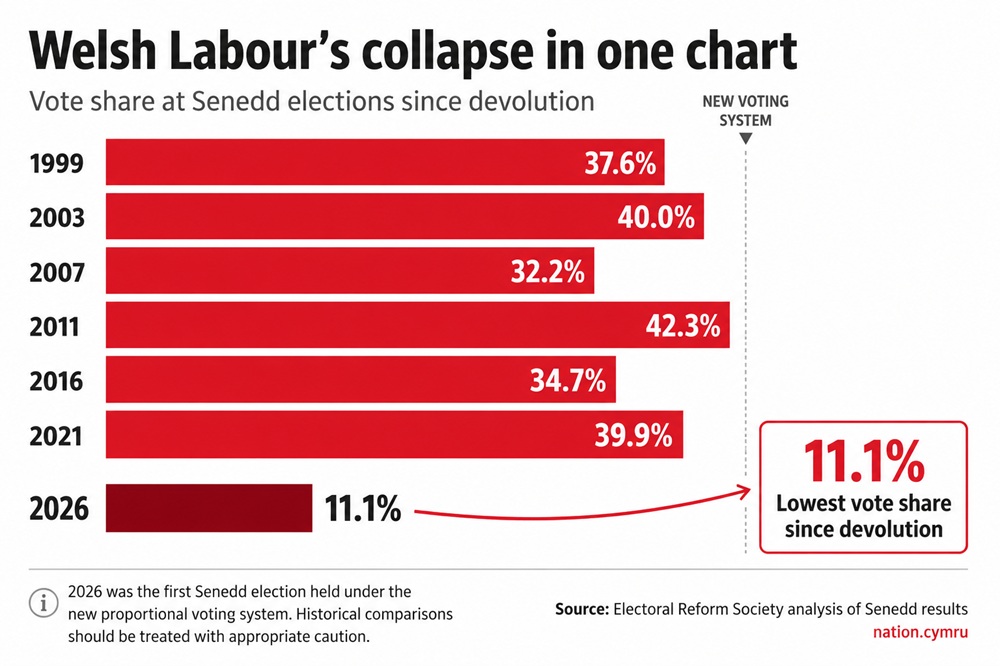
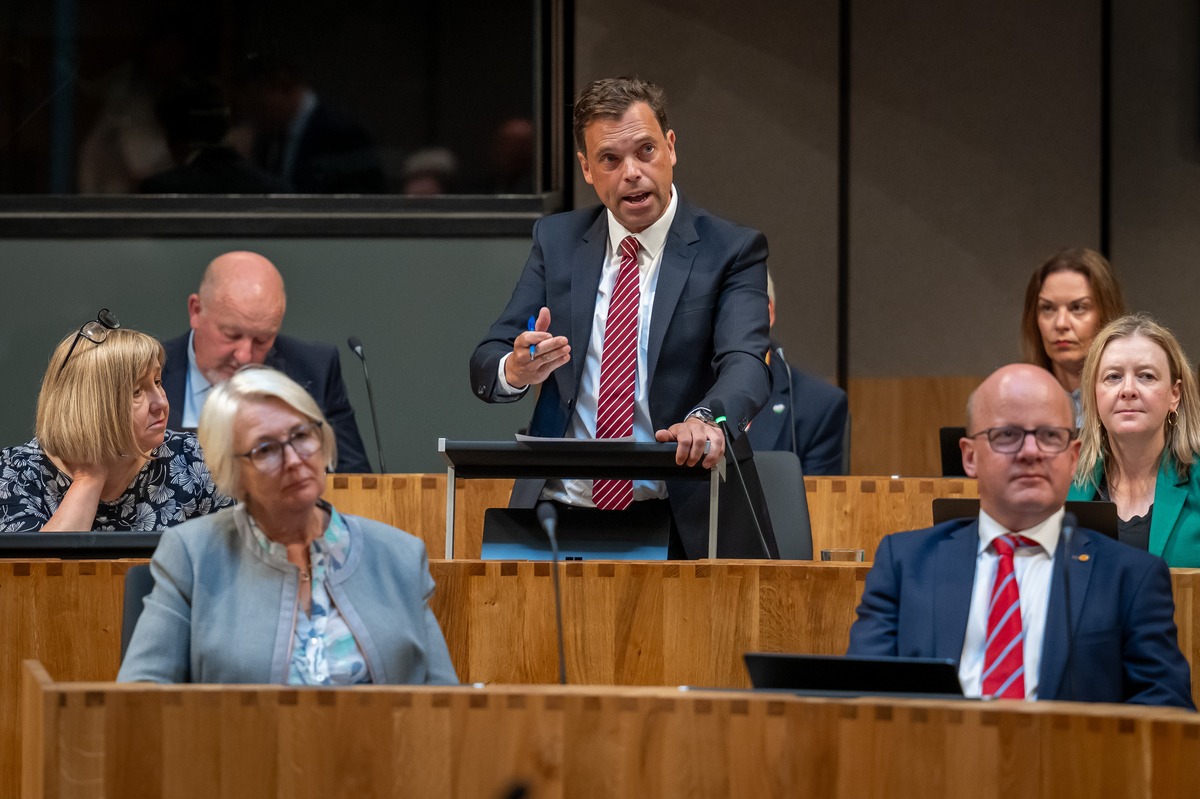
Opinion polls had pointed towards losses for some time, but the scale of the result still came as a shock. Labour now has nine Members of the Senedd, one of whom serves as Llywydd and is therefore required to act impartially. That leaves the party with only eight voting members.
A long road ahead
Electoral defeat brings more than a change in status. The party will need to adapt to a different Senedd position and reconsider how it uses resources. For Labour, the challenge is not simply recovering lost support but proving how it can remain an effective party in the Senedd from a smaller base.
Labour will have considerably less influence than it once commanded. Representing constituents, responding to current issues, taking part in chamber business and serving on committees will all place demands on a smaller group of MSs. That will require the party to decide which campaigns and policy areas get priority.
While the party is no longer at the centre of the Senedd, it still has links to a Labour government at Westminster. Welsh Labour MPs can help advance issues being raised by their colleagues in Cardiff Bay. That relationship may prove valuable as the party adjusts to its new position.
Labour has said it will review its election defeat. Reviews are rarely comfortable, particularly after a result of this scale. They often ask tough questions about strategy, organisation and how voters view a party.
They can also prompt wider reflection on how a party communicates its message and develops policy. They may require long-held assumptions to be reconsidered. Whatever conclusions are reached, the review will shape decisions about the party’s future direction and its efforts to rebuild support.
Whether this is a temporary setback or the beginning of a longer political realignment, only time will tell.
What is clear is that Welsh politics has entered a different phase. How successfully Labour adapts will shape not only its own future but also the wider balance of Welsh politics.
Brenig Davies writes on Welsh politics, public policy, and civic life. His articles have appeared regularly in Nation.Cymru and other Welsh publications.
Support our Nation today
For the price of a cup of coffee a month you can help us create an independent, not-for-profit, national news service for the people of Wales, by the people of Wales.
Get more trusted Welsh news
Choose Nation.Cymru as a preferred source in Google News to see more of our journalism.



Welsh Labour failed in its duty to fight for Wales’s interests, which is why it now finds itself in obscurity. This situation is unlikely to improve if, as expected, Andy Burnham ascends to the Labour leadership and maintains the status quo—failing to reform the outdated and unfair Barnett formula, continuing to deny Wales devolution afforded to England, Scotland, and Northern Ireland, and subjecting us to further neglect under Jo Stevens, one of the worst Welsh Secretaries since the treacherous George Thomas. If this continues, Labour risks facing political oblivion in Wales. If so. Good riddance!
“While the party is no longer at the centre of the Senedd, it still has links to a Labour government at Westminster. Welsh Labour MPs can help advance issues being raised by their colleagues in Cardiff Bay.”
But isn’t their failure to do so part of the reason why they’re in this mess? That Eluned Morgan would go to Westminster asking for help, only for it to turn in to a reenactment of Oliver Twist asking for more gruel? I see no evidence that anyone occupying Welsh Labour seats in Westminster has learnt anything.
I hope that when the debate about our crushing defeat at this last election,every past Labour Party,and present Labour members are contacted to give their views,