


Ask Greenland
Ben Wildsmith
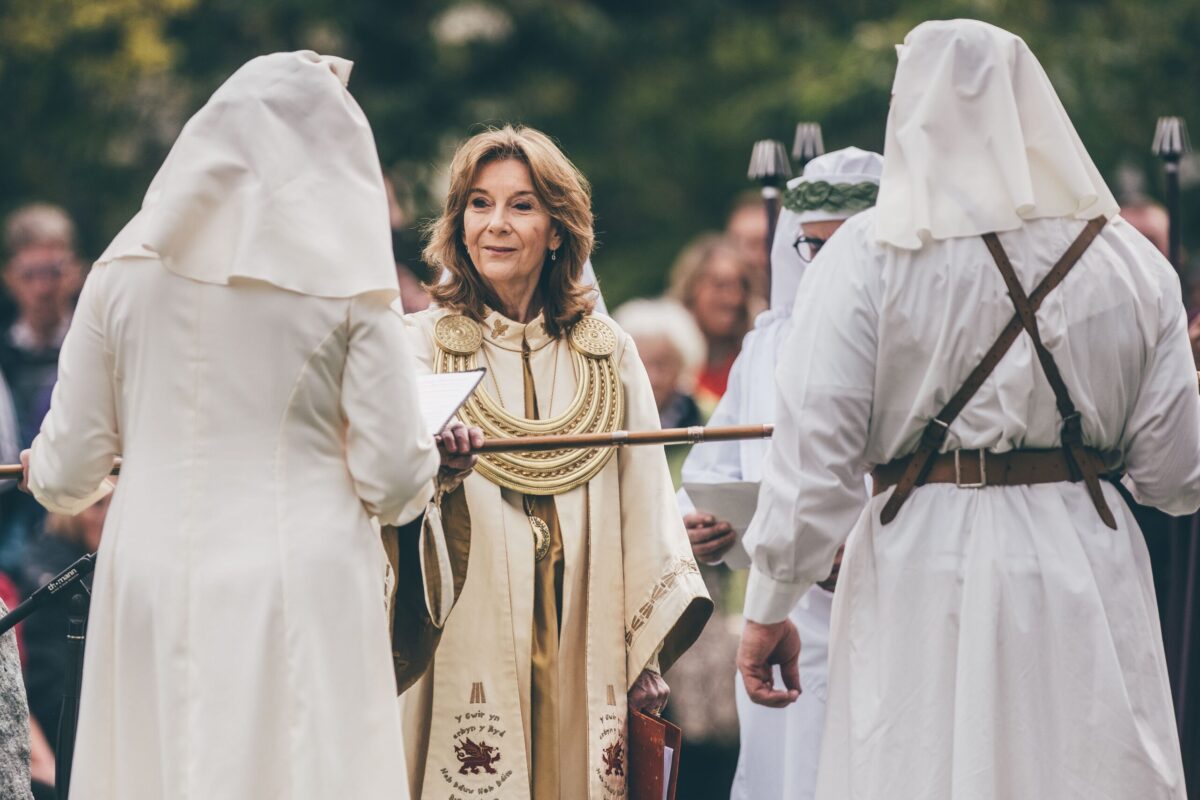
When Mererid Hopwood chose to question plans to site a 27-dish radar network on the St Davids peninsular in her Maen Llog address last week, the Archdruid framed the debate about how Wales relates to the UK and the wider world.
‘What do we stand for? Feeding the military machine, or reinforcing the beauty of the local area, land and people coming together to live in peace?’ she asked, mirroring the concerns not only of local opposition to this plan, but of many in Wales who are uneasy about the compromises being demanded of our nation by global interests and a UK government that seems unable, or unwilling, to forge a relationship with devolved administrations that recognises legitimate differences of approach.
Local objections to the proposed DARC installation, which would cover an area equivalent to ten football pitches, are multifaceted. Naturally, people are horrified at the visual impact of the plan on an area that is beloved worldwide for its natural beauty. There are also fears that radiation levels caused by the installation will cause health problems and have an adverse effect on wildlife. Beyond those entirely reasonable, but localised, objections, however, exists an ethical argument about where Wales stands as a nation.
LBC’s conversations with campaigners reveal moral objections to the plan, which would see the US defence firm Northrop Grumman building the facility under the aegis of the AUSUK defence partnership between the UK, US, and Australia. Uneasiness with American strategy, especially in the wake of the war against Iran, is a specific problem for people who fear that the project will place Wales on the frontline of global conflicts over which we exercise no democratic control.
Within Britain, this issue, has the potential to be an anvil upon which our fractured constitution breaks open. The Welsh Government has called in the planning proposal for scrutiny, with the expectation that Plaid Cymru will oppose it the national level.
Senedd majority
As the recent defeat of the supplementary budget illustrated, that is no guarantee of a Senedd majority on the matter. Labour supports the proposal, with the local MP, Henry Tufnell, pugnacious in his defence of it.
‘This is a clear move from Plaid Cymru to weaken the UK’s security and alliances, and in doing so, will harm local jobs, economic development, and our county’s proud culture in defence.’
Mr Tufnell, who has been criticised for failing to engage with local concerns over the issue, espouses here a strand of current Labour thinking that has straddled the Starmer and Burnham administrations.
John Healy, former Defence Secretary and now Chancellor, has been unambiguous in his belief that defence spending should be a central plank of the government’s drive to inject growth into the UK economy. As Tufnell demonstrates, any moral objection to that idea can be dismissed as abstract in the face of supposed economic realism. In other comments, Tufnell stresses the dangers posed by Russia and China to global security, presumably seeking to impose a moral obligation on the residents of Pembrokeshire to assume a disproportionately onerous share of the risks inherent to countering them.
Politically, this affair has wide and urgent implications. In the Senedd, we are likely to see Labour’s nine MSs again wielding power that belies their showing in the recent election.
Battering ram
On this issue, it is difficult to imagine that opinion across Wales is emphatically in favour of the project. If Labour’s Senedd cohort, all of whom finished bottom of their respective constituency lists, is to be used as a battering ram for the wishes of Westminster, then the party’s legitimacy here will be further undermined.
If Plaid prevail, however, the problem becomes constitutional. Defence is not devolved and any decision made by the Welsh Government on planning could thus be overruled by Westminster. Labour’s current pitch to be the party of devolution will not survive an imposition of this sort against the stated democratic will of the people it affects.
If we are denied agency over an issue that threatens our natural landscape, health, and tourist revenue whilst plausibly painting a target on our nation at a time of global crisis, then devolution as it applies in Wales is meaningless.
The Archdruid was right to frame this issue as one of national identity and values. That her opponents can rely only on speculative economic benefits and our supposed obligation to an American alliance is telling. Ask Greenland.
Support our Nation today
For the price of a cup of coffee a month you can help us create an independent, not-for-profit, national news service for the people of Wales, by the people of Wales.
Get more trusted Welsh news
Choose Nation.Cymru as a preferred source in Google News to see more of our journalism.



Battle lines being drawn? Will this galvanise y Cymry? Whatever, your stance on these military shenanigans, surely we the people of Cymru should have the final say?
It is not the first time a lady has rallied her ‘troops’ and repelled invaders from that beautiful county…
Have you a clue as to what I was talking about!
If the wishes of the Welsh people and their representatives in the Welsh Government are overridden on this issue, then we have not really progressed since Tryweryn.
Labour taking the “despise Wales” line again.