


Brexit Referendum: 23 June 2016 – the day our world changed
Desmond Clifford
Is it really 10 years? I worked in the First Minister’s office in Cardiff on the morning Wales and Britain voted to leave the EU.
Carwyn Jones, then First Minister, was shell-shocked, and so was I. I’d spent a big chunk of my life in Brussels as the Welsh Government’s first diplomat, a representative to the European Union.
Back in Cardiff in 2016, I was still responsible for the Welsh Government’s EU policy.
Carwyn led the Remain campaign in Wales and spoke a couple of times alongside David Cameron.
Most commentators thought Carwyn spoke well and made a rational case for remaining. The Leave campaign was energised by Nigel Farage and Boris Johnson. The Welsh Conservative leader Andrew RT Davies supported Leave, but the Welsh campaign never developed a distinct identity.
Remainers had a well-stocked warehouse of issues. Wales benefitted from European regional money more than anywhere else in Britain: you could barely drive a mile without spotting a building paid for by the EU.
Farmers were subsidised through Europe’s agriculture scheme. Universities accessed serious research funding. Students spent time in Europe while our university towns teemed pleasingly with French, Spanish and German students.
Immigration was ratcheted to the top of the agenda when UKIP cottoned on that they could use it as a proxy for opposition to the EU.
Few truly cared much about the minutiae of EU market rules, but immigration offered a handle on “taking back control”.
Leavers spooked people into imagining a vast influx of Turkish migrants – which still hasn’t happened and isn’t going to.
EU immigration was mostly positive. Remember the Polish plumber? Remember those polite smiley young people who worked the pubs and coffee shops?
There was genuine pressure on public services in specific parts of England – notably the agricultural flatlands of east Anglia – but in Wales EU immigration was low, and in large parts of the country, practically non-existent.
Yet it was in those areas, oddly, that anti-immigration sentiment was at its highest.
That was the canary in the coalmine. The Brexit debate was often only marginally about the European Union.
Most people knew little, and cared less, about the CAP, the Single Market, the Customs Union. For many, the vote wasn’t about that. It was about distance from power, being seen or not seen, heard or not heard.
Too many people felt ignored, and the referendum was a way of poking Authority’s eye.
In the First Minister’s office on that gloomy June morning in 2016 – gloomy, though blindingly sunny outside – we pored over the figures: 52-48 in favour of leave. It was a clear defeat though not crushing.
You couldn’t help but wonder what extra effort could have nudged the dial the other way.
In the Senedd around 50 out of 60 Members voted Remain – that’s around 83% of all Members – including a good few Tories.
Traditionally Conservative areas like the Vale of Glamorgan and Monmouth voted Remain. Yet, among the whole Welsh electorate, less than 48% of people chose Remain.
The gap between the Welsh public and their political representatives was stark. This should have been a warning, alerting Wales’ politicians to widening disaffection.
Instead, it was treated as an aberration. The warnings were ignored, Welsh Labour went on its way and finally paid the price at the 2026 election.
As most of us recall, the years following the referendum were painful. The result drove an enormous crevice through Britain’s politics which only widened through years of chaos. Parliament virtually collapsed under the strain and normal politics ceased to function.
It took a private citizen, the admirable Gina Miller, to fight in the Supreme Court to uphold parliament’s rights and to unscramble what politics couldn’t do.
Instability
Prime ministers were spat out like no time in our history and the instability unleashed in 2016 continues still; we’ll soon be on our seventh PM in a decade.
The Welsh Government spilled acres of ink on white papers arguing for nuanced terms of departure from the EU. I wrote some of them. Our documents were widely praised and comprehensively ignored.
For years, I journeyed wearily to and from Whitehall every week, sometimes twice a week, often with Carwyn Jones or Mark Drakeford, leaving before dawn, to make Wales’ case with the UK Government.
Ultimately, we had no purchase whatsoever and our efforts were in vain. Devolution, in the sense of giving Wales a political voice within the United Kingdom, failed utterly – an outcome worth noting for future reference.
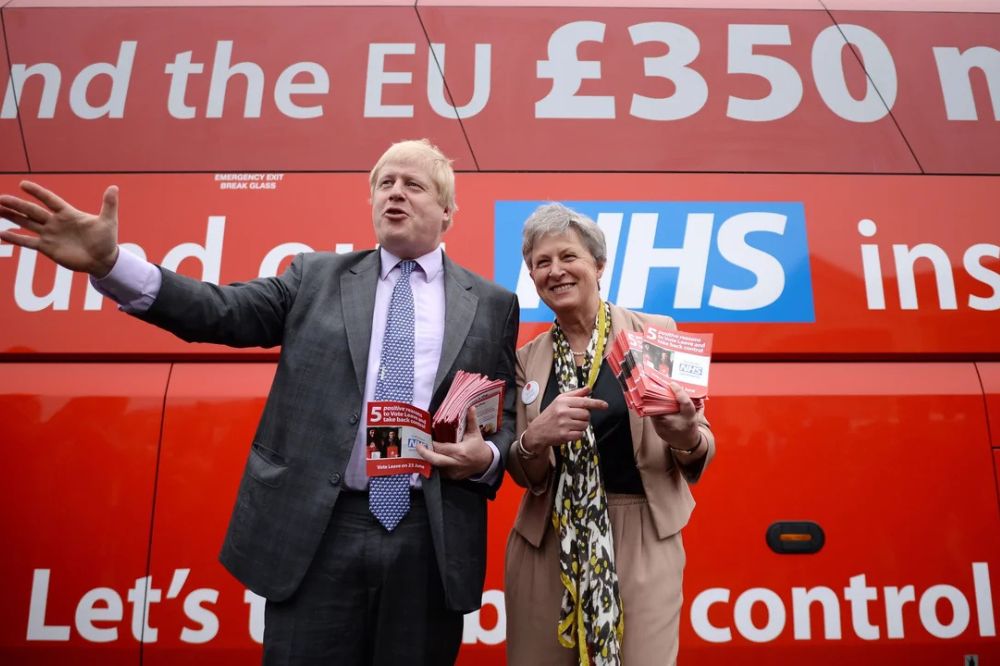
Wales lost EU money which was never fully replaced by the UK Government. Remember all the additional cash that was going to be spent on the NHS…? We’re still waiting.
The Senedd and Welsh Government lost powers which should have been repatriated from Brussels to Cardiff but were intercepted by Whitehall.
They were intercepted through the UK Internal Market Act, devised by Boris Johnson to usurp devolved governments. The Welsh Government was supported in its opposition by Keir Starmer, then Labour’s Brexit person. Now Starmer uses the same Act for the same purposes as Johnson and wonders why he and his cyphers are so unpopular in Wales.
Brexit emphasised the inability of the Welsh Government in current constitutional circumstances to exert any meaningful influence on the wider United Kingdom when its legitimate interests are stake.
I wish it were otherwise, but that’s where we are in 2026.
The European problem has always divided Britain down the middle. If there was a clear, long-term preference for or against, it would be less painful. It’s a question which always divides, and the ambiguity is agonising.
Poor leadership
The problem in 2016 was exacerbated by poor leadership among those who claimed, ultimately, to support Remain.
Although he was Prime Minister, David Cameron could not tell us until February 2016, only months before the referendum which he called, that he was unambiguously in favour of Remain.
Goodness knows what Jeremy Corbyn truly believed. Gordon Brown was consistently aloof on Europe until the referendum. Tony Blair was always pro-European but by 2016 no one wanted to hear from him.
It’s no comfort that the world predicted by Remain 10 years ago has mostly come to pass. Worst of all, the UK is poorer by about 4%, exactly as foreseen by the Welsh Government’s post referendum white paper.
Our economy is flatlining. Outside Europe, the UK lost its strategic role just at the wrong time as Russia mobilised with real menace.
Leavers assured us in 2016 that NATO and the Special Relationship with America would support our defence. Well so much for that in 2026.
Houdini politics
Remarkably, Nigel Farage goes largely from strength to strength. His Houdini politics is truly a phenomenon and defies easy explanation.
Meantime, the UK drifts like a cork on the ocean, all at sea, no harbour in view. It’s an unfamiliar position and the logic of defence pushes us back towards Europe, as it always must.
Where else could it push us? Trumpism isn’t finished, not by any means, and I reckon we’ll hear again about Greenland before he’s done.
With immense irony, the EU referendum in 2016 moved in tandem with the Welsh football team’s unprecedented progress to the semi-finals of the European Cup. It was incredible.
Only three days before the vote Wales beat Russia 3-0; two days after we beat Northern Ireland 1-0.
We said No to Europe politically just as Wales asserted itself sportingly like never before.
I had anguished messages from friends around Europe, congratulating me on the football (all down to me, of course!) while lamenting our Leave vote. My responses were even more anguished. I couldn’t explain it; not then, not now.
Voters remorse
Opinion polling now shows voters remorse. A vote tomorrow would produce a different result, but I feel no certainty that we wouldn’t eventually relive the whole divisive cycle over again.
Besides, we’d never get back into the EU on the same advantageous terms we had before. There’s quite a strong chance that we wouldn’t be allowed back in at all, on any terms, at least not while Reform remains strong.
On balance, I reckon that aspiring to re-join the EU is probably not the way forward, at least not in the short-term.
I think we should position ourselves closely to the EU without re-joining. We could join the Single Market and Customs Union while remaining apart from the political institutions in Brussels.
There would be some drawbacks; we’d be rule-takers, although that’s done Norway no harm. But doing nothing has drawbacks too; it’s making us poorer!
Realities
Since the World War, Britain has often failed to exercise clear-sighted international judgement. We should start now and take a view based on the realities before us. We can no longer rely on America in the ways we thought we could. This doesn’t mean we should give up.
It’s in our interests to retain the best available relationship with the USA, but we are obliged to recalibrate our expectations.
But for trade, defence and democratic solidarity we have only one natural and enduring partner and that’s the people next door.
Support our Nation today
For the price of a cup of coffee a month you can help us create an independent, not-for-profit, national news service for the people of Wales, by the people of Wales.
Get more trusted Welsh news
Choose Nation.Cymru as a preferred source in Google News to see more of our journalism.



Was always going to be out, controlled bu Murdoch, the hate mail and ss express. With the BBC giving Farage free reign to spout crap for 16 yrs before the vote. I hate all leave voters who have ruined by kids future and mean my wife has to constantly justify her existence because she is a forces child born abroad.Where is the 500 billion gone from our GDP
The UK and Welsh Remain campaigns should go down in history as the most sanctimonious and complacent of all time. They never thought they could lose despite dire warnings at least six weeks ahead of the referendum. Carwyn Jones was concentrating on the Assembly elections a month prior.
The mistake was trusting folks to see through the spivs and chancers.
Not really. That’s democracy. The mistake was a campaign which failed to expose the spivs. As Jones says below it was obvious at least six weeks out that the momentum was with the leave campaign. But the UK and Welsh establishment were detached from the reality.
In order to campaign to expose the spivs and chancers you must first accept that the electorate aren’t smart enough to see through them. The failing therefore in the Remain camp was to think too highly of the masses.
This was the straw that broke thr camels back for me in realising that there are a lot of gullible people who won’t bother researching what they’re voting for. Farage and Johnson Spouted so many ridiculous lies, and the public lapped it up. The media fed complete fabrications of what the EU did or didn’t do vto everyone and they were never challenged or questioned. I will say though, that I feel that the gullible voters and well controlled media have been major players in promoting Welsh and Scottish independence. There’s a delicious irony in the “taking back control” brigade… Read more »
The day the gammons started the d3struction of everything they claim to hold dear.
All those small boats are their fault.
I have a lot of respect for Des Clifford. But how in earth was he and CJ gobsmacked by the result of the ref. One reason being is they don’t speak to ordinary people or listen to them. It was pretty obvious here in Carms how it was going to go just by listening to what was said in bars, shops, work. I am not a politician but I do follow it closely. Two things that I have predicted have come true. In 2006 I predicted that Russia’s grip on Europe’s source of energy would mean political leverage for Russia… Read more »