


Burnham and Wales
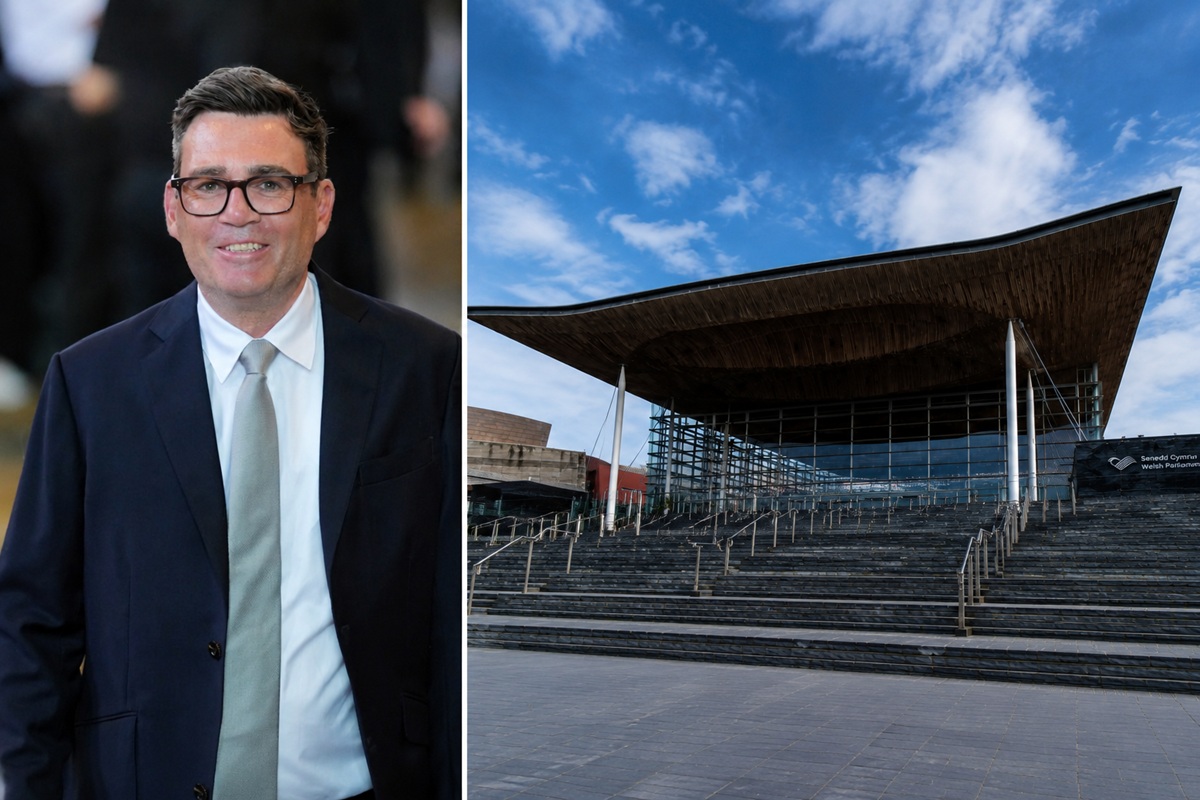
Paul Griffiths
Wales has a devolved government. Burnham’s primary objective is to enhance devolution. It might therefore be assumed that Burnham and Wales therefore have a simple shared agenda.
Wrong! The agenda is far from simple; it is complex with a fog of unresolved tensions within Wales and throughout the United Kingdom. Finding a shared understanding between Burnham and key actors within Wales is an urgent task for the next few weeks.
Burnham brings from his Manchester experience the proposition that the UK will emerge from its economic stagnation only if the city regions of the United Kingdom are empowered to create the coordinated action which integrates innovative business investment with infrastructure, transport and land use.
When Burnham looks at the devolved nations of the UK he is perplexed and confused. He wants to believe they are just like Manchester and equally within his writ as Prime Minister. But they are not.
They have devolved executive and legislative powers which the regions of England do not have. They are not economic regions; they are recognised nations within a United Kingdom.
Burnham may want to find the city regions of Wales and Scotland upon which he can replicate Manchester but, if they exist, they are buried deep and concealed by the competitive tensions within the devolved nations.
In 2021 the Senedd of Wales legislated to create a regional tier – the ‘Manchesters’ of Wales. The legislation recognised that the networks which may stimulate our contrasting Welsh economies were larger than our local authorities could ever be; but they would never fit the geography of all Wales.
The legislation created four regions in Wales: the north with its economic pathways reaching out to north west England and Ireland; the south east where coastal cities are inter-dependent with valleys and have their pathways to the south west of England; the south west where Swansea and Carmarthen seek to develop their networks of growth; and perhaps hitherto lacking form and focus the bit in the middle.
The legislation gave these regions the awful title of ‘Corporate Joint Committees’ – the people of Wales share with Burnham a perplexed frown as they try to make sense of this arrangement.
The few years of regional governance in Wales have had their successes – the almost completed ‘Core Valleys’ rail metro is a startling achievement which will underpin an economic region of a million population. This should be celebrated as our equivalent of the transport led regeneration of Manchester.
But in other ways we have dithered with a typically Welsh muddle of unresolved tension.
Regions
Welsh Government legislated for the four regions but has been unwilling to let go of its own centralised controls. The regions have been given responsibilities in law but heavily curtailed powers in practice.
The regions have each provided regional transport plans but it was made clear that the plans should not refer to all the transport responsibilities that remain with Welsh Government. We therefore have regional transport plans that do not refer to major highways, rail, ports or airways. We have regional transport funds that allocate funds for active travel routes and local highways but do little to underpin regional economic development.
The regions are developing regional land use plans. We might expect such plans to be integrated with proper regional transport plans to zone development across the local authorities.
The plans would lift the lid on that opaque world in which Welsh Government officials set targets for residential development in each local authority area. Instead Welsh Government clings on to its own strategic planning role and requires that the Welsh regions regionalise the task of allocating of sites that until now were agreed by local authorities.
It is a recipe for conflict and confusion, confirming the perception of communities that government is done to them and not by them
Regionalisation in Wales has come to mean that powers move from the local authority to the region and not from Welsh Government to the region.
Economic activity
It is in the area of promoting economic activity that we find the most unproductive muddle.
We should first agree that there is no such thing as ‘the’ Welsh economy. When we need to focus on regional networks economic activity, they are defined by their transport patterns, the mobility corridors in which people move from home to work, the chains of supply which allow firms to access supplies from other firms and sell their products on, the inter-relationships of business with colleges, skills centres and regional universities, the inter-dependence of cities with the towns and smaller settlements that share the supply chains and labour networks. By these analyses, it is sensible to identify distinctive economies in the south east, south west, north and middle of Wales.
These regions identified in Welsh legislation are allocated economic responsibilities concurrent with those of the Welsh Government. In practice there is a constant muddle as regional officials appear to have jarring, competitive relationships with Welsh Government officials each competing to appear relevant to the business leaders they seek to support and influence.
The governance of the regions in Wales is different to that in England. Instead of the directly elected mayors of the city and regions of England, Wales has joint committees of the leaders of the constituent local authorities.
Both the English and Welsh models are being tested and the juries remain out. In England there are many regional mayors who appears disconnected from the political and administrative networks they need to orchestrate. In Wales regional leadership can appear diffuse and un-focused.
Muddle
It is in this Welsh muddle that Burnham may think that he wants to galvanise the energies of the Welsh cities and regions. Does he work with the Welsh Government on a joint venture or does he seek a direct relationship with the regional bodies that are emerging within Wales?
If he is true to the spirit of national devolution created by Tony Blair, as a homage to his predecessor John Smith, Burnham will work through the Welsh Government encouraging our new Welsh ministers to let go and breathe life into the Welsh regions. Alternatively he will be told by his UK civil servants that Whitehall has the powers and funding routes to deal directly with the Welsh regions.
It is a muddle. But the stakes are high. If Burnham seeks to deal directly with Welsh regions then devolved government across Wales continues a slide to irrelevance. If he works through a Welsh Government that refuses to let go and empower its own economic regions, the economy of Wales will continue to stagnate and the people of Wales will be justifiable unforgiving.
There is a way through this muddle. Welsh Government needs rapidly to create active partnerships with the regions of Wales, devolving responsibilities and funding to those regions – so that the UK Government can have a [positive relationship with both Welsh Government and the Welsh regions.
Paul Griffiths is a former chief special adviser to Labour’s Welsh Government and is currently the deputy leader of Monmouthshire County Council
Support our Nation today
For the price of a cup of coffee a month you can help us create an independent, not-for-profit, national news service for the people of Wales, by the people of Wales.
Get more trusted Welsh news
Choose Nation.Cymru as a preferred source in Google News to see more of our journalism.



All this comes down to the fact that Labour FAILED to confront the problem of 22 ‘county’ councils of which 75% are to small, too weak and too ineffective to implement change. Unless the four ‘regions have a structure and purpose beyond the ad-hoc cross-county management committees they will (a) Not provide an effective platform to which the Senedd/ Westminster Labour can allocate finance and decision making.(b) Lack the drivers to implement the effective and practical allocation of such finance.
‘too small’!
Absolutely correct. This is Plaid’s dilemma. Unless they address local government reorganisation (but show no signs of doing so), devolution stops at Cardiff Bay. This undermines their case for more powers inevitably, quite apart from failing to produce real results.
Major deliberately made them small to stop them being political fiefdoms putting party ambitions before local needs, and creating deadlock with other tiers of government. Any reorganisation should keep this in mind although he may have saved everyone a lot of trouble by simply changing the voting system to STV.
Wales has 22 Local Authorities. ~700 community and town councils; 16 Senedd constituencies, each with 6 Senedd members; 32 Westminster constituencies and MPs. Wales had 3 (soon 4?) National Park Authorities. There are 4 Corporate Joint Committees (CJCs) and Regional Economic Partnerships. NHS Wales has 7 regional University Health Boards and 7 Regional Partnership Boards. The Welsh Ambulance Services University NHS Trust (WAST) has 3 operational regions. There are11 large regional bus companies and a number of smaller operators (and TrawsCymru, Flecsi, FLiXBUS, National Express and a procurement procedure is underway for a contract to operate the recently announced Carmarthen… Read more »
Burnham wants to devolve more power outside of Westminster, please can he inform our new Welsh Secretary, who seems lees keen. What has Wales done, to deserve such useless politicians. Party before Nation, that’s the sort of politician we send to Westminster.
Good to see an article on regional governance in Wales. Most people have little idea about this. CJCs are unelected and less accountable than either local authorities or Senedd.