


Burnham & the Cult of the Free Market
Ben Wildsmith
Like many kids of my vintage, I copped for whooping cough as a child because my mum was spooked by stories about serious side effects of the vaccine.
Parents were informed relentlessly that whooping cough itself carried much more risk than the vaccine, but inaction still seemed like the safer option to many.
That’s a natural instinct, it’s easier to live with the risks of doing nothing than it is the responsibility of doing something that turns out badly.
Something like that has frozen UK politics since the 2008 crash fractured the illusion that our economic system was working for anyone but a select few.
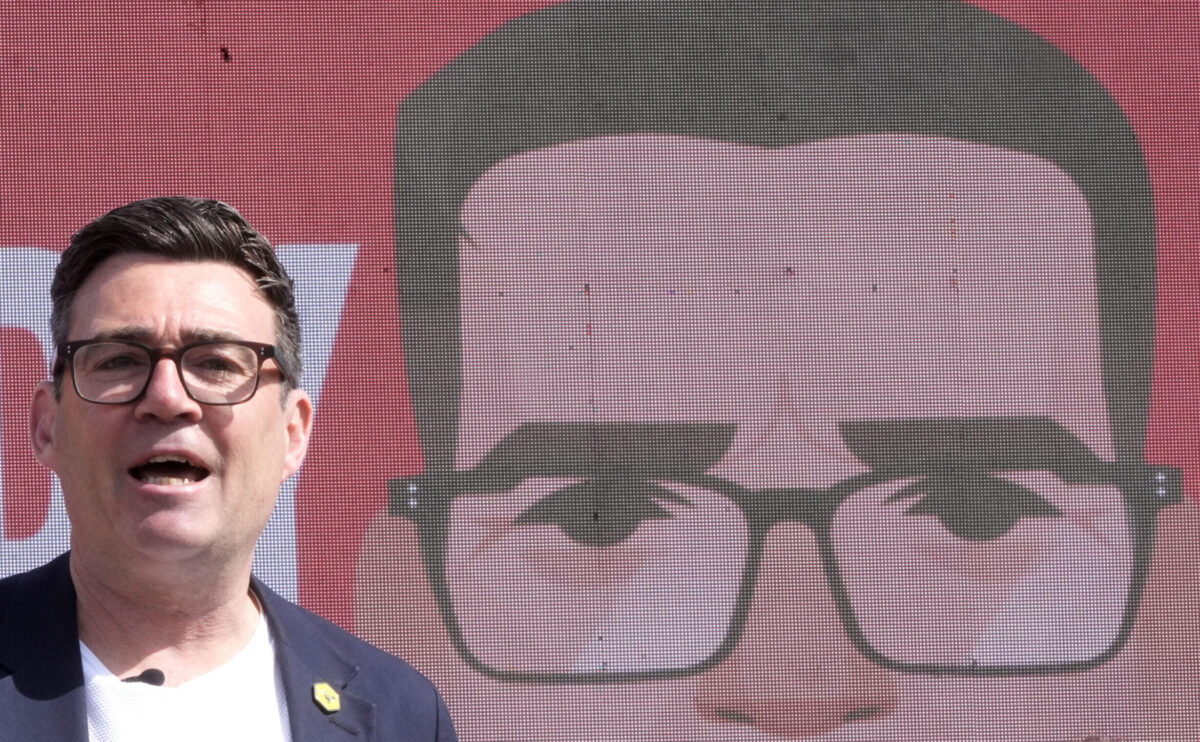
During the by-election campaign in Makerfied, Andy Burnham made some noises about ending the UK’s adherence to neoliberal economics and transitioning to a more interventionist, planned economy.
Free market economics have been largely unchallenged since Tony Blair became leader of the Labour Party nearly 32 years ago.
In the immediate aftermath of the Soviet bloc’s collapse, it seemed as if the argument over state intervention was over. Private capital would create wealth; the only dispute left was how it would be spent.
Conservatives believed private interests could take over state responsibilities, whilst Blair et al saw a ‘third way’ in which partnerships between private capital and government would create common cause between the two.
Since then, the only high-profile voice to suggest widespread state involvement in the creation of wealth has been John McDonnell.
The disintegration of the Soviet bloc is widely seen as the defining event of the late 20th Century. The great ideological battle was over, and the failure of Marxist-Leninism proved that statist politics of any sort were a blind alley.
Meanwhile, at the time, most assumed that the Chinese government’s brutal response to democracy demonstrations in Tiananmen Square was a temporary setback before the country’s adoption of capitalism naturally bred a generation of individualists that would assert its democratic rights.
By the time that western capitalism ate itself in 2008, the notion that private enterprise was the only reliable mechanism for change had hardened into a quasi-religious dogma.
Even as we printed £375 billion to save the system, there were no serious objections to handing this over to the very banks that had caused the crisis.
Where nationalisation was necessary, it was on the understanding that reprivatisation would occur as soon as it was viable. Those responsible for overturning the Monopoly board were handed a get-out-of-jail card and fresh stakes for another game.
The recapitalisation of banks, and the subsidy of wages during Covid lockdowns, should have reminded us that the state is, after all, the solidity that underpins all economic activity. The cult of the free market, however, is so ingrained in our political culture that even its self-destruction wasn’t enough to persuade politicians that fundamental change was an urgent necessity.
The notion persists that despite a state-educated workforce sending goods across state-built roads and relying on a state health service to keep them fit for work, wealth is created solely by the genius of entrepreneurs and investors. Government, cultists believe, is a harnessing inconvenience to the smooth operation of business.
Dragon’s Den
Well, that depends on which business. Culturally, the free markets cult elbowed its way into the national ethos via TV shows like The Apprentice and Dragon’s Den. Here we were instructed in doctrinal certainties by prominent priests like Lord Sugar and Duncan Bannatyne.
Occasionally, the Dragons would refuse an investment on ethical grounds. Deborah Meaden would issue an indignant condemnation of a proposal that would be harmful to the environment; Peter Jones would deploy his monumental self-possession to rule out a business that promoted gambling.
On Cult TV, the system always worked for our benefit. In the confined moral space of a studio full of cash, there were no faceless investment funds that would back a business boiling down grannies for glue if they could get away with it.
Investors were just like you and I, but with a stronger work ethic and nicer shoes. Meanwhile, in the real world, food banks became a permanent feature of life whilst, in America, where the cult is headquartered, sentiment curdled to the extent that the murderer of a health insurance CEO was celebrated as a hero.
In China, the game was being played differently. When a gap in the global market was identified, the government seeded companies to compete for five years before picking those that performed best and folding the others. The benefits of competition were made to serve the state’s wider ambitions.
In place of democratic reforms, the CCP offered improvements in living standards and private companies exist to serve that commitment. Since 1990, approximately 800 million Chinese have been lifted out of poverty, whilst the USA has created one trillionaire.
Now, clearly nobody here wants to live in an authoritarian state. As a democracy, however, is it not time that we wrested control of the nation’s economy away from the service of shareholders towards the improvement of general living standards?
The belief that state interference kills prosperity has been disproven by the Chinese experience, and the fate of UK companies is a visible reminder.
When you look at an MG badge on a Chinese car that bears no resemblance to the sporty objects of desire it previously invoked, does it not give you pause for thought? When you bite into a Cadbury’s chocolate bar, only to gag on palm oil and sugar, do you wonder if a free market of hostile, foreign takeovers is providing the solutions it promised?
When you read of rivers being polluted by companies formed to monetise a commodity that falls out of the sky, do you puzzle over how value has been added?
As AI and robotics threaten to render many of us obsolete, do you worry about whether the owners of those technologies care if your children eat or not?
Steering the UK out of the jaws of predatory capital is a dangerous business. Cult leaders will scream that the bond market is sovereign, not Parliament.
For them, democracy is a sideshow that elects mouthpieces for the cult. If it threatens to disrupt their machinations then it will be overridden by the withdrawal of capital from the nation. That’s a nice NHS you’ve got there, be a pity if something happened to it…
Sovereignty
For all the endless rhetoric we hear about sovereignty, control of our borders, and national pride, we’re supposed to accept that foreign investors can cancel any plan we direct our politicians to implement.
Our natural resources are open to exploitation by anyone with the banking heft to capture them, and the conduct of business must be left to those who profit from it.
Well, I object. Private enterprise can absolutely be a force for societal good, and the old Cadburys, which built beautiful homes for its workers and supported their leisure pursuits, was proof of that before faceless execs from Kraft stripped all public value from the operation.
The prime directive of the cult, however, is that everything profitable is virtuous. So, a baker operates on a level playing field with the vape shop next door, as if each contribute equally to the wider good.
Societal outcomes
Is it beyond our imagination to envisage a system of taxation and subsidy that rewards societal outcomes and directs investment towards them?
As China hoovers up UK brands by doing just that, why are we paralysed to the point where building a railway line has proved impossible?
Most likely, Burnham’s talk of fundamental change is a lot of campaigning blather. The same powerful voices will be in his ear as have been in all his predecessors, warning and threatening not to take the vaccine.
In the case of whooping cough, the fear was that it caused brain damage. Economically, as our waterways fill with excrement, our jobs return lower standards of living, our high streets wither away, and our politics degenerates into performative farce, we’re already cognitively impaired.
Support our Nation today
For the price of a cup of coffee a month you can help us create an independent, not-for-profit, national news service for the people of Wales, by the people of Wales.
Get more trusted Welsh news
Choose Nation.Cymru as a preferred source in Google News to see more of our journalism.



Good article but I think you left a “not” out:
there were no faceless investment funds that would NOT back a business boiling down grannies for glue if they could get away with it.
Now let’s chat about your glorious China and its treatment of political dissidents, the uyghurs etc
Not to mention that outbreak in 2019 . Gain of function.
That the USA commissioned. If it was Wuhan, the ultimate cause is the USA.
Interesting article. The Chinese model looks to work but, obviously, the State needs to be in complete control in order to control capitalistic forces. The trouble is any organisation or individual that becomes too powerful will do anything to keep that power – anything. So there needs to be checks and balances but these will undoubedly be hijacked by the very capitalist forces which need to be controlled. I’m not defending Chinese communism but if we are to have a similar system here – heavily protected regulatatory systems wiil need to be put in place to protect any State checks… Read more »
Then there’s the baffling case of the free-marketeers dreamland Singapore where the state owns almost everything including 80% of residential property.
There is the world we might like and the world we have got. No amount of (often valid) criticism of neo liberalism changes the fact that government addiction to borrowing from the bond markets means it plays by the market’s rules. I think we can safely forget China and John McDonnell as role models.
The fact the Chinese govt is investing so much in its own people means it is democratic. Just because elections work differently doesn’t mean it is not democratic. And just because we have the privilege to pick between the pedo party and the fascist one – both ending up mirroring the other – doesn’t make our own system democratic either. Clearly we have a lot to learn from them, from social housing to climate change, and from how they deal with nonces and racists.