


Burnham wants the benefits of EU membership without the argument
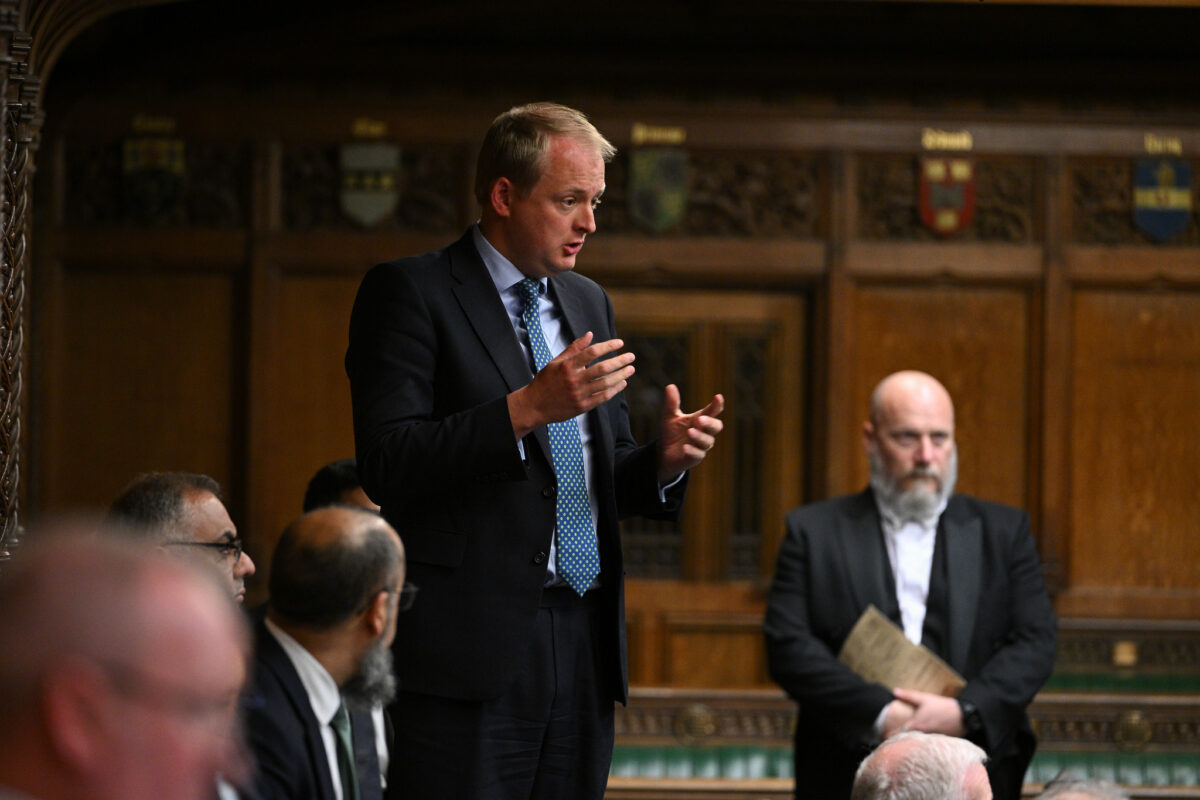
Ben Lake MP
As the UK prepares for this week’s summit with the European Union, there is something curious about the Prime Minister’s approach.
When I asked Andy Burnham in the House of Commons whether the UK should be prepared to discuss membership of the customs union, the Single Market and ultimately the European Union itself, his response was encouraging. He spoke of the need for a discussion about where the country wants to go in the next decade and said he would not shy away from difficult questions. Just this week the Prime Minister reiterated his belief that the UK lost more than it gained from leaving the European Union.
Yet when challenged from a different direction, he was equally emphatic.
“There is no confusion at all,” he told sceptical MPs. “The red lines are in place and they will remain in place.”
Those red lines rule out freedom of movement, membership of the Single Market and membership of a customs union.
The contradiction is becoming harder to ignore.
The Prime Minister says Britain needs a conversation about Europe. I agree. But if the destination is ruled out before the journey has even begun, how meaningful can that conversation really be?
The UK Government argues that closer ties with Europe will boost growth, reduce costs for businesses and create more opportunities for young people. Ministers have spoken positively about agreements covering food exports, youth mobility, energy and security. The Government itself says the proposed package could add more than £10 billion a year to the UK economy by 2040.
Those arguments sound remarkably familiar.
For years, Plaid Cymru has argued that reducing barriers with our nearest neighbours would help businesses, strengthen trade and create opportunities for future generations. We have made the case that closer cooperation with Europe is not an ideological project but an economic necessity.
The UK Government now appears increasingly willing to accept much of that analysis.
What it is less willing to accept is where that analysis leads.
If closer alignment is good for growth, why rule it out in key areas? If reducing trade barriers is beneficial, why preserve barriers that serve no useful purpose? If closer cooperation brings economic gains, why continue to treat permanent distance from our neighbours as a virtue?
These are not abstract questions for Wales.
These are pressing issues because goods exports account for a larger share of Wales’s economy than they do in any other UK nation. While 49.4% of UK goods exports are destined for the EU, the figure for Wales is significantly higher at 58.3%.
Ports
The effects of Brexit are visible across our economy.
Farmers face additional bureaucracy when selling into their nearest market. The Office for Budget Responsibility has estimated that Brexit will leave UK productivity around 4% lower in the long term than it would otherwise have been.
The consequences can be seen in our ports. Fishguard, in my constituency, and Holyhead on Ynys Môn have both felt the effects of changed trading patterns since Brexit came into force.
Before Brexit, Wales was a key land bridge between the mainland EU and the Republic of Ireland, with 91% of Irish-registered heavy goods vehicles travelling to Ireland via Welsh ports. Since Brexit, that share has collapsed to 42%.
Communities that were promised new opportunities have often found themselves dealing instead with more paperwork, higher costs and fewer options.
That is why progress at this week’s summit matters.
Any agreement that helps Welsh producers sell their goods more easily is welcome. Any measure that strengthens cooperation with our European neighbours should be supported. Any reduction in the barriers created by Brexit is a step in the right direction.
But let us be honest about what is happening here.
Economic benefits
The UK Government is seeking many of the economic benefits associated with closer European integration while insisting that it cannot discuss the political question that sits beneath them.
That may be convenient politics, but it is not a sustainable position.
Too often, the Prime Minister appears to be addressing two audiences at once. To those frustrated by Brexit, he speaks about economic reality and the need to rethink Britain’s place in Europe. To those wary of reopening old debates, he offers reassurance that Labour’s red lines remain firmly in place.
At some point, however, a choice has to be made.
Leadership is not simply the art of keeping every option open. It requires making a case and being prepared to defend it.
Plaid Cymru has been clear. We opposed Brexit because we believed it would make Wales poorer and less influential. We argued that leaving the Single Market and customs union would damage trade and economic growth. Unfortunately, events have done little to disprove that assessment.
That is why we believe Wales would be better off back in the European Union.
Debate
Polling indicates that 61.4% of Welsh voters would support the UK rejoining the European Union in a future referendum.
Others may disagree, and that is entirely legitimate. But the public deserve a debate that is open about both the costs of Brexit and the choices available to us.
As Britain approaches another important moment in its relationship with Europe, the Prime Minister must decide whether he intends merely to manage the consequences of Brexit or make the case for something better.
Trying to do both at once may be politically convenient, but it is not leadership.
There comes a point when repeatedly seeking to mitigate the consequences of Brexit becomes an admission that Brexit itself must be reversed.
For Plaid Cymru, the evidence has long been clear – Wales’s economic future lies back at the heart of Europe.
Ben Lake is the Plaid Cymru MP for Ceredigion Preseli
Support our Nation today
For the price of a cup of coffee a month you can help us create an independent, not-for-profit, national news service for the people of Wales, by the people of Wales.
Get more trusted Welsh news
Choose Nation.Cymru as a preferred source in Google News to see more of our journalism.


