


Business rates are killing dreams, and Wales can do better
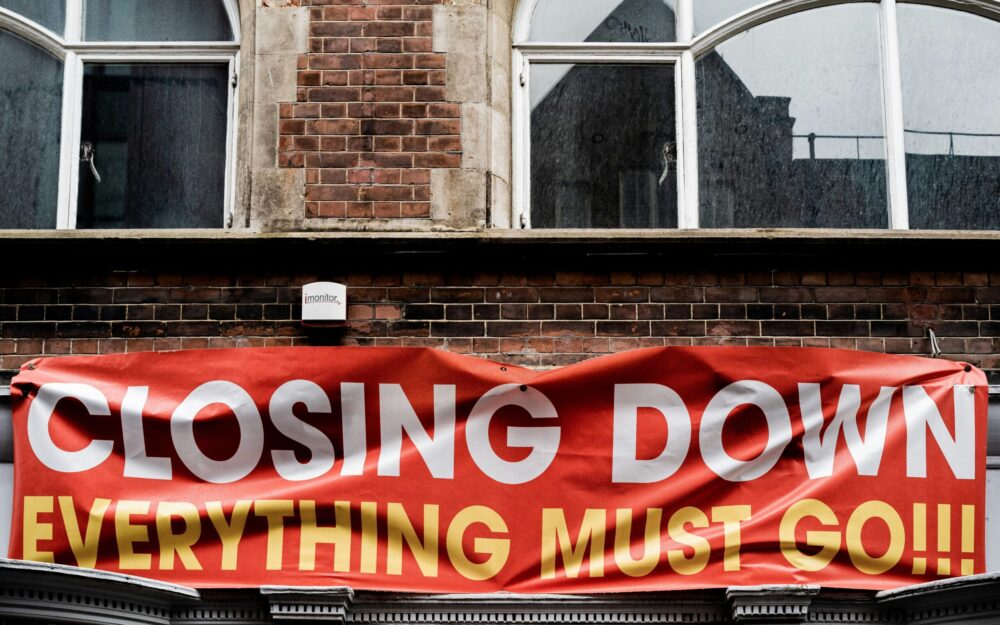
Franck Banza
For the past few months, I have been exploring what makes the Welsh economy tick, and what holds it back.
My writing and podcasting have taken me from the high streets of Swansea to the heart of local communities, listening to people who are creating something of their own: cafés, bakeries, creative ventures, family-run shops, and social enterprises.
These are not abstract ideas; these are real lives, aspirations and dreams. Yet time and again, I hear the same barrier: the cost of actually running a business in Wales is simply too high.
History offers a warning we would do well to remember. The Romans understood that taxation, when disconnected from reality, does not strengthen a society, it destroys it. Ubi tributum opprimit, ibi civitas deficit: where tax oppresses, the community fails.
Civilizations collapse not merely because of invasion or internal decay, but because the systems meant to support them strangle productive activity.
Today, Wales risks a similar trap. Business rates, as they currently stand, quietly do to small businesses what rigid taxation did to ancient societies: discourage productivity, suppress ambition, and deprive our communities.
What are business rates?
Business rates are a tax on non-domestic properties, intended to help fund local services. They are not based on how much a business earns, but primarily on the physical characteristics and rental value of the property it occupies.
The Valuation Office Agency (VOA) assesses each commercial property and assigns it a rateable value, which is broadly based on the estimated annual rent the property could command on the open market, taking into account factors such as size, location, layout, and use. Larger properties, or those in central or high-footfall areas, are therefore given higher rateable values regardless of whether the business operating inside is profitable or struggling.
Local authorities then apply a nationally set multiplier to that rateable value to calculate the amount owed. Councils are also responsible for collecting payments and administering a range of reliefs and exemptions, such as small business rate relief. While these reliefs are intended to soften the impact, they often depend on thresholds, applications, and periodic revaluations.
In practice, this creates a complex and inflexible system. A small independent business can face rising bills simply because property values increase, even if footfall falls or turnover declines. Navigating revaluations, appeals, and relief applications can be time-consuming and confusing, particularly for sole traders and micro-businesses without specialist support. As a result, many small businesses find themselves paying tax based on the space they occupy, not the economic reality they face.
I have Seen the Damage First-hand
I meet people every day who are ready to create jobs, provide services, and strengthen their communities. They have ideas, passion, and drive, yet they hit a wall: their businesses face property taxes so high that survival itself becomes a gamble.
Relief schemes do exist and they do offer some protection, but they are far from straightforward. In Wales, support such as Small Business Rates Relief, which can provide up to full relief for the smallest properties before tapering as rateable values rise, alongside targeted help for retail, leisure, and hospitality, is intended to ease pressure on businesses.
In practice, however, these reliefs are not applied automatically and must often be requested every financial year, introducing uncertainty and additional strain for entrepreneurs already operating on tight margins and long hours. Time that should be spent serving customers, developing new ideas, or growing a business is instead absorbed by navigating forms, deadlines, and eligibility rules, all while facing the constant risk of outgrowing the thresholds that determine support.
The result is a system that offers limited help at the margins but ultimately creates more complexity than clarity, encouraging very small, low-risk operations while discouraging the growth of larger, sustainable enterprises that could employ more people and bring real variety and vitality back to our town centres.
For local authorities, this system also comes at a cost. Staff are required to process relief applications, review eligibility, and manage appeals year after year. And for landlords, the rules have unintended consequences: to help tenants qualify for relief, properties are often divided into smaller units, creating a patchwork of tiny shops that can barely accommodate customers. Instead of vibrant, diverse high streets with cafés, restaurants, and larger retail spaces, we see a proliferation of takeaway shops, and more recently, shops that exploit these small units to sell illegal goods.
In Swansea city centre, Gorseinon, Pontarddulais, Morriston, and Uplands, operations by Swansea Council and Trading Standards have uncovered a worrying trend. “Operation Ceecee” and “Operation Marvel” targeted illegal cigarettes and vapes, resulting in nine closure notices for premises, 11 arrests, hundreds of counterfeit goods seized, and even cannabis confiscated. While some of this activity is criminal, it thrives in part because legitimate businesses cannot afford the spaces small enough to access relief, leaving the doors open for those willing to exploit the system.
In addition to this, I have had conversations with many people that have shared the view that our city centres increasingly feel flat and uninviting, marked by empty units, long rows of charity shops that automatically qualify for 100% mandatory relief and therefore pay no business rates, and Betting shops operated by large chains that can absorb the cost of rates but often add little to the long-term health of local communities.
None of these exist in isolation, and the unintended consequence of the current system is that our town centres become dominated by uses that limit diversity and economic dynamism. Instead of a bustling city centre with independent retailers that create jobs and draw people in, we are left with streets that feel hollowed out. This is a clear illustration of how tax policy shapes behaviour and, unintentionally, the very character of our communities.
Property values, rates thresholds, and multipliers interact in a way that distorts markets. Landlords and businesses make decisions not based on what the community needs or what customers want, but on how to minimise the rates bill. The outcome is predictable: high streets crowded with tiny shops, struggling to provide services, while vacancies and economic inactivity persist.
Research also shows that high property taxes actively influence behaviour. Lockwood, Simmler, and Tam (2021) demonstrated that effective reductions in tax rates can meaningfully reduce vacancy, supporting the idea that tax policy can directly impact whether businesses survive or fail. Reliefs are working, but only where they are applied and managed — which is far from ideal.
Why Abolishing Business Rates for Small Businesses Makes Sense
The solution is clear: business rates for small businesses should be abolished in their current form and replaced with a fairer model based on turnover or employment, not property size and opaque relief mechanisms. This approach would remove administrative stress for entrepreneurs, reduce costs for local authorities, and encourage landlords to provide larger, more versatile spaces that support a diverse mix of businesses. High streets could once again be full of hospitality units, shops, and creative enterprises rather than takeaway chains or tiny units exploited for illegal trade.
A Wales that abolishes business rates for small enterprises is a Wales that nurtures ambition, retains talent, and spreads economic activity across cities, towns, and communities. It is a Wales where entrepreneurship is encouraged, not penalised, and where the local economy thrives because people are free to take risks, innovate, and invest in their communities.
Building a High Street That Works for Everyone
Supporting small businesses properly is not just about lowering costs. It is about shaping a local economy that works for the people, not just the tax system. Jobs stay local, communities flourish, and economic activity spreads beyond Cardiff Bay. Families and young entrepreneurs see that Wales is a place where dreams can be realised, not crushed by paperwork or punitive taxation.
Business rates, as they stand today, quietly strangle opportunity. But by abolishing rates for small businesses, we can turn high streets into centres of innovation and community life once again. We can build a Wales where ambition thrives, where local enterprise is valued, and where every small business has a fair chance to succeed.
Support our Nation today
For the price of a cup of coffee a month you can help us create an independent, not-for-profit, national news service for the people of Wales, by the people of Wales.



However did the high street survive before ? Business rates have been around for quite a long time , and yes some of the revenue goes towards essential council services such as education but also funds the infrastructure servicing the high streets – CCTV, car parking facilities, traffic wardens, litter bins and litter collection, street lighting etc – scrapping business rates would put immense pressure on Council tax payers to make the difference to subsidise the infrastructure for business – is that fair ?
Is there anyone who thinks linking business rates to turnover is a bad idea?
Yes totally flawed many high vol items have wafer thin margins
How about a choice. Any small business can choose between a fixed charge linked to premises value that doesn’t decrease if business is bad, or a variable bill linked to last year’s turnover (no charge in the first year of business) that might be lower or higher than the fixed charge.
I think the administration of something like that would be overwhelming
For who? Surely helping businesses to thrive comes before making civil servants work a bit harder.
Many businesses will appreciate bills that drop when business is bad. And councils will be motivated to increase footfall if it means variable bills return more revenue.
Well the current sytem does mirror the market Rateable values on shops are valued on “Tone “which is a moveable feast
Retailers clearly willing to pay more in prime spots with higher footfall etc The problem is the VO is understaffed and it lags market chnges
Problem with a turnover based system It can be gamed especially if the retailer has an online offer The authorites would require team of forensica ccountants
Wouldn’t that also involve falsifying records submitted to Companies House? Surely that is a much bigger problem that councils don’t need to get involved in.
Pushing legitimate hardworking businesses out of business in a downturn just to make it a bit easier to catch fraudsters doesn’t seem very sensible.
Keith, linking business rates to turnover without considering the fact that some businesses have very fine margins would result in the overnight closure of every petrol station, as well as every distributor who supplies home heating oil and agricultural diesel.
Business rates are a bad model, but a turnover tax or employment tax as proposed in the article would simply create other problems.
As already proposed above, businesses could choose between fixed or variable rates to best suit their business model.
Well business rates are intrinsically linked to property values just like council tax
They do rise and fall with the health of the high street
Many shops the rates have fallen in many Welsh towns mirroring the market
Newport for example
One of the main problems is the changes lag behind the market
The Valution office are slow to respond to appeals as they are short staffed They are still snowed under with rating appeals from the last revaluation
They arent perfect but turnover based payments are extremely diffcult to administrate
Cracking article, and more the sort of debate that should be had in run up to election. Business rates are about 15% of council income so they can’t be removed without consequence. It’s a case of changing it, and what to change to. Every other option on table has plusses and minuses, and there will be no alternative that suits all. You need to work out what you want to achieve. Shifting tax, local profit tax, targeted relief- can all work to different groups advantages or disadvantages. One thing is for sure, there is always a real risk that the… Read more »
I think it would be best to just abolish Business Rates for small businesses. I don’t know if there is a definition of a small business but if there is then that should be used.
I would also abolish Business Rates for new businesses in their first year of trading to give them the best chance of succeeding.