


Chancellor turns to property to bolster Treasury coffers
Jonathan Edwards
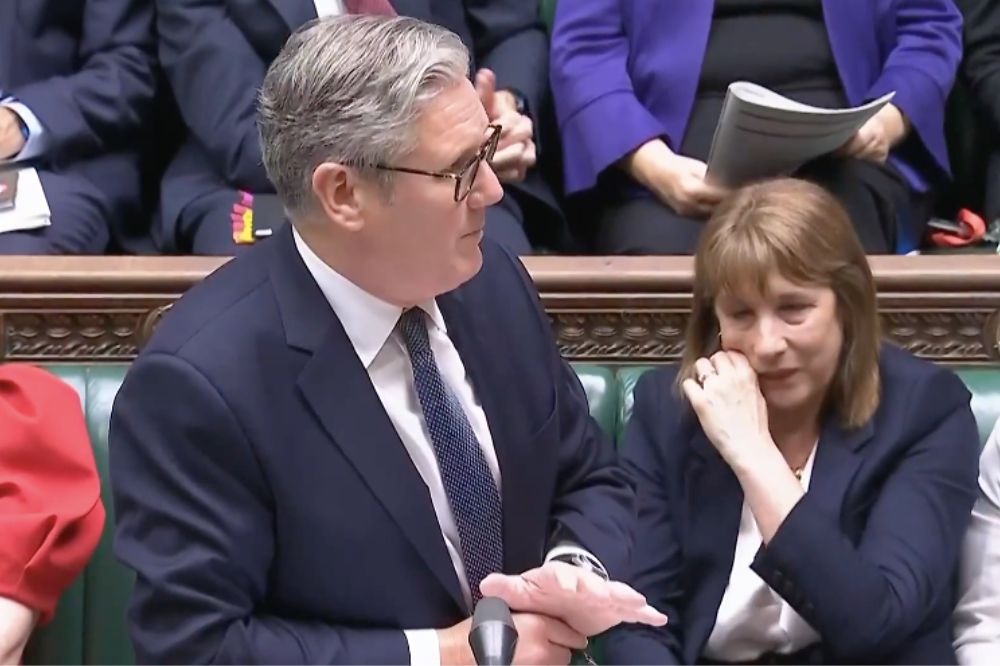
When the Chancellor breaks down in the Commons a night after a big rebellion stopped one of the UK Government’s main efforts to reduce expenditure by cutting support for disabled people, it indicates the Treasury know they are in danger of not meeting their own self-imposed fiscal targets.
Labour has placed fiscal competence as a totemic symbol for the entire Starmer project to be judged upon. An adverse Office of Budget Responsibility (OBR) assessment of the public finances therefore in the Autumn would not only be an economic problem considering how the financial markets may react, but would be a political catastrophe for the Prime Minister and Chancellor.
We can have a long argument about the dangers of set-in-stone fiscal rules. I always argued they were artificial in nature and removed much needed flexibility for the Treasury to react to world events and economic shocks.
To compound matters, Labour has further reduced its room for manoeuvre by ruling out increases in major revenue sources such as income tax, VAT and employee National Insurance.
Magic bullet
With economic growth performing less well than expected, coupled with projections being downgraded by many forecasters and an inability to secure backbench support for spending reductions, the Treasury is in desperate need of a magic bullet.
This week’s Mansion House speech to the City bigwigs indicates that the Chancellor has fallen back on the standard Treasury trick of further inflating the UK housing market.
In her speech the Chancellor announced plans to remove regulatory safety checks by allowing lenders to offer higher loans to income mortgages as part of a package to encourage riskier behaviour.
Furthermore, a permanent government backed mortgage guarantee scheme will be created which could lead to the return of zero deposit bank home loans.
Rachel Reeves said in her speech that she intended to unleash financial services in the hope of creating a ‘ripple effect’ for the rest of the economy.
To many, all this will sound like trickle down economics – a strategy that has spectacularly failed in the UK. It’s not only the regulators at the Financial Conduct Authority who are not entirely convinced.
The FCA of course has a primary responsibility for ensuring stability of financial firms and markets.
Housing bubble
While it would use different language, it is probably concerned that the Chancellor’s policies will deliberately create a housing bubble on assets that some analysts would argue are already hugely overpriced.
The Chancellor will claim her policy is all about helping first time buyers purchase their first home, and the proposal to allow historic rental payments to be a suitable proof of loan affordability is sensible.
These proposals however have far more to do with the Chancellor desperately seeking to stimulate economic activity via a housing boom.
First Time Buyer activity stimulates the whole market and drives house purchases further up the ladder. According to the OBR, property taxation forecasts across the UK (Wales and Scotland have different systems for taxing house purchases) are projected to increase from £14bn in 2024-25 to £22.1bn in 2028-29.
They were only £10bn at the height of the Gordon Brown-fuelled property boom. These measures will undoubtedly lead to the OBR revising the figures upwards for the forecasting period and provide some much needed headroom for the Chancellor in relation to her fiscal rules.
It’s not only the UK Treasury that will be happy. Welsh Government receipts via the Land Transaction Tax will also surely increase and remember that property values above £250k are taxed at a higher level in Wales than England.
Consumer boom
The Chancellor will also be hoping that house price inflation will have the added benefit of a consumer boom, as households borrow more on the back of increased equity in their properties.
Some would accuse the Chancellor of economic short-termism and endangering long term sustainability.
As a newly qualified Independent Financial Adviser I may well have timed matters right in terms of the next step in my professional life. However, from a UK macroeconomic perspective we have heard this tune many times before, it is a carbon copy return to the New Labour economic playbook of 1997-2010 of allowing the UK financial sector to let rip. History tells us how that ended.
Jonathan Edwards was the MP for Carmarthen East and Dinefwr 2010-24
Support our Nation today
For the price of a cup of coffee a month you can help us create an independent, not-for-profit, national news service for the people of Wales, by the people of Wales.



It’s not surprising with struggling economic growth that alternative sources of government revenue are being considered to meet increasing demands on the public purse. We may well see some sort of wealth tax, but taxes on property are easier to assess and collect and less easy to avoid. House price inflation by relaxing mortgage lending rules is certainly easier to achieve than economic growth! Boosting property values makes available greater potential revenues from transaction taxes, capital gains tax, inheritance tax, tax on landlords’ income and others who benefit financially directly or indirectly from the real estate market. One can even imagine the… Read more »
A very interesting comment and analysis this, on Jonathan’s own insight and historical persective.
“Treasury trick of further inflating the UK housing market”
That the Treasury thinks this is a good idea highlights the massive problem in central government. Higher house prices may boost some tax revenues, and completely coincidentally the personal wealth of Treasury mandarins, but they result in reduced disposable income because people have less to spend after high rent and mortgage payments. This means people spend less in their local economy shrinking GDP, hitting revenues from employment, consumption and business taxes.
Because the UK doesn’t have a separate economy department there’s no-one to push back on the short-termist Treasury beancounters.